Words

procrastination

I think all of us probably struggle with a bit of procrastination from time to time. It’s when you put off doing something, usually work, by doing something else. Like spending hours creating a colour-coded revision plan meaning there’s no time left for revision (I definitely did that). Or spending three hours scrolling through food blogs to find a super-healthy recipe leaving no time to go to Tesco so you have to order a pizza (yup, also me). Ironically, this word that describes the act of avoiding work actually has a very hard-working linguistic history.

This is an AI-generated image, which should be obvious from the fact that it looks like the man has eaten a third of his cup. I apologise for using AI, which I hate, but posts with images are usually more popular, and I couldn’t find anything on Unsplash for ‘procrastination’.

‘Procrastination’ entered the English language in the mid-16th century from the Latin procrastinationem. It’s made of three parts:

  • the prefix pro-, meaning ‘forward’ or ‘forth’

  • crastinus, meaning ‘belonging to tomorrow’ (from cras, the Latin word for, you’ve guessed it, ‘tomorrow’)

  • -ation, a standard suffix that turns a verb into a noun describing an action or process.

Put it all together, and you get, literally: ‘The action of putting forward until tomorrow.’

Procrastination isn’t always the bane of creativity. For example, Leonardo Da Vinci was the patron saint of unfinished projects, taking 16 years to finish the Mona Lisa. The good news is that he didn’t just sit around colour coding his paintbrushes or scrolling through the renaissance equivalent of TikTok. He ‘productively procrastinated’ by studying (among others) optics, light and human anatomy. And that meant that when he finally returned to the painting, he’d mastered a technique called sfumato (smoky blurring) that he hadn’t been able to do previously. So if he’d actually finished the enigmatic painting on time, it likely wouldn’t be the masterpiece it is today.

Another notorious historical procrastinator was Queen Elizabeth I, who apparently drove her advisors nuts taking her time over signing death warrants and marriage treaties. The good news is that by procrastinating on executing Mary, Queen of Scots for nearly 20 years, Lizzie avoided a premature war with Catholic Europe. By the time she finally did sign the warrant in 1587, England was militarily stronger and better prepared for the eventual Spanish Armada. So that procrastination kept England out of a potentially bloody – and expensive – conflict that could have gone on for decades. Oh, and by not choosing a husband, Liz made sure every country in Europe was concentrating on getting in her pants rather than on invading her queendom.

So next time you find yourself doing anything but the thing you’re supposed to be doing, fret not – you’re not being lazy, you’re just applying Elizabethan diplomacy.

treacle

I’m pretty sure you know what treacle is – uncrystallised syrup made during the refining of sugar. Okay, maybe you didn’t know that. But I’m sure you do know that it’s the sticky stuff that we use in many a pudding (my mum makes a killer treacle sponge pudding). Why ‘treacle’ though? Well, it turns out the word itself has distinctly medicinal origins.

As so many of these stories do, this one begins in ancient Greece. The word we’re interested in this time is thēriakos, meaning ‘of a wild animal’. Since lots of wild animals enjoy taking a chunk out of us human beings, thēriakē came to mean ‘antidote against a poisonous bite’. Latin borrowed this as theriaca, and the word eventually made its way through Old French into Middle English as triacle with this meaning. The earliest recorded use of it in English dates to 1340, in a text called ‘Ayenbite of Inwyt’ where it refers to an antidote to poisons and snakebites.

(Just a quick aside: the ‘Ayenbite of Inwyt’ – literally the ‘again-biting of inner wit’ or the ‘Remorse of Conscience’ – is the title of a confessional prose work written in a Kentish dialect of Middle English. Wikipedia describes it as: ‘Rendered from the French original, one supposes by a “very incompetent translator,” it is generally considered more valuable as a record of Kentish pronunciation in the mid-14th century than exalted as a work of literature’. BURN.)

So how did we get from ‘remedy for painful bite’ to ‘sticky stuff on puds’? Well, theriac recipes often contained honey in large quantities – sometimes three times the weight of all the dry ingredients combined. Because of this, the meaning of ‘treacle’ later became associated with the sticky dark syrup left over from the process of sugar refining. This was probably because of a perceived resemblance to the old medicinal preparations. Or maybe just because it was really sweet.

‘Treacle’ is primarily a British term for what Americans call molasses, even though the two products aren’t actually identical – molasses is typically boiled for longer, creating a thicker, darker liquid with less sugar (and less fun, by the sounds of it). The figurative sense, meaning cloyingly sentimental, does appear in some American writing, but it’s less common than it is in British. Oh, and the pet name (‘Hello Treacle’), beloved of Pete Beale in Eastenders (showing my age there), comes from Cockney rhyming slang, where ‘treacle tart’ means ‘sweetheart’.

havoc

If you’ve ever come home to find your usually well-behaved (well, kinda) cavapoo has decided to redecorate the lounge using the stuffing from three cushions and the contents of the kitchen bin, you’ve seen havoc in action.

As a noun, ‘havoc’ describes widespread destruction, confusion or disorder. It’s the kind of chaos that doesn’t just happen; it’s wreaked. And it turns out that its origins are rooted in a specific – and actually quite terrifying – military command.

In the Middle Ages, ‘Havoc!’ was a formal cry used during a conflict. It signalled that soldiers could start plundering and looting, grabbing whatever the olde equivalent of flat-screen TVs and games consoles was, and generally causing as much mayhem as they liked. The command came from an Old French word, havot, meaning pillaging. During the 14th century, as French-speaking officers gave orders to English-speaking troops, the soft French ‘t’ was gradually hardened into the English ‘k’. This is probably due to something called folk etymology, which is when a foreign word enters a language and people subconsciously ‘correct’ it to something that already sounds familiar to them. In this case, that was hafoc, the Old English name for a predatory hawk – to a 14th-century soldier, the command to start looting and pillaging might have felt conceptually very similar to the action of a hawk swooping down to snatch its prey.

Havoc time (did you just read that as MC Hammer? Maybe that’s just me) was so destructive that it had to be legally regulated. In 1385, Richard II issued the ‘Statutes of War’, which specifically forbade shouting ‘Havoc’ without authorisation under penalty of death. So anyone who lost their head and got overly enthusiastic about being first to the lootfest would quite literally lose it for real shortly after.

The most famous literary appearance of ‘havoc’ comes courtesy of, you’ve guessed it, William Shakespeare. In Julius Caesar, Mark Antony promises to ‘Cry “Havoc!” and let slip the dogs of war’. Today, we use ‘havoc’ for much lower stakes, though I’m fairly certain my dog still hears the 14th-century call to arms the second the front door clicks shut behind me.

laconic

If you’ve ever had a text from someone consisting entirely of the letter ‘k’, you’ve been on the receiving end of laconic. As an adjective, it describes a way of speaking or writing that uses the absolute minimum number of words to get a point across. No padding, no pleasantries, no ‘I hope this email finds you well’. Just straight to the point, like a cricket ball to the crotch.

But, why ‘laconic’? Well, it comes from Lakonikos – a Greek adjective for anything relating to Laconia, a region on the south-eastern part of the Peloponnese peninsula. Laconia was home to Sparta and (obviously) the Spartans, whose six-packs you may remember from Zack Snyder’s naked chest-fest, 300. The Spartans were not big talkers. And while other Greeks like the Athenians were busy writing philosophy, performing tragedies and inventing democracy, the Spartans were honing an arguably more useful skill: saying a great deal by saying almost nothing.

The most famous example of Spartans being spartanly (yep) with their words comes from Philip II of Macedon. He was a man who loved to open a can of whup-ass (and dad to Alexander the Great), having taken Macedon from a fairly insignificant kingdom to a power that conquered most of Ancient Greece in less than 25 years. Turning his attention to Sparta, he sent a message asking whether he should come as a friend or a foe. The reply was ‘Neither’. He then sent the message:

If I invade Laconia, I shall turn you out.

The Spartans replied with a single word:

If.

There’s also a story from Plutarch of a Spartan mother sending her son off to battle. After handing him his shield, her farewell advice consisted of five words: ‘Either this or upon this’, meaning ‘Come back with your shield, or on it’ – returning without your shield meant you’d thrown it away to run faster (the ancient Greek equivalent of updating your LinkedIn profile before handing in your notice). Inspiring and absolutely terrifying.

So next time someone accuses you of being curt in an email or a text, tell them you weren’t being rude, you’re just channelling your inner Gerard Butler/Greek warrior. Sparta would be proud. Although they probably wouldn’t say so.

(PS The Philip vs Sparta story would have been great if it ended ‘Philip did not invade Laconia’, which is what ChatGPT told me when I was researching this. When I checked it elsewhere, which thankfully I always do since ChatGPT told me a bunch of lies previously, it turns out that Philip did indeed invade Laconia, devastating large parts of it and kicking the Spartans out. In hindsight, maybe a few more words might have helped.)

braggadocio

If you ever watch the news, ‘braggadocio’ might sound familiar. During the 2016 US election, Donald Trump famously used the adjective ‘braggadocious’. At the time, most of us assumed he was talking rubbish as per usual – see ‘panican’ (used during his second term to describe those panicking over his economic tariffs), ‘bigly’ (often interpreted as ‘big league’) and ‘I’ve stopped eight wars’. But ‘braggadocious’ is actually rooted in a word that’s been around for over 400 years (although I doubt DT knows that). And ironically, both the word and its history describe him perfectly.

‘Braggadocio’ is an uncountable or mass noun (exactly what it says on the tin – examples include ‘bravery’, ‘nonsense’ or ‘happiness’) that describes empty, arrogant boasting or a swaggering manner that isn’t backed up by much substance. Despite its Italian looks, ‘braggadocio’ wasn’t born in the olive oil-drenched streets of Florence or Rome – its origins are actually a lot closer to home. It was cooked up in 1590 by the English poet Edmund Spenser for his epic poem, The Faerie Queene, one of the longest poems in the English language at a bum-numbing 36,000 lines and over 4,000 stanzas.

In the poem, Spenser created a character named Braggadocchio – a ‘knight’ who was all mouth and no trousers. He first appears in Book II, Canto iii when he steals the horse and spear of the hero, Sir Guyon. He then spends the rest of the book riding around on his fell-off-the-back-of-a-lorry warhorse, pretending to be a legendary warrior while actually being terrified of his own shadow. Why Braggadocio? To give the character an air of pretension (and perhaps to make him sound like the vainglorious characters found in Italian comedy), Spenser took the very English word ‘brag’ and slapped a pseudo-Italian suffix on the end of it. It’s the linguistic equivalent of putting a spoiler on a 2005 Vauxhall Corsa.

Eventually, ‘braggadocio’ escaped the poem and became shorthand for anyone whose mouth is (to quote that literary giant, Limp Bizkit) writing cheques that their ass can’t cash. Whether it’s a stolen horse in an epic poem or a stolen election narrative on social media, ‘braggadocio’ remains the ultimate red flag for a man with a massive ego who’s all wrapping paper and no present.

genuflect

To genuflect is to bend one knee to the ground, usually as a sign of reverence or respect. It’s mostly associated with churches and religion, particularly Catholicism – people genuflect before entering a pew. It also has a metaphorical meaning: to show excessive deference or subservience to someone. As in, ‘I'm not going to genuflect to my dog just because he’s the most gorgeous boy in the world’ (even though I spend a lot of time cramped into weird positions because he’s asleep on me and I don’t want to upset him by getting blood back into my limbs).

‘Genuflect’ comes from a Late Latin word, genuflectere, and it’s pretty straightforward when you break it down: genu means ‘knee’ and flectere means ‘to bend’. So literally, knee-bending. The Romans were nothing if not literal. (Oh, and ‘Late Latin’ refers to the form of Latin used roughly from the 3rd to the 7th centuries AD i.e. when the Roman Empire was beginning that falling business. At this point, Latin was becoming less standardised, picking up influences from regional dialects and the languages of the various peoples who were interacting with (or invading) the Roman world. Grammar got simpler, new words were created and it moved away from the highly polished Classical Latin of Cicero and Caesar.)

Flectere has been quite busy in the English language, popping up in all sorts of places. For example, it’s where we get ‘reflect’ from (bending light), ‘deflect’ (as in turning aside) and ‘inflect’ (bending as in modulating something, usually your voice). Meanwhile, poor old genu has been rather left on the sidelines. Its only real claim to fame beyond genuflect is ‘geniculate’, a scientific term that means ‘bent abruptly at an angle like a bent knee’. Sounds painful.

You might look at ‘genuflect’ and think ‘well, surely that’s also related to “genius” and “genuine”’, unless, unlike me, you have a life. Well, I’m afraid that, despite the resemblance, those words come from an entirely different Latin verb, gignere, which means ‘to beget’. So no knees involved whatsoever. But, if you’re hungry for more knee-based etymology, the Latin genu is related to the Greek gonu (also meaning ‘knee’), which gave us gōnia meaning both ‘knee’ and ‘angle’. And that means that polygons, pentagons and hexagons are all essentially named after knees. You’re welcome.

woebegone

If someone’s woebegone, they’re really sad. Not just a bit fed up, but proper miserable (think someone who’s just accidentally pressed ‘reply all’ or called their teacher ‘Mum’).

At first glance, ‘woebegone’ looks pretty straightforward – ‘woe, begone’, right? Well, no. ‘Begone’ does mean ‘go away’, but the second part isn’t actually anything to do with ‘begone’ at all. Instead it comes from ‘begān’, an Old English verb meaning ‘to go about’ or ‘to befall’. So woebegone isn’t sending woe away; it’s actively surrounding you. A figurative shitstorm, if you will.

‘Woebegone’ has been doing this slightly misleading double act since at least the 14th century. According to the OED, its earliest recorded use is from 1325 in Middle English, where it appears in forms like ‘wo-bigon’.

One of the reasons I chose this word was because I thought there was a species of shark called a woebegone, and I was going to regale you with interesting facts about it. But it turns out that it’s actually called a wobbegong. Still, that’s similar, so let’s talk about them anyway. Wobbegong is the common name for carpet sharks, so-called because they literally look like carpets and like to lie on the floor (well, seabed) – they can pump water over their gills which means they can sit quietly, then ambush their prey (most sharks need to keep moving to breathe). They’re believed to have got their name from the Australian Aboriginal word for ‘shaggy beard’, which is another reference to the way they look – they have fringed skin flaps, or dermal lobes, around their heads and mouths. These flaps help them camouflage when they’re pretending to be carpets on the sea floor, as they break up the outline of the shark so they blend into their surroundings even more.

All completely irrelevant, but interesting, I’m sure you’ll agree.

callithump

A ‘callithump’ is a noun that describes a noisy, boisterous band or parade. Think drunken revelry, tins banging, horns blaring, maybe a smattering of cowbells and a general ruckus. So just your average Friday night on most British high streets then. You can also use it as an adjective (describing word) – so something can be 'callithumpian'.

The origin of the word is a bit murky, but most authorities agree it comes from an older British dialect term, ‘Gallithumpian’. The capital ‘G’ here isn’t a mistake – Gallithumpian is a proper noun (a unique person, place or thing) and, just in case you’re as geeky as me, nothing to do with Doctor Who’s home planet. In the late 18th and early 19th centuries, Gallithumpians were groups who deliberately turned up at elections, hustings and public gatherings to make as much noise as possible – banging pots, ringing bells and generally drowning things out. While this might sound like a protest, contemporary accounts describe Gallithumpians less as protesters and more as organised nuisances – they arrived, f*cked things up, then went home again.

Etymologists usually break ‘Gallithump’ down into elements meaning noise or bluster simply combined with ‘thump’. So it’s slightly mocking label for people whose main contribution was a load of noise and disruption rather than an actual counterpoint. Hmmm, I know a few people that could refer to.

Over time, ‘Gallithump’ lost its political edge and shifted from a label for the people involved to a description of the behaviour itself. ‘Gallithumpian’ softened into ‘callithumpian’, and eventually into ‘callithump’.

The first recorded use of ‘callithump’ as a noun in the sense of a riotous parade dates to 1843. In 19th‑century America the term was often used to describe makeshift celebrations or mock serenades – sometimes cheerful (pots and pans for a wedding, say), sometimes protest‑style chaos (anything to do with Donald Trump then).

So next time you see a chaotic, clang-and-carnival-style parade coming down your street, you might think: ‘Ah yes… a proper callithump.’ And, if you’re me, stand very still until it passes.

chout

I discovered this word through one of my mum’s random Wordle guesses (as we all do, sometimes she just tries random letters until Wordle says ‘yes’). And being as it’s nearly Christmas, it’s actually quite fitting. Well, half of it is, anyway. That’s because ‘chout’ has two completely different meanings.

Let’s start with the (sort-of) Christmassy one. ‘Chout’ in this sense means to joke, play the fool or mess about in a silly, good‑natured way. This meaning appears in some older English dialect dictionaries, like the Century Dictionary, a massive, multi-volume English dictionary originally published in the late 19th century.

The second, and better documented, meaning of ‘chout’ comes from a tax that Maratha rulers in western India demanded from neighbouring territories during the 17th and 18th centuries. (The Maratha were a powerful group of rulers and warriors who controlled much of western and central India during this time.) They called this ‘chauth’, which meant ‘a quarter’ in Marathi, because they demanded a quarter of the revenue from the territories they targeted. I say ‘tax’, but it was essentially protection money which rulers paid to avoid being raided by the Marathas. British administrators in India picked up the word and began describing it in English as ‘chout’.

There you go. I hope we all have a good chout this festive season – just the first kind, though. If you find yourself demanding payment from your neighbours in exchange for not setting fire to their recycling bins, you’ve got the wrong one.

(PS While I was researching this post I found Chout, a Chicago-based 90s-style grunge rock band known for their Alice in Chains-like sound and music. And I think I love them.)

tare

I have a dog with a dodgy stomach, which means I spend a lot of time weighing various potions and powders for his food. My weighing scales flash up with the word ‘tare’ every time I turn them on or press the ‘zero’ button. Now I don’t usually spend a lot of time thinking about weighing scales, but I do spend a lot of time thinking about words – and I realised I have no idea what ‘tare’ actually means.

Strap yourself in...

It turns out that ‘tare’ is the name for the weight of any container or packaging that isn’t part of the thing you actually want to measure. So when my scales show ‘tare’, they’re telling me they’ve set that deducted weight to zero. Put a bowl on, press the zero button and the scales adjust the tare so you only see the weight of the food itself.

‘Tare’ has travelled a long way to get to my dog’s daily allowance of probiotics. It comes from Middle French (also ‘tare’), which in turn comes from the Medieval Latin word, ‘tara’. Go one step further back and you reach the Arabic word ‘ṭarḥ’ – this means ‘that which is deducted’ or ‘something thrown away’. It’s a very old word in Arabic that’s been around for more than 1,400 years (and its earliest form goes back even further than that). But it’s always referred to the bit you don’t count.

So that’s the story behind ‘tare’. A word that has crossed continents and centuries to help me measure out pumpkin powder for a dog who still hasn’t learned not to eat disgusting things he finds in the street.

dragoon

I’m not sure what I thought ‘dragoon’ meant, but I think I’ve been conflating it with ‘platoon’ all my life. And maybe also ‘doubloon’.

It turns out that ‘dragoon’ isn’t even a noun (a person, place or thing) – it’s a verb (doing word). If you dragoon someone, it means you pressure or force them into doing something they don’t really want to do. It’s not always aggressive – it could just be heavy-handed persuasion – but it definitely suggests a lack of choice. Think of being ‘dragooned into organising the office Christmas party’ when all you want to do is go home and watch ‘Kirstie’s Handmade Christmas’ with an eggnog. (Every Christmas I thank god I no longer have to run the gauntlet of senior colleagues and free alcohol. And that’s all I’m going to say about that.)

Like many good words, ‘dragoon’ started out in uniform. In the 1600s and 1700s, a dragoon was a mounted European infantryman – someone who rode to battle but fought on foot. They were named after their weapon, a short musket so-called due to its resemblance to a fire-breathing dragon when fired.

Here’s where things get a bit darker. Under Louis XIV in 17th-century France, dragoons were sent to persecute French Protestants (Huguenots) – often moving in with them forcibly and staying until they converted to Catholicism. This coercion was so notorious that ‘dragoon’ eventually became a verb, meaning to force someone to do something, echoing that original, presumably very literal, form of arm-twisting.

So next time someone’s trying to make you do something you don’t want to, try telling them you refuse to be dragooned – it might not get you out of it, but at least your resistance will sound stylish.

testify

At first glance, ‘testify’ seems very serious and upright. It’s something you do in court with your hand on your heart as you swear to only tell the truth, and nothing but the truth. But like so many English words, ‘testify’ has a surprisingly cheeky backstory. And just in case you’ve got there before me, yes, it involves testicles.

Strap yourselves in.

The theory goes that in ancient Rome, men would swear oaths with their hands on their testicles to prove they were telling the truth. And from there, we get ‘testify’. (I also read one article that said two men taking an oath of allegiance would hold each other’s knackers. Don’t remember seeing that in Gladiator.)

It’s a great story. But is there any truth in it? Well, both ‘testify’ and ‘testicle’ do come from the same Latin root, ‘testis’. Although that probably doesn’t mean what you think it means – it actually translates as ‘witness’. Some etymologists think the anatomical sense came about because testicles were seen, metaphorically, as ‘witnesses’ to a man’s virility. Others say that the two words just sound similar. But frankly, the image of a Roman swearing on his love spuds was just too good for me to pass up.

So ‘testify’ and ‘testicle’ are genuinely related, although perhaps not in a holding-your-family-jewels-to-show-you’re-serious way. Same root, VERY different destinies. Either way, it’s probably not something to start doing if you ever find yourself in the witness box.

weird

I had to doublecheck this hasn’t featured as a word of the week before, as it’s a really common adjective (describing word) with an interesting backstory. Amazingly, it hasn’t, so hang on to your (witch’s) hats…

You know what ‘weird’ means. And it turns out people have been being weird for a bloody long time – it first appeared in the 700s as the Old English noun, ‘wyrd’. The word ‘noun’ is the important thing here (a noun being a person, place or thing). Rather than using ‘wyrd’ to describe someone or something like we do today, you’d talk about ‘their wyrd’, meaning the path their life would take: what lay ahead of them and how that might unfold. That’s because at this point it meant ‘fate’ or ‘destiny’. So you could say ‘Her wyrd was to carry on coming up with words of the week’.

Fast forward a few centuries to the 1100s, and the English language was changing fast. For a start, we were all ooh-la-laaing a lot more after the Norman Conquest. And as monastic scribes who were familiar with our Old English spelling system died, the French-trained ones who replaced them didn’t know what to do with all our wyrd spellings. So they started writing them the way they sounded (gasp! Although clearly that didn’t stick). That’s when ‘wyrd’ began to shift. Because it was pronounced with a long ‘ee’ sound, people started spelling it as ‘werd’, ‘weyrd’ and, finally, ‘weird’. At the same time, the noun version was slowly disappearing from everyday speech, and being replaced with an adjective that meant something like ‘linked to fate’.

In the 1600s, our old friend Shakespeare locked in the new spelling and adjectival use when he called the witches in ‘Macbeth’ ‘the weird sisters’. That still didn’t mean odd at this point though – he was using it with its old meaning of ‘tied to destiny’. But because the witches’ scenes were eerie and unsettling, and full of toil and trouble and thumb pricking, the word picked up that mood. Over the next couple of centuries, it shifted from ‘fate-related’ to ‘supernatural’, and then to the softer, everyday sense of ‘strange’ or ‘unusual’ that we use now.

Warning: contains someone puking up a baby’s finger. Shakespeare is WILD.

urchin

When you hear the word ‘urchin’, you probably picture a scruffy Victorian street kid saying ‘Please sir, can I have some more?’. But, did you know that the OG urchin had prickles rather than pickpocketing skills? Yep, in Middle English, ‘urchin’ meant ‘hedgehog’. It appears in writing as ‘yrchoun’ or ‘irchoun’, which we borrowed from an Old French word, ‘herichon’. That came from the Latin word for hedgehog, ‘ericius’. That Latin root is also linked to the Proto-Indo-European word ‘ghers-’, which means ‘to bristle’. That’s also where we get ‘horror’ from, which literally means ‘a bristling of the hair’.

From ‘hedgehog’, ‘urchin’ did what words (and Victorian pickpockets, probably) love to do – it wandered. In the 1500s, people started using it figuratively for anyone or anything small, mischievous or misshapen, including hunchbacks, women of bad reputation (rolls eyes), and even goblins and elves. Shakespeare mentions ‘urchin-shows’ in ‘The Tempest’, which refers to the ghostly or spirit-like apparitions that Prospero sends to haunt Caliban:

‘His spirits hear me,
And yet I needs must curse. But they’ll nor pinch,
Fright me with urchin-shows, pitch me i’ th’ mire,
Nor lead me like a firebrand in the dark
Out of my way, unless he bid ’em.’

It wasn’t long before those meanings of small, ragged, impish and half-wild started to blur together, and the word ‘urchin’ began being applied to children who fit the same image. By the 18th to 19th centuries ‘street urchin’ had become a familiar phrase, especially in urban contexts. Here it is in Dickens’ ‘The Pickwick Papers’:

‘Gabriel had been looking forward to reaching the dark lane, because it was, generally speaking, a nice, gloomy, mournful place … he was not a little indignant to hear a young urchin roaring out some jolly song about a merry Christmas, in this very sanctuary …’

Another urchin also appeared in the 1500s, this time in the sea. This is when the phrase ‘sea urchin’ cropped up, when English speakers spotted those spiky little sea creatures and thought, essentially, ‘there’s an underwater hedgehog’. The link’s completely visual: same shape and same spines, just wetter. Well, kinda.

I trod on a sea urchin on holiday when I was younger, and got a few of its spines lodged in my foot. The locals told me to pee on it, and I still don’t know if that was good advice or just them taking the piss out of the tourists. I’ll leave it up to your imagination as to whether I did or not, but let’s just say I flew home without any sea urchin spines in my foot.

gargoyle

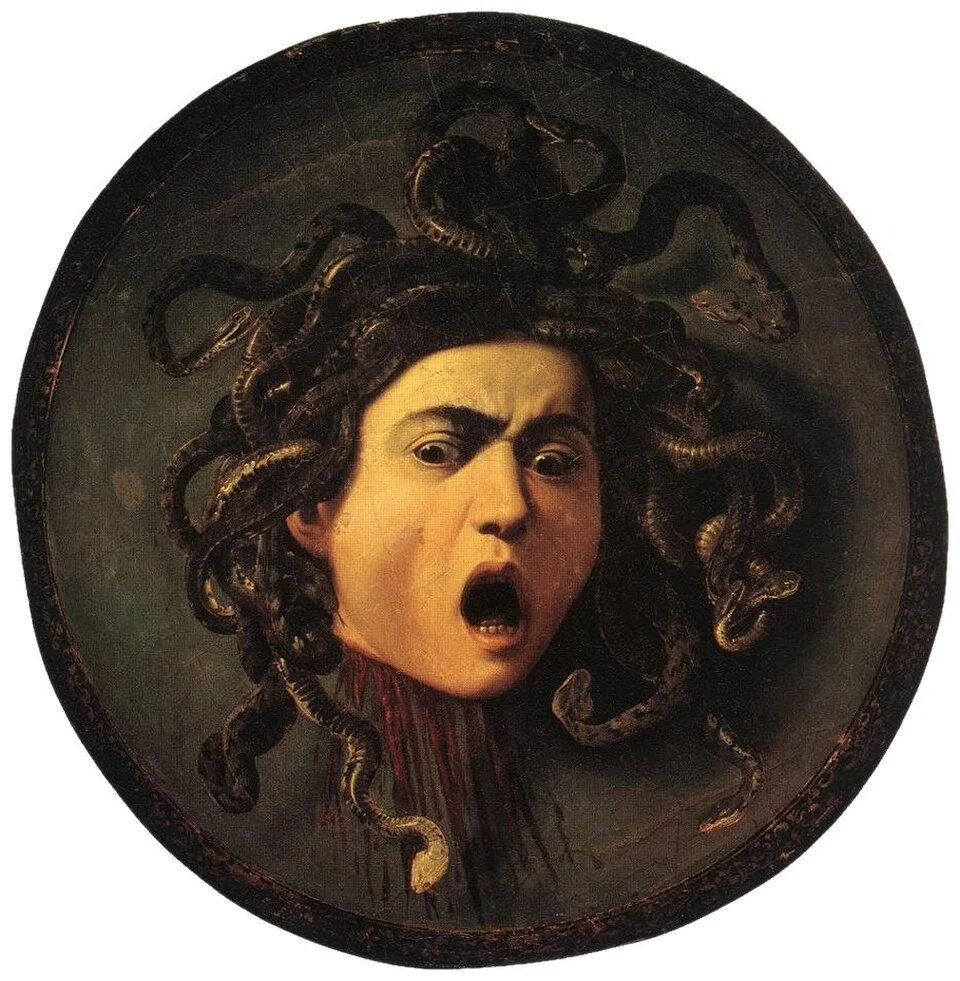
I’m sure you know what a gargoyle is – an ugly little devil-like figure, often winged, that sits high up on the outside walls of churches, cathedrals and other Christian buildings to ward off evil. Well, you’re half right. A gargoyle is one of those things, but only if it has a hole where its mouth is for water to flow out of. That’s because gargoyles actually have a very practical purpose – to channel rainwater through their mouths and away from church walls, so the stonework didn’t crumble. If it doesn’t have any water flowing through it, it’s a grotesque. So all gargoyles are grotesques, but not all grotesques are gargoyles.

‘Gargoyle’ goes back to an Old French word, ‘gargouille’, which means ‘throat’ or ‘gullet’. That comes via Medieval Latin from ‘gargola’/‘gargulio’. It’s the same root as ‘gargle’ – both words echo the sound of liquid gurgling down the throat.

So far, so good. But who decided to gussy up gutters as gargoyles in the first place? Well, we have a French legend to thank for that. The story goes that in 7th-century Rouen, a dragon-like creature called La Gargouille was terrorising the town, breathing fire and flooding it with water (I’m not entirely sure how the fires turned into floods, but let’s gloss over that). When the townspeople finally defeated it, they mounted its head and neck on the town’s church. And that’s apparently the reason why gargoyles came to be carved onto churches as both water spouts and protectors.

(In truth, it was probably just the whimsy of medieval architects and designers – but that doesn’t make for nearly as good a story.)

Gargoyles and grotesques might feel like an olde worlde thing, but they’re still being added to buildings today. Paisley Abbey in Scotland was built in the 12th century and restored in the 1990s. A stonemason hired to replace 12 crumbling stone gargoyles added a grotesque that looks exactly like the xenomorph from the 1979 film ‘Alien’ – great to see a modern movie monster keeping company with its medieval cousins.

Image credit: Colin, via Wikimedia Commons, CC BY-SA 3.0

heckle

Today, I think probably everyone thinks heckling is a thing that happens to people on stage, mostly comedians. But it has genuinely surprising origins. And they involve… sheep. Scottish sheep, to be precise.

In the early 14th century, ‘heckle’ (then spelled ‘hechel’) was a noun that referred to a comb for flax or hemp. It came into English from the Middle Dutch ‘hekelen’, which itself is from a root meaning ‘hook’ or ‘tooth’, a nod to the rows of sharp teeth on the combs. The verb followed soon after around 1350, meaning to comb out fibres before spinning them into linen.

Although flax was the main thing being heckled at this point, the same process of combing applied to wool, which is where my sheep come in. Farmers and spinners would literally heckle wool fibres into shape before weaving them into cloth.

So how did it go from combing to shouting at gigs? Come with me to 18th-century Dundee. This was the local centre of the wool trade and therefore full of hecklers, skilled workers employed to comb out wool. These hecklers had a reputation for radical politics, forming themselves into what we’d call a union today, and bargaining for better salaries and perks (mainly booze, apparently). At public meetings they’d bombard politicians with awkward questions, ‘combing through’ their arguments just like they did with those tangled fibres. And by the 1790s, ‘to heckle’ had also come to mean challenging or interrupting a speaker. Fast forward to the 19th century, and the textile sense of ‘heckle’ had pretty much faded away completely.

There you go. From pulling fibres apart to pulling people on stage apart in less than 500 years.

set

If you had to guess the English word with the most meanings, what would you go for? Okay, so there’s a bit of a spoiler in the heading – it is, obviously, ‘set’. According to the Oxford English Dictionary, ‘set’ has more definitions than any other word in English – over 430 (WHAT) across nouns, verbs and adjectives. That’s a lot of heavy lifting for one little three-letter word.

Here it is showing off just some of those meanings:

  • as a verb: you can set the table, set your alarm, set off fireworks or set a bone

  • as a noun: you can own a set of tools, perform on a film set, play a set in tennis or study a data set

  • as an adjective: you can have set beliefs, a set routine or a set expression on your face.

So how did that happen? Well, laziness, it seems. It’s much easier to adapt an existing word than come up with a new one (unless you’re Dickens, Carroll or Milton). ‘Set’ didn’t start out doing all that work though. It comes from the Old English verb ‘settan’ which was usually used to mean ‘to cause to sit or place something’. But even then people were stretching it to other things. Here’s a brief timeline of what happened next…

  • by the mid‑13th century, ‘set’ could mean ‘make or cause to do, act, or be; start or bring to a certain state’ (e.g. ‘set something on fire’, ‘set in order’) and also, randomly, ‘mount a gemstone’

  • by around 1300, it also meant things like ‘determine upon, resolve’ (as in ‘I’m set against setting that shoddy gemstone’)

  • by the late 14th century, it had also taken on the meaning of ‘make a table ready for a meal’ and ‘regulate or adjust by a standard’ (like setting a clock)

  • after that, it all went nuts and loads of other uses followed in printing, music, medicine and many more, including idioms like ‘but I’ve set my heart on that shoddy gemstone’.

The adjective version has been around a while too. In late Old English (spoken from 900–1100ish), ‘set’ meant something like ‘appointed or prescribed beforehand’, eventually shifting to ‘fixed, immovable, definite’ and later ‘ready’.

As a noun, it came about a bit later – around the mid‑15th century. Then it was linked to ‘religious sect’. Later, around Shakespeare’s time (the 16th century), it came to mean ‘collection of matching things’ (like a tea set, for example).

I asked ChatGPT for a sentence that uses lots of different meanings of set, and here’s what it came up with (deep breath):

Yesterday I set my alarm too early, so I set my feet on the cold floor and set off down the hall, only to find the builders had set ladders against the wall, while the decorator had set about painting the ceiling; in the kitchen I set a pan of milk to warm, then set the table with a breakfast set, but before eating I set my phone to silent, set my watch by the radio pips, and set my mind to solving the crossword, until the dog set up a racket at the postman, who was trying to deliver a boxed chess set, which reminded me to set aside time later to meet friends for a set at the tennis club, though I feared the rain clouds already set in would set back our plans, so I set down my pen, set my heart on baking instead, and left the cake mixture on the side to set.

That squeezes in 20 meanings of ‘set’ which are (assuming there’s anyone still reading this):

  1. set = adjust/alarm

  2. set = place (feet on floor)

  3. set off = depart

  4. set = position/prop (ladders)

  5. set about = begin/attack task

  6. set = put to cook (pan)

  7. set the table = prepare for meal

  8. set (noun) = group of items (breakfast set)

  9. set to silent = adjust/arrange

  10. set watch = regulate/adjust

  11. set one’s mind = focus

  12. set up = cause to make a noise

  13. set (noun) = boxed collection (chess set)

  14. set aside = reserve

  15. set (noun) = a tennis sequence of games

  16. set in = begin (weather)

  17. set back = delay

  18. set down = put in writing

  19. set one’s heart on = desire

  20. set (of jelly/cake) = solidify

I’m off for a lie down now.

alcohol

This is quite apt, as I’m writing this with a bit of a hangover (don’t judge me). But whether you’re a drinker or not, you might not know that the word ‘alcohol’ has an interesting backstory.

Like lots of words starting with ‘al-’, ‘alcohol’ comes from an Arabic word: ‘al-kohl’. If you’re someone who likes a smoky eye, you’ll probably recognise that last bit from kohl eyeliner. And that’s what it meant – by the 10th century, ‘al-kohl’ was used to refer to the mix of lead-based minerals (including galena, cerussite, laurionite, phosgenite, stibnite and malachite) used as eyeliner in the Middle East. (And no, rocking a lead-based cat-eye isn’t a good idea – research has found that lots of people got lead poisoning as a result. There’s an upside though. It also acted as a toxin, killing off infections that got into people’s eyes when the Nile flooded. Bonus.)

Much like me walking home after a night at the pub, the word ‘alcohol’ took a slightly circuitous route to get to English. Because kohl was made by grinding, over time, the meaning of ‘al-kohl’ shifted in Arabic to mean any very fine powder. In the 13th to 14th centuries, Medieval Latin borrowed the word as ‘alcohol’ or ‘alcochol’, using it for fine powders or refined substances that were ground or distilled. By the 14th to 16th centuries, alchemists were applying it to the purified ‘essence’ of something – for example, ‘alcohol of wine’ meant highly concentrated ethanol. In the 17th and 18th centuries, the meaning narrowed further in English to ethanol specifically, and then more broadly to any drink containing it. AKA, booze.

Us humans have been finding ways to get pissed for the best part of 13,000 years. In 2018, residue from a beerlike fermented drink was found in stone mortars in a cave in Israel. They’re believed to date back to 9750–11,750 BCE. There’s also a theory that the hunt for beer is what prompted us to start farming cereals, which led to one of the biggest social-technological changes in human history. (It might also have been the hunt for bread or porridge, but that doesn’t make for such a good story.)

buttload

This one sounds American, and that’s because it is. You’ve probably heard it US films or TV used in the same way we’d say ‘shed/shitload’: ‘I’ve got a buttload of laundry’ or ‘They made a buttload of money’. It just means ‘a lot’.

Before you start muttering ‘These words of the week have really gone downhill, Emma,’ ‘buttload’ IS a real word. And it’s nothing to do with bottoms. If you’re a gardener, you might already be one step ahead of me – because the ‘butt’ of ‘buttload’ is the same one you might use to collect rainwater, AKA a waterbutt. That’s because ‘butt’ is an old word for a barrel. But it was a more fun barrel than a waterbutt, as this one was filled with wine or beer. A standard butt held about 108 imperial gallons or around 477 litres. So a ‘buttload’ literally meant the amount a butt could hold. You can even find references to ‘buttload’s in old brewing and shipping records. (I told you it was real.)

The slang version first appeared in print as a jokey way to say ‘loads’ in the late 1980s. That was in an autobiographical cult (according to Amazon) travelogue called ‘Los Angeles Without a Map’ by Richard Rayner, first published in 1988 (and made into a film starring David Tennant in the 90s). According to the synopsis, Brit Rayner left his long-term girlfriend and steady job in London to ‘fly on a whim to track down Barbara, a bunny girl, athlete and party head’. A party head is 80s slang for someone who likes to have a good time, apparently. And Richard sounds like a buttload of dickheads, frankly.

ornery

I saw this word in the blurb of a book I was looking at, where it referred to an ‘ornery teen’. In case you haven’t come across it before, it means ‘bad-tempered or difficult to deal with’. Despite its grumpy meaning, it’s a nice word, right? But where does it come from? Well, it turns out that ‘ornery’ actually has quite an ordinary background. Literally.

Let’s take a trip to 18th-century America. The word ‘ordinary’ was often slurred in speech to something like ‘ornary’ or ‘ornery’. Because of that, this pronunciation became associated with rural, working-class or ‘uneducated’ speakers. It then started to pick up negative connotations, implying something a bit rougher or more unsophisticated than ‘ordinary’. Over time, it moved even further from its ordinary roots, coming to mean contrary, grumpy or mean-spirited.

You’re most likely to hear ‘ornery’ in the south or midwest of Murica. It turns up a lot in ‘The Adventures of Huckleberry Finn’ by Mark Twain. He often uses it to show a kind of cranky self-loathing or backwoods stubbornness (this novel is also one of the earliest and most famous literary uses of the word):

‘… though I couldn’t make out how he was a-going to be any better off then than what he was before, seeing I was so ignorant, and so kind of low-down and ornery.’

‘There was empty drygoods boxes under the awnings, and loafers roosting on them all day long, whittling them with their Barlow knives; and chawing tobacco, and gaping and yawning and stretching—a mighty ornery lot.’

‘Ornery’ is an example of how pronunciation, social attitudes and a bit of good old-fashioned snobbery can shape the meaning of a word. This is called semantic drift. Not the snobbery bit – ‘semantic drift’ is where words acquire new senses, lose old ones or completely change their meaning (like how ‘gay’ shifted from meaning ‘cheerful’ to ‘homosexual’).

Semantic drift can lead to ‘polysemy’, which is when a word ends up with more than one meaning at the same time – like ‘wicked’, for example, which can mean ‘evil’ (from ‘wicca’, the Old English word for a male sorcerer) or ‘super cool’. As well as polysemy, ‘wicked’ is also an example of semantic inversion – where a word flips to mean its opposite (‘sick’ is another one that’s done that in slang).

Finally, if you’re looking for a band name, ‘semantic drift’ would be awesome.