Old English

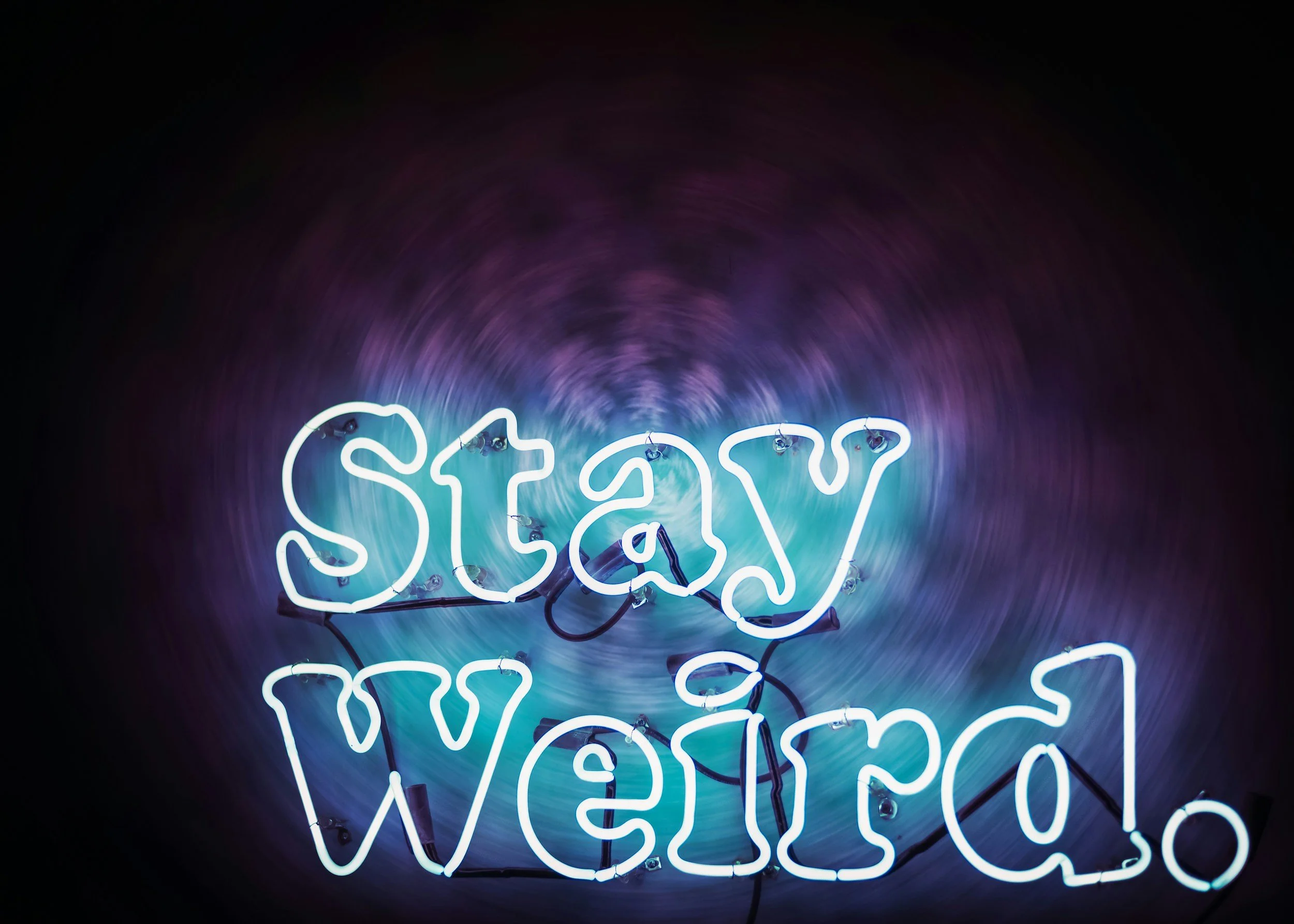
weird

I had to doublecheck this hasn’t featured as a word of the week before, as it’s a really common adjective (describing word) with an interesting backstory. Amazingly, it hasn’t, so hang on to your (witch’s) hats…

You know what ‘weird’ means. And it turns out people have been being weird for a bloody long time – it first appeared in the 700s as the Old English noun, ‘wyrd’. The word ‘noun’ is the important thing here (a noun being a person, place or thing). Rather than using ‘wyrd’ to describe someone or something like we do today, you’d talk about ‘their wyrd’, meaning the path their life would take: what lay ahead of them and how that might unfold. That’s because at this point it meant ‘fate’ or ‘destiny’. So you could say ‘Her wyrd was to carry on coming up with words of the week’.

Fast forward a few centuries to the 1100s, and the English language was changing fast. For a start, we were all ooh-la-laaing a lot more after the Norman Conquest. And as monastic scribes who were familiar with our Old English spelling system died, the French-trained ones who replaced them didn’t know what to do with all our wyrd spellings. So they started writing them the way they sounded (gasp! Although clearly that didn’t stick). That’s when ‘wyrd’ began to shift. Because it was pronounced with a long ‘ee’ sound, people started spelling it as ‘werd’, ‘weyrd’ and, finally, ‘weird’. At the same time, the noun version was slowly disappearing from everyday speech, and being replaced with an adjective that meant something like ‘linked to fate’.

In the 1600s, our old friend Shakespeare locked in the new spelling and adjectival use when he called the witches in ‘Macbeth’ ‘the weird sisters’. That still didn’t mean odd at this point though – he was using it with its old meaning of ‘tied to destiny’. But because the witches’ scenes were eerie and unsettling, and full of toil and trouble and thumb pricking, the word picked up that mood. Over the next couple of centuries, it shifted from ‘fate-related’ to ‘supernatural’, and then to the softer, everyday sense of ‘strange’ or ‘unusual’ that we use now.

Warning: contains someone puking up a baby’s finger. Shakespeare is WILD.

set

If you had to guess the English word with the most meanings, what would you go for? Okay, so there’s a bit of a spoiler in the heading – it is, obviously, ‘set’. According to the Oxford English Dictionary, ‘set’ has more definitions than any other word in English – over 430 (WHAT) across nouns, verbs and adjectives. That’s a lot of heavy lifting for one little three-letter word.

Here it is showing off just some of those meanings:

  • as a verb: you can set the table, set your alarm, set off fireworks or set a bone

  • as a noun: you can own a set of tools, perform on a film set, play a set in tennis or study a data set

  • as an adjective: you can have set beliefs, a set routine or a set expression on your face.

So how did that happen? Well, laziness, it seems. It’s much easier to adapt an existing word than come up with a new one (unless you’re Dickens, Carroll or Milton). ‘Set’ didn’t start out doing all that work though. It comes from the Old English verb ‘settan’ which was usually used to mean ‘to cause to sit or place something’. But even then people were stretching it to other things. Here’s a brief timeline of what happened next…

  • by the mid‑13th century, ‘set’ could mean ‘make or cause to do, act, or be; start or bring to a certain state’ (e.g. ‘set something on fire’, ‘set in order’) and also, randomly, ‘mount a gemstone’

  • by around 1300, it also meant things like ‘determine upon, resolve’ (as in ‘I’m set against setting that shoddy gemstone’)

  • by the late 14th century, it had also taken on the meaning of ‘make a table ready for a meal’ and ‘regulate or adjust by a standard’ (like setting a clock)

  • after that, it all went nuts and loads of other uses followed in printing, music, medicine and many more, including idioms like ‘but I’ve set my heart on that shoddy gemstone’.

The adjective version has been around a while too. In late Old English (spoken from 900–1100ish), ‘set’ meant something like ‘appointed or prescribed beforehand’, eventually shifting to ‘fixed, immovable, definite’ and later ‘ready’.

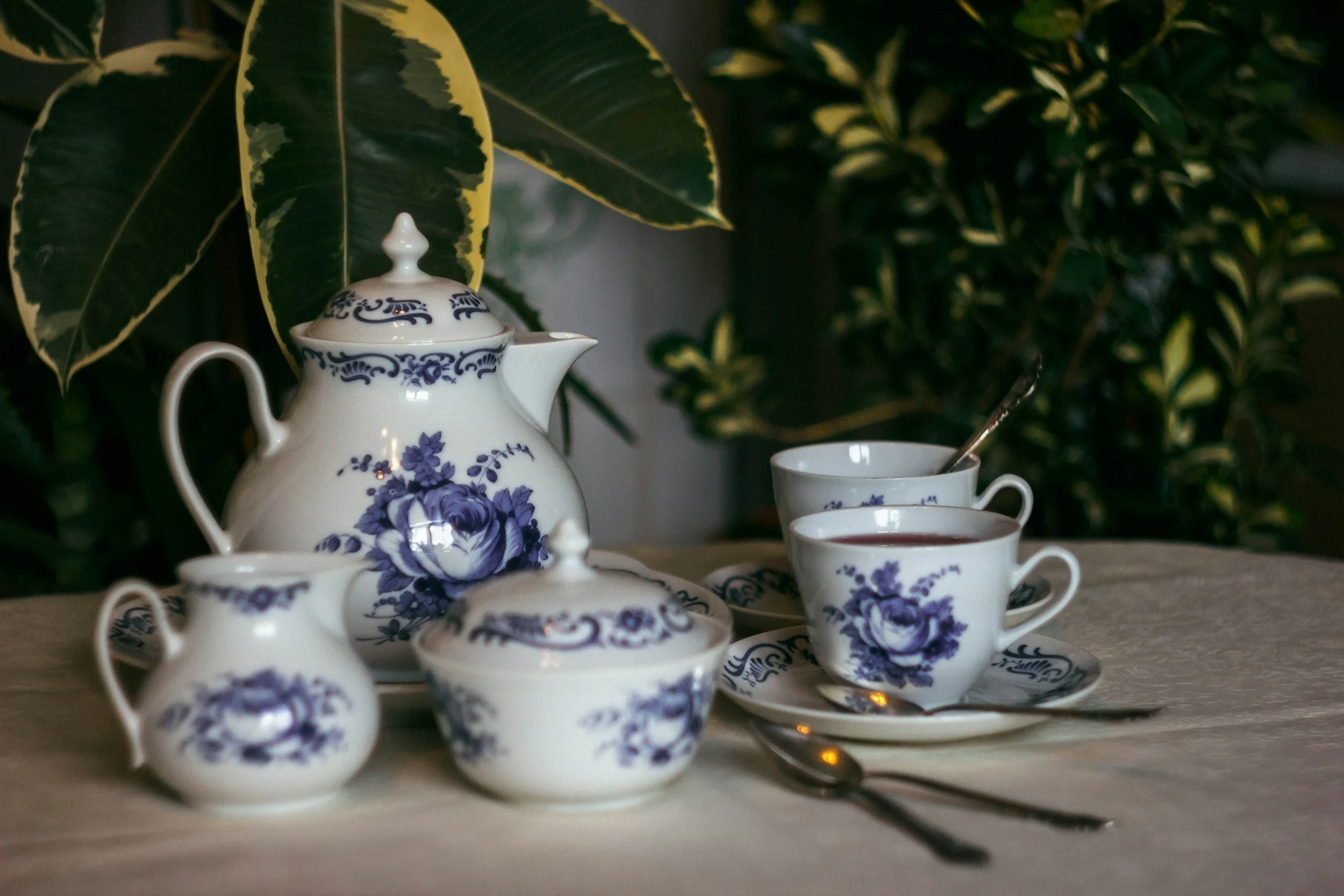
As a noun, it came about a bit later – around the mid‑15th century. Then it was linked to ‘religious sect’. Later, around Shakespeare’s time (the 16th century), it came to mean ‘collection of matching things’ (like a tea set, for example).

I asked ChatGPT for a sentence that uses lots of different meanings of set, and here’s what it came up with (deep breath):

Yesterday I set my alarm too early, so I set my feet on the cold floor and set off down the hall, only to find the builders had set ladders against the wall, while the decorator had set about painting the ceiling; in the kitchen I set a pan of milk to warm, then set the table with a breakfast set, but before eating I set my phone to silent, set my watch by the radio pips, and set my mind to solving the crossword, until the dog set up a racket at the postman, who was trying to deliver a boxed chess set, which reminded me to set aside time later to meet friends for a set at the tennis club, though I feared the rain clouds already set in would set back our plans, so I set down my pen, set my heart on baking instead, and left the cake mixture on the side to set.

That squeezes in 20 meanings of ‘set’ which are (assuming there’s anyone still reading this):

  1. set = adjust/alarm

  2. set = place (feet on floor)

  3. set off = depart

  4. set = position/prop (ladders)

  5. set about = begin/attack task

  6. set = put to cook (pan)

  7. set the table = prepare for meal

  8. set (noun) = group of items (breakfast set)

  9. set to silent = adjust/arrange

  10. set watch = regulate/adjust

  11. set one’s mind = focus

  12. set up = cause to make a noise

  13. set (noun) = boxed collection (chess set)

  14. set aside = reserve

  15. set (noun) = a tennis sequence of games

  16. set in = begin (weather)

  17. set back = delay

  18. set down = put in writing

  19. set one’s heart on = desire

  20. set (of jelly/cake) = solidify

I’m off for a lie down now.

hench(wo)man

These days a hench(wo)man is a villain’s loyal-to-a-fault sidekick, and the one who does the dirty work. But where does the ‘hench’ bit come from? Well, it actually has a quite noble backstory.

(Just FYI, henchperson sounds weird, which is why I’ve gone for that less sexist bracketed version.)

Hench comes from an Old English word ‘hengest’, which meant a horse – more specifically, a stallion or gelding ridden into battle. In the Middle Ages, a henchman (or henxman – an early spelling) was someone who walked or rode beside a noble or royal, often leading their horse. They were trusted servants, sometimes young noblemen, who acted as attendants in a lord’s household or during travel. The role was both practical and symbolic – yes, they were there to help with the horses, but having a henchman also showed off the lord’s status.

‘Henchman’ first appeared in Middle English in the 14th century. Records from 1360 mention ‘henxmen’ in the service of King Edward III. Over time, as the roles of squires and personal grooms disappeared, ‘henchman’ came to mean any loyal supporter or follower. By the 17th and 18th centuries, it was used more generally for someone who backed up a powerful figure. The more sinister meaning – a thug or blindly loyal enforcer – only became common in the 20th century, helped along by fiction books and films.

Talking of which, the most famous henchmen and women have probably gone up against James Bond. Here are just a few of my favourites along with JB’s perfectly delivered one liner.

  • Oddjob in Goldfinger (1964), who’s electrocuted when Bond jams his steel-brimmed hat into electrified metal bars: ‘He blew a fuse.’

  • Xenia Onatopp in GoldenEye (1995) is crushed against a tree when Bond shoots down her helicopter harness: ‘She always did enjoy a good squeeze.’

  • Necros, The Living Daylights (1987) (my favourite Bond film), who falls to his death after Bond cuts his bootlace during a fight hanging out the back of a plane: ‘He got the boot.’

  • Vargas, Thunderball (1965), is shot by Bond with a speargun, and impaled against a palm tree: I think he got the point.’

(Oh, and the slang term ‘hench’ for someone who’s big, strong and muscular probably does come from hench(wo)man, although no one’s completely sure.)

winnow

If you’re one of the many (including me) people who’ve read the adult fairy-tale series (and by ‘adult fairy-tale’ I mean dirty, dirty soft porn) ‘A Court of Thorns and Roses’ by Sarah J Maas, you’ll be very familiar with the verb ‘to winnow’. It’s not filthy, sorry. In the books, winnowing is the ability to transport yourself to a different location using magic. Only some of the Fae in the series can do it, as it takes lots of concentration and strength.

Winnow is a real word, although it doesn’t have anything to do with teleportation. If one of us non-Fae folk winnows, it’s much more mundane, I’m afraid – it means we’re separating grain from chaff using a current of air. That’s a fancy way of saying that you chuck it in the air and let the wind do the hard work, blowing away the lighter chaff while the heavier grain falls back down.

Figuratively, ‘winnow’ can also mean to separate the valuable or desirable part of something from the crap bit, or to sift through and choose stuff that’s useful or valuable. So it’s basically a much quicker way of saying ‘separate the wheat from the chaff’.

‘Winnow’ has its origins in Old English and Old High German. The Old English verb ‘windwian’ meant ‘to fan’ or ‘to blow’. That’s related to the Old High German word ‘winnan’, which means the same. And that word has roots in Proto-Germanic and ultimately derives from the Proto-Indo-European root *wē- or *weh- which means ‘to blow, to move air’. So it’s actually a pretty good verb for a fictional process that involves moving yourself through the air really fast.

PS I realise I sounded a bit snobby when I referred to ACOTAR as ‘dirty, dirty soft porn’. I didn’t mean to – I actually really enjoyed all of them, and leant them to both my mum and my sister (is that weird?). I’m not alone either. The series has sold over 13 million copies, is a New York Times bestseller and has been optioned for a TV series adaptation. (They are super filthy though – especially ‘A Court of Silver Flames’. So if you decide to read them, don’t say I didn’t warn you.)

Apparently this is a ‘book trailer’. I didn’t know this is a thing, but I’m here for it.

hobby

I’ve recently taken up needle-felting, which resulted in this utter monstrosity (pictured next to what it was supposed to look like – I’ve got better since, honestly). And this new hobby got me thinking, why is it called a hobby? Also, don’t give up the day job.

How it started vs how it’s going

In the 14th century the word ‘hobby’ referred to a small horse or pony, specifically one used for riding or racing. This probably comes from the Old English word ‘hobyn’, meaning small horse or pony (well, durr). In the 16th century the term ‘hobby horse’ appeared (in a payment confirmation, which I assume means ‘receipt’), which, if the etymology is correct, is actually a tautology i.e. it says the same thing twice. Like Sahara desert, Gobi desert and Kalahari desert, all of which mean ‘desert desert’ – ‘sahara’ is Arabic for ‘desert’, ‘gobi’ is Mongolian for desert’ and ‘kalahari’ is Tswana (one of the 11 official languages recognised by the South African constitution) for, you’ve guessed it, ‘desert’. Anyway, I digress. If you’re a young person, you might not know what a hobby horse is – a toy which was basically a horse head stuck on a stick that you’d straddle (sounds horrific – no wonder kids today prefer iPads) and run about with pretending to be on an actual horse.

Fast forward three hundred-ish years, and the term ‘hobby’ evolved to refer to any activity that people do for pleasure (except rude ones, obviously) or relaxation in their leisure time.

In the 17th century, people used ‘hobby’ as a bit of an insult, as these pasttimes were seen as something children did. But in the 18th century, with the advent of the industrial revolution and more leisure time for people, hobbies suddenly got cool. Although this might not have happened if anyone then had seen my zombie-alpaca needle-felting disaster.

nickname

You know what a nickname is, of course – a substitute for someone or something’s proper name. But have you ever wondered who Nick is?

As it’s Christmas, it would be great if the ‘nick’ was St Nick. But, sadly, it turns out there’s no Nick in nickname. It’s a very old word, going all the way back to the early 1300s. And it looked a bit different then, as it was spelled ‘ekename’. This literally means ‘additional name’ from the Old English word ‘eac’, which comes from ‘eacian’ – to increase. So how did it become ‘nickname’? This is down to a process called rebracketing (also resegmentation or metanalysis if you want to get really technical), which is a fancy-dancy way of saying that the ‘n’ of the ‘an’ got moved to the beginning of the noun. So it went from [an][ekename] to [a][nekename], which eventually morphed into ‘nickname’.

This specific type of rebracketing is called ‘false splitting’. Other words that have lost an ‘n’ because of false splitting include:

  • a napron ⇾ an apron (the thing you wear when you’re cooking)

  • a naddere ⇾ an adder (snake)

  • a noumpere ⇾ an umpire (the tennis people).

Another type of rebracketing is when words become split in a way that’s different from how they were built. If you just said ‘huh’, here are some examples which will hopefully help:

  • hamburger – hamburgers are called hamburgers because they come from Hamburg i.e. [Hamburg][er]. But because ham is a food, at some point we decided they were made from ham (even though they’re not), and created a new word, ‘burger’. Then we attached that to lots of other foodstuffs (cheeseburger, veggieburger, etc). Ooh, I’m hungry now

  • helicopter – this is made up of ‘helico’, from the Greek word ‘helix’ meaning ‘spiral’, and ‘pter’ from ‘pterón’ which means ‘wing’. So it’s actually [helico][pter]. Presumably because ‘pter’ is quite hard to pronouce, we’ve rebracketed it as [heli][copter] and use both of these as parts of other words (helipad and gyrocopter being the only two I can think of at the moment)

  • alcoholic – this is actually made up of [alcohol] and [ic], with alcohol being, well, alcohol, and the suffix ‘ic’ meaning ‘relating to’. We’ve rebracketed this as [alco][holic] and added the [holic] bit to anything vaguely addictive (shopaholic, workaholic, etc.).

Well, that was a lot of technical gubbins, wasn’t it? Let’s finish up with some awesome historical nicknames.

Henry the Impotent doing a medieval finger gun

  • Viscount Goderich, AKA The Blubberer: Goderich (1782–1859) holds the dubious honour of being the briefest-serving British prime minister ever (who didn’t die in office) at only 144 days. He got his nickname from crying in the House of Commons about people who died in riots against the Corn Laws (which I think makes him sound like quite a nice bloke).

  • Ragnar Hairy Pants: This one’s slightly cheeky as Ragnar might not have been a real person, although he does turn up in The Anglo-Saxon Chronicle which is apparently pretty reliable. I think his nickname’s fairly self-explanatory (he had hairy trousers). His son also had an awesome nickname – Ivar the Boneless – although no-one knows for sure where that came from.

  • Charles XIV of Sweden, AKA Sergeant Pretty Legs: He was king of Sweden and Norway from 1818 until he died in 1844, and he had good legs. Nuff said.

  • Honourable mentions to: Constantine the Dung-Named (Byzantine emperor from 741 to 775); John The Babymaker (born in 1458 and ruled Cleves – where ‘Anne of’ came from presumably, apparently fathering 63, yep, 63 illegitimate children); and Henry the Impotent (King of Castile from 1454 to 1474, who failed to consummate his 13-year marriage to his cousin, although didn’t have trouble doing it with anyone else apparently).

eavesdrop

As you’ll no doubt already know, to eavesdrop is to listen in to someone else’s convo without them knowing. But have you ever wondered what it has to do with ‘eaves’ and/or dropping stuff? Well, luckily I’m here to tell you, whether you want me to or not.

So, back in the day, ‘eavesdrop’ didn’t actually have anything to do with listening. It was actually much more literal, and referred to the water that fell from the eaves of a building (i.e. the edges of a roof which overhang the walls). The meaning then changed to refer to the ground where that water fell. In fact, there was an ancient law that meant when you were building your house you had to leave at least two feet between the edge of your eaves and your neighbour’s boundary. This was to make sure that any water dripping from your eaves stayed on your own land, thank you very much. There was even a legal term called ‘right of drip’ which entitled someone’s eaves to drip on their neighbour’s land (which sounds like a euphemism but isn’t). Eventually ‘eavesdrop’ morphed into a word describing people hanging around in that space under the eaves, listening in to conversations they shouldn’t be.

The original word ‘eavesdrop’ comes from an Old English word which goes all the way back to the ninth century. It has the fantastic spelling of ‘yfesdrype’ (and if you know how to pronounce that, will you marry me?).

Eavesdropping is a central plot point in a lot of well-known novels and stories. Here are some examples (SPOILER ALERTS):

A painting of some cardinals eavesdropping in the Vatican, by Henri Adolphe Laissement (that one in purple by the door is definitely telling the others to shut the fuck up).

A painting of some cardinals eavesdropping in the Vatican, by Henri Adolphe Laissement (that one in purple by the door is definitely telling the others to shut the fuck up).

  • the entire plot of What Maisie Knew by Henry James (which I wrote an essay on at university but never actually read) revolves around a child, the eponymous Maisie, overhearing various salacious details of her divorced parents’ love lives (I think – like I said, I never actually finished it)

  • Polonius gets stabbed in the arras while eavesdropping on Hamlet in, you’ve guessed it, Hamlet

  • the unending misery that is Atonement by Ian McEwan is all kicked off by a child overhearing what she thinks is a rape

  • all of Pride and Prejudice, and also Bridget Jones’ Diary, is centred on Lizzy Bennet/Bridget overhearing Colin Firth slagging her off.

cobweb

unsplash-image-379FlotHWkE.jpg

Obviously you know what a cobweb is (AKA things I constantly have on my car’s wing mirrors – how do the spiders stay in there?) But have you ever wondered where the ‘cob’ bit came from? Somewhat disappointingly, ‘cob’ is just an olde-worlde (Middle-English if you want actual facts) word for ‘spider’. It comes from the Old English word for spider which was atorcoppe – ‘ator’ meaning ‘poison’ and ‘coppe’ meaning ‘head’ – apparently those Old English types thought spiders were poisonous which, as far as I can work out, they never have been in the UK.

From ‘atorcoppe’ we got ‘coppeweb’ and then ‘cobweb’. While we’ve stopped calling spiders themselves ‘cobs’ (although J.R.R. Tolkien used it and ‘attorcoppe’ in The Hobbit in 1937), we’ve kept it when talking about their homes – although it might be something that dies out soon as the more pedestrian ‘spider’s web’ becomes more common.

Oh, and an old (from the 1670s) Norfolk term for a misty morning was a ‘cobweb-morning’. Nice, right?

Okay, spider facts. The biggest species of spider in the world is the Goliath birdeater. Despite its name, it very rarely preys on birds (thank god), preferring insects, worms and amphibians. It’s part of the tarantula family and can have a legspan up to 30 cm, a body length of up to 13 cm and weigh up to 175g. Yikes. The good news is that unless you’re in northern South America, you’re unlikely to come across a Goliath birdeater in your day-to-day doings. If you are there, you might also find one on a menu – they’re edible spiders and apparently taste like ‘shrimp’. Think I’ll pass, thanks.

(If you’re feeling brave, do a Google image search for ‘largest spider crab’. If the results don’t give you a little shiver then you’re a better person than me.)

metathesis

Photo by Jay Ruzesky on Unsplash.

Photo by Jay Ruzesky on Unsplash.

‘Metathesis’ is a linguistic term (wait, come back – it’s interesting, honest!) which basically means to swap bits of a word round to create a new one. The word ‘walrus’ came about because of metathesis. It’s from an old Norse word ‘hrossvalr’ which means ‘horse whale’. At some point when the word made its way over to us, somebody switched it round (it was possibly more complicated than this) and we got ‘walrus’. ‘Foliage’ is another example. The word comes from a Latin root (BOOM BOOM), ‘follium’ which means leaf. Metathesis happened to it at some point and it went from ‘foillage’ to the better known ‘foliage’ we use today.

The most famous modern (or is it…?) example of metathesis is ‘aks’ for ‘ask’. ‘Aks’ actually came first from the Old English word ‘acsian’. Because of metathesis in ye olde times (scientific, I know), there was also another version floating about – ‘ascian’ – which won the linguistic fight and is how we ended up with ‘ask’ being the norm. (I used to absolutely loath it when I heard people saying ‘aks’ instead of ‘ask’, but now I know it’s from Old English and that Chaucer used it, I don’t feel so cross about it. Because I’m a pretentious wanker apparently.)

The word metathesis itself comes from the Greek word ‘metatithenai’, which just means ‘to put in a different order’. So that’s not very interesting, sorry. There’s also a super-poncy joke in here about metathesis being a thesis about a thesis, but I’ll spare you. Because I don’t think it’d be very funny, even to me.