churlish

I don’t normally advocate for violence, but if someone calls you ‘churlish’, you should at the very least stand on their foot. That’s because it means they think you’re rude, boorish (another good insult) and generally lacking in basic social graces.

But what even is a churl?

Historically, being churlish was nothing to do with helping yourself to the last roast potato or jumping the queue in Marks & Spencer. ‘Churl’ traces its lineage back to the Old English word ‘ceorl’, which simply meant a a ‘free man’ AKA a peasant who wasn’t a slave, servant or serf.

This meaning applied up until around the 14th century. But, history books – and dictionaries – are written by the winners, which in many cases means the richey-rich. And because the wealthy elites assumed that anyone of low birth must naturally have a foul disposition and awful manners, ‘churlish’ mutated from a simple description of socio-economic status into an insult meaning ‘vulgar’ and ‘ill-bred’. Chaucer cemented the meaning in his Wife of Bath’s Tale (which contains an unashamedly sex/body-positive woman, something that’s still all-too-rare rare these days, sadly):

He nys nat gentil, be he duc or erl,
For vileyns synful dedes make a cherl.

(He is not noble, be he duke or earl,
  For churlish sinful deeds make a churl.)

Ironically, while the word ‘churl’ skidded down to the arse-end of the social scale, a first name derived from the same source remained prestigious enough to be used by many European royal families, including our own: Charles.

bathetic

No, I haven’t spelled ‘pathetic’ wrong, honest. ‘Bathetic’ is an adjective describing an abrupt turn from something serious and poetic to something regular and silly, either on purpose or unintentionally. A great example of bathos (the noun) comes in the film Castaway, when Tom Hanks’ character gets incredibly upset over the loss of his only friend while stranded on a desert island: a Wilson brand volleyball: ‘Wilson, I’m sorry! WIIILLLSSSOOONNN!’ (That made me well up just writing about it.)

‘Bathos’, as you can probably guess from the ending, comes from Ancient Greek. Then it simply meant physical depth, like a valley, trench, the sea, etc (you know what ‘deep’ means, sorry). We have satirist and writer Alexander Pope to thank for turning it into a literary joke though, which he did back in 1792. For centuries, critics had used the Greek word ‘hypsos’ (meaning ‘height’ or ‘loftiness’) to describe grand and beautiful poetry. Pope argued that if great writing reaches the heights, then terrible writing does the exact opposite: it plunges into the depths, AKA bathos.

Jane Austen was a big fan of bathos which she used to mock the overly dramatic Gothic romance novels that everyone was reading at the time. In ‘Northanger Abbey’, Austen ratchets up the tension as our protagonist, Catherine Morley, creeps into a spooky room where she opens an ancient, mysterious cabinet expecting to discover dark family secrets. And she finds… ‘[a]n inventory of linen’.

Douglas Adams was another master of bathos, and ‘The Hitchhiker’s Guide to the Galaxy’ is full of it. For example, The ships hung in the sky in much the same way that bricks don’t’. And, of course, Deep Thought (the second-greatest supercomputer in the universe) who, when tasked with finding the answer to the great question of life, the universe and everything, takes 7.5 million years to reply with ‘42’.

Warning – will make you bawl over a ball

kiki

To have a kiki means to host a casual gathering with close friends for a good old gossip, catch up and lots of laughs. It’s both a noun for the party itself and a verb for the act of doing the chatting. Linguistic and cultural historians generally believe the word ‘kiki’ is onomatopoeic, mimicking the sound of laughter or the whispering of friends sharing gossip. I first heard it in the Scissor Sisters’ song ‘Let’s Have a Kiki’ (2012) which you can listen to below (warning, contains LANGUAGE).

‘Kiki’ might sound like modern internet jargon, but it’s actually been around for a long time. It originated within the Black and Latino LGBTQ+ house and ballroom culture of New York during the late 20th century (which apparently is a long time ago now). For those unfamiliar with this underground subculture, it was a community created by queer and transgender people of colour. They formed their own alternative families known as ‘houses’ led by older mentors called house mothers or house fathers who gave them shelter and support. These houses would compete against one another at vibrant community events called balls where members would walk a catwalk, dress up in competitive categories and face-off in a highly stylised form of dance called vogueing (and yes, that is where the Madonna song came from, specifically after she saw dancers like Jose Gutierez Xtravaganza and Luis Xtravaganza voguing in NYC clubs).

In the early 2000s, a distinct, youth-lead offshoot called the kiki scene appeared. This was a network of younger houses and smaller balls designed specifically to give teenagers a less intimidating, low-pressure space to socialise, look after each another and practise their dance moves. Obviously, I’m far too old, White and British to be part of a scene like this but it sounds amazing (and a nicer place for young people than the hell that is social media. Or the school discos I went to). Long live the kiki!

freelancer

I can’t quite believe I’ve never written about the word ‘freelancer’ before, being as I am one, but apparently I’ve missed a trick there. So, why are people like me who work for themselves called freelancers? Well, it all comes down to Sir Walter Scott, Scottish novelist, poet and historian. He used the word ‘Free Lance’ in his most famous work, Ivanhoe (1820), to describe a medieval mercenary: literally a knight whose lance (hee hee) was free for hire, i.e. not pledged to any lord. Here’s a quote showing it in action:

‘ …“Trust me, Estoteville alone has strength enough to drive all thy Free Lances into the Humber.”—Waldemar Fitzurse and De Bracy looked in each other’s faces with blank dismay.—“There is but one road to safety,” continued the Prince, and his brow grew black as midnight; “this object of our terror journeys alone—He must be met withal.”’

Sir Walter (what’s that on the table next to him?)

‘Freelance’ changed to a figurative noun around the 1860s and was recognised as a verb in 1903 by the Oxford English Dictionary. It’s only recently that it’s morphed into an adjective (‘a freelance writer’), verb (‘a writer who freelances’) and an adverb (‘she works freelance’).

As well as coining the word ‘freelance’, we also have Walter Scott to thank for the fact that many of us were subjected to Bryan Adams singing ‘Everything I do’ for 16 weeks (the same length as a domestic pig’s gestation period) in 1991 as part of the soundtrack to Robin Hood, Prince of Thieves. That’s because Scott wasn't just a writer; he was a cultural phenomenon who essentially ‘invented’ the way we view the Middle Ages today. Ivanhoe’s romanticised version of knights, chivalry and tournaments sparked a massive Gothic Revival, including a real-life attempt by British nobles to hold a medieval tournament in 1839 (apparently it rained so hard the knights had to hold umbrellas over their armour, proving that the Great British Weather has been ruining days out for centuries). But what does all this have to do with Kevin Costner, Alan Rickman (god rest him), et al? Well, Scott’s responsible for the modern image of Robin Hood, calling him Locksley in Ivanhoe. He was also the first to firmly place Hood in the reign of Sean Connery, sorry, Richard the Lionheart.

Oh, and Scott also ‘found’ the crown jewels of Scotland which had been lost for over 100 years (in a chest in Edinburgh Castle – I can’t help thinking no one else had looked particularly hard). For that he earned a baronetcy, giving him that ‘Sir’. Score.

donjon

I came across this word in a short story by Naomi Novik called ‘Castle Coeurlieu’ which scared the crap out of me, something that’s quite hard to do to this hardcore horror-film watcher. If you haven’t read it, it’s a brilliant, claustrophobic tale about a woman named Isabeau who has to navigate a shifting, predatory castle to save her stepson. If I didn’t sleep on a divan bed that’s full of crap, I definitely would have had to check under it before turning off the lights.

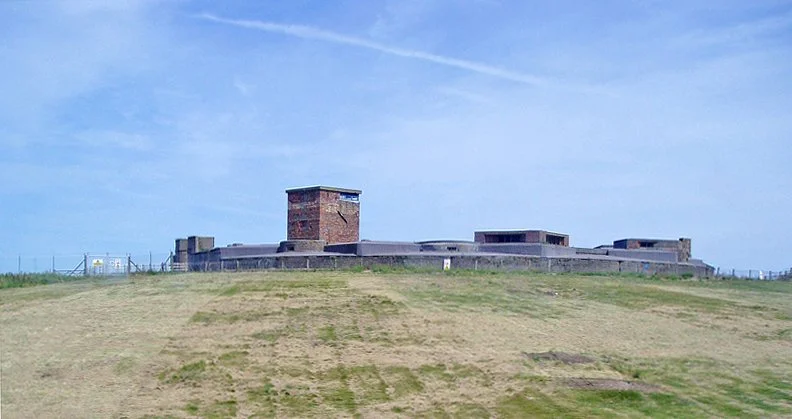
Anyway, back to the donjon. It’s the innermost keep or the strongest tower of a castle – a massive, vertical structure designed to be a final refuge when the outer walls have failed and everything has gone tits up. Think of it as a fortress-within-a-fortress. In Novik’s story, the donjon isn’t a place of safety though – it’s a sentient, hungry labyrinth where, after dark, the rules of time and space are twisted into something other.

‘Donjon’ is an Old French word, which grew out of the Gallo-Roman ‘dominio’, meaning ‘lordship’ or ‘mastery’. That’s because a donjon was all about the physical manifestation of a lord’s power – his (phallic? Probably) ‘dominion’ over the landscape. But over time, the word underwent a bit of a branding disaster. Because the safest place to stash people who pissed you off was in the windowless foundations of these towers, the ‘donjon’ of the elite eventually morphed into the English word ‘dungeon’. From proud prick to pitiful pit.

Donjons were masterpieces of medieval paranoia. Many were built with spiral staircases that turned clockwise as they went up. This gave right-handed defenders plenty of room to swing their swords down at intruders, while the attackers coming up the stairs would bash their sword arms against the central stone pillar. Why no one recruited a left-handed army is beyond me though. (Clearly there were no one women involved in this.)

procrastination

I think all of us probably struggle with a bit of procrastination from time to time. It’s when you put off doing something, usually work, by doing something else. Like spending hours creating a colour-coded revision plan meaning there’s no time left for revision (I definitely did that). Or spending three hours scrolling through food blogs to find a super-healthy recipe leaving no time to go to Tesco so you have to order a pizza (yup, also me). Ironically, this word that describes the act of avoiding work actually has a very hard-working linguistic history.

This is an AI-generated image, which should be obvious from the fact that it looks like the man has eaten a third of his cup. I apologise for using AI, which I hate, but posts with images are usually more popular, and I couldn’t find anything on Unsplash for ‘procrastination’.

‘Procrastination’ entered the English language in the mid-16th century from the Latin procrastinationem. It’s made of three parts:

  • the prefix pro-, meaning ‘forward’ or ‘forth’

  • crastinus, meaning ‘belonging to tomorrow’ (from cras, the Latin word for, you’ve guessed it, ‘tomorrow’)

  • -ation, a standard suffix that turns a verb into a noun describing an action or process.

Put it all together, and you get, literally: ‘The action of putting forward until tomorrow.’

Procrastination isn’t always the bane of creativity. For example, Leonardo Da Vinci was the patron saint of unfinished projects, taking 16 years to finish the Mona Lisa. The good news is that he didn’t just sit around colour coding his paintbrushes or scrolling through the renaissance equivalent of TikTok. He ‘productively procrastinated’ by studying (among others) optics, light and human anatomy. And that meant that when he finally returned to the painting, he’d mastered a technique called sfumato (smoky blurring) that he hadn’t been able to do previously. So if he’d actually finished the enigmatic painting on time, it likely wouldn’t be the masterpiece it is today.

Another notorious historical procrastinator was Queen Elizabeth I, who apparently drove her advisors nuts taking her time over signing death warrants and marriage treaties. The good news is that by procrastinating on executing Mary, Queen of Scots for nearly 20 years, Lizzie avoided a premature war with Catholic Europe. By the time she finally did sign the warrant in 1587, England was militarily stronger and better prepared for the eventual Spanish Armada. So that procrastination kept England out of a potentially bloody – and expensive – conflict that could have gone on for decades. Oh, and by not choosing a husband, Liz made sure every country in Europe was concentrating on getting in her pants rather than on invading her queendom.

So next time you find yourself doing anything but the thing you’re supposed to be doing, fret not – you’re not being lazy, you’re just applying Elizabethan diplomacy.

rival

Ah yes, my favourite novel by Jilly Cooper (I’m not ashamed to admit I love her). A rival is, of course, someone you compete with for the same thing – like the last roast potato at a family dinner or the armrest on an aeroplane. ‘Rival’ comes from a Latin word, rivalis, which literally means ‘one who uses the same stream as another’ (rivus = brook or stream – but not ‘river’, weirdly, which is flumen). But where does the conflict and side-eye come in? Well, just as it is now (and rapidly becoming more so thanks to AI and its thirsty data centres), water was a precious commodity in ancient times. If you and your neighbour were using the same stream, you were naturally competing for that resource. That’s why, in Roman law, rivales were neighbours who had ‘river rights’ to the same water source. Which of course led to lots of argy-bargy about one person taking too much. So it wasn’t long before the word rivalis came to mean ‘competitor’ or ‘adversary’.

As Latin evolved into the Romance languages, rivalis entered Old French as ‘rival’. But the literal watery meaning fell away while the ‘competitor’ meaning took over, specifically in the context of love or honour.

While ‘rival’ existed in Latin and French for yonks, the word didn’t make its debut in English until the late 16th century, first appearing in print in 1577. This was in ‘Holinshed’s Chronicles’ (specifically ‘The Firste Volume of the Chronicles of England, Scotlande, and Irelande’), an enormous history of Britain which was a major source of inspo for lots of Shakespeare’s plays (as well as works by Christopher Marlowe and Edmund Spenser). Here it was used in the context of political and military competition. (There’s also a separate, slightly earlier variation of the word – ‘rivality’, meaning the state of being rivals – which turned up in print as early as 1528, but that obviously didn’t make the cut.)

‘Rival’ initially arrived as a noun (i.e. a person, place or thing) in English, and we have Willy S (as per bloody usual) to thank for verbifying it (i.e. turning it into an action – to rival someone). He first did that in ‘King Lear’ (1605–1606) in a now rather suspect reference to Cordelia as a prize for two men to fight over:

My lord of Burgundy,
We first address toward you, who with this king
Hath rivaled for our daughter. 

Not bad for a word that started as a plumbing dispute, right?

treacle

I’m pretty sure you know what treacle is – uncrystallised syrup made during the refining of sugar. Okay, maybe you didn’t know that. But I’m sure you do know that it’s the sticky stuff that we use in many a pudding (my mum makes a killer treacle sponge pudding). Why ‘treacle’ though? Well, it turns out the word itself has distinctly medicinal origins.

As so many of these stories do, this one begins in ancient Greece. The word we’re interested in this time is thēriakos, meaning ‘of a wild animal’. Since lots of wild animals enjoy taking a chunk out of us human beings, thēriakē came to mean ‘antidote against a poisonous bite’. Latin borrowed this as theriaca, and the word eventually made its way through Old French into Middle English as triacle with this meaning. The earliest recorded use of it in English dates to 1340, in a text called ‘Ayenbite of Inwyt’ where it refers to an antidote to poisons and snakebites.

(Just a quick aside: the ‘Ayenbite of Inwyt’ – literally the ‘again-biting of inner wit’ or the ‘Remorse of Conscience’ – is the title of a confessional prose work written in a Kentish dialect of Middle English. Wikipedia describes it as: ‘Rendered from the French original, one supposes by a “very incompetent translator,” it is generally considered more valuable as a record of Kentish pronunciation in the mid-14th century than exalted as a work of literature’. BURN.)

So how did we get from ‘remedy for painful bite’ to ‘sticky stuff on puds’? Well, theriac recipes often contained honey in large quantities – sometimes three times the weight of all the dry ingredients combined. Because of this, the meaning of ‘treacle’ later became associated with the sticky dark syrup left over from the process of sugar refining. This was probably because of a perceived resemblance to the old medicinal preparations. Or maybe just because it was really sweet.

‘Treacle’ is primarily a British term for what Americans call molasses, even though the two products aren’t actually identical – molasses is typically boiled for longer, creating a thicker, darker liquid with less sugar (and less fun, by the sounds of it). The figurative sense, meaning cloyingly sentimental, does appear in some American writing, but it’s less common than it is in British. Oh, and the pet name (‘Hello Treacle’), beloved of Pete Beale in Eastenders (showing my age there), comes from Cockney rhyming slang, where ‘treacle tart’ means ‘sweetheart’.

havoc

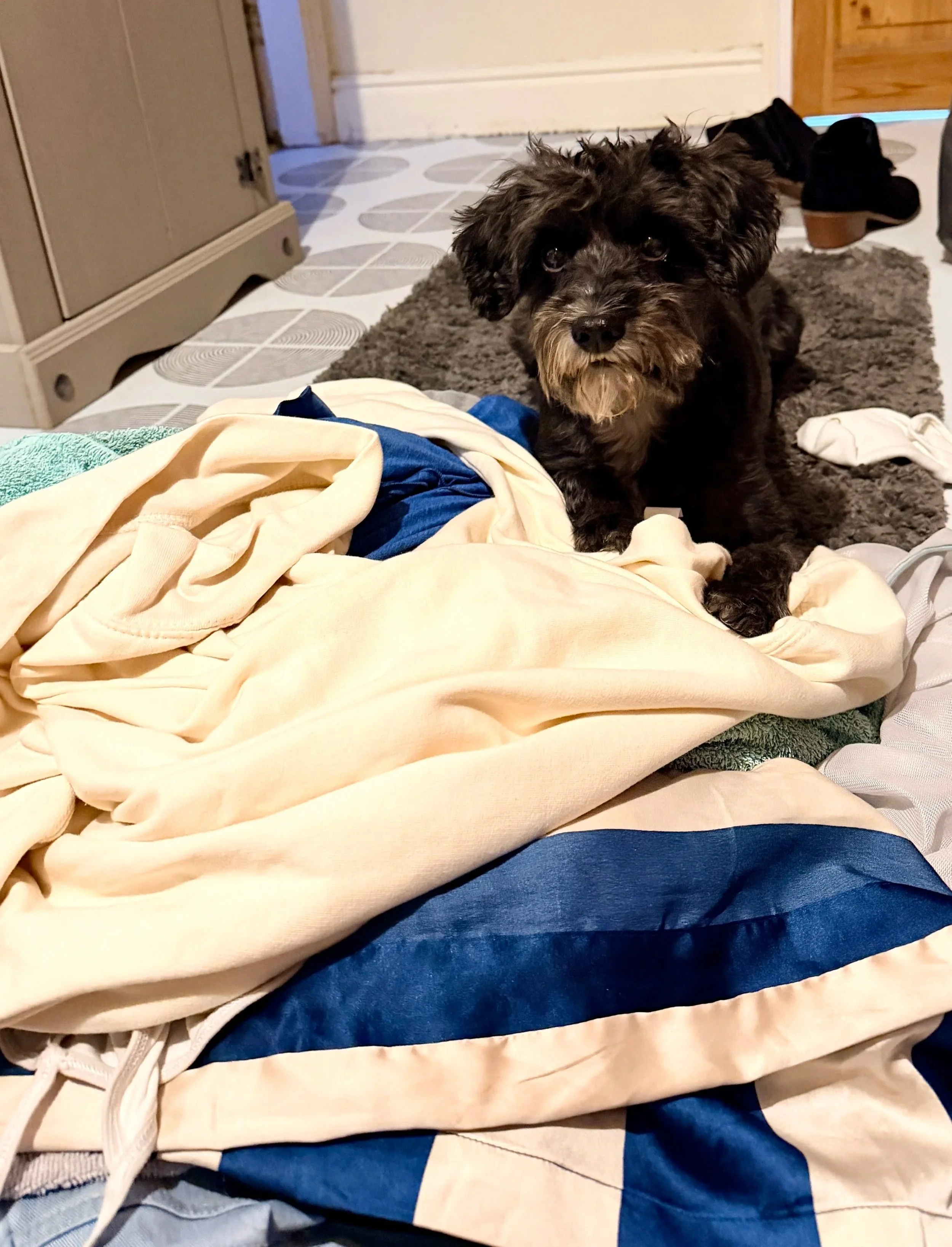
If you’ve ever come home to find your usually well-behaved (well, kinda) cavapoo has decided to redecorate the lounge using the stuffing from three cushions and the contents of the kitchen bin, you’ve seen havoc in action.

As a noun, ‘havoc’ describes widespread destruction, confusion or disorder. It’s the kind of chaos that doesn’t just happen; it’s wreaked. And it turns out that its origins are rooted in a specific – and actually quite terrifying – military command.

In the Middle Ages, ‘Havoc!’ was a formal cry used during a conflict. It signalled that soldiers could start plundering and looting, grabbing whatever the olde equivalent of flat-screen TVs and games consoles was, and generally causing as much mayhem as they liked. The command came from an Old French word, havot, meaning pillaging. During the 14th century, as French-speaking officers gave orders to English-speaking troops, the soft French ‘t’ was gradually hardened into the English ‘k’. This is probably due to something called folk etymology, which is when a foreign word enters a language and people subconsciously ‘correct’ it to something that already sounds familiar to them. In this case, that was hafoc, the Old English name for a predatory hawk – to a 14th-century soldier, the command to start looting and pillaging might have felt conceptually very similar to the action of a hawk swooping down to snatch its prey.

Havoc time (did you just read that as MC Hammer? Maybe that’s just me) was so destructive that it had to be legally regulated. In 1385, Richard II issued the ‘Statutes of War’, which specifically forbade shouting ‘Havoc’ without authorisation under penalty of death. So anyone who lost their head and got overly enthusiastic about being first to the lootfest would quite literally lose it for real shortly after.

The most famous literary appearance of ‘havoc’ comes courtesy of, you’ve guessed it, William Shakespeare. In Julius Caesar, Mark Antony promises to ‘Cry “Havoc!” and let slip the dogs of war’. Today, we use ‘havoc’ for much lower stakes, though I’m fairly certain my dog still hears the 14th-century call to arms the second the front door clicks shut behind me.

laconic

If you’ve ever had a text from someone consisting entirely of the letter ‘k’, you’ve been on the receiving end of laconic. As an adjective, it describes a way of speaking or writing that uses the absolute minimum number of words to get a point across. No padding, no pleasantries, no ‘I hope this email finds you well’. Just straight to the point, like a cricket ball to the crotch.

But, why ‘laconic’? Well, it comes from Lakonikos – a Greek adjective for anything relating to Laconia, a region on the south-eastern part of the Peloponnese peninsula. Laconia was home to Sparta and (obviously) the Spartans, whose six-packs you may remember from Zack Snyder’s naked chest-fest, 300. The Spartans were not big talkers. And while other Greeks like the Athenians were busy writing philosophy, performing tragedies and inventing democracy, the Spartans were honing an arguably more useful skill: saying a great deal by saying almost nothing.

The most famous example of Spartans being spartanly (yep) with their words comes from Philip II of Macedon. He was a man who loved to open a can of whup-ass (and dad to Alexander the Great), having taken Macedon from a fairly insignificant kingdom to a power that conquered most of Ancient Greece in less than 25 years. Turning his attention to Sparta, he sent a message asking whether he should come as a friend or a foe. The reply was ‘Neither’. He then sent the message:

If I invade Laconia, I shall turn you out.

The Spartans replied with a single word:

If.

There’s also a story from Plutarch of a Spartan mother sending her son off to battle. After handing him his shield, her farewell advice consisted of five words: ‘Either this or upon this’, meaning ‘Come back with your shield, or on it’ – returning without your shield meant you’d thrown it away to run faster (the ancient Greek equivalent of updating your LinkedIn profile before handing in your notice). Inspiring and absolutely terrifying.

So next time someone accuses you of being curt in an email or a text, tell them you weren’t being rude, you’re just channelling your inner Gerard Butler/Greek warrior. Sparta would be proud. Although they probably wouldn’t say so.

(PS The Philip vs Sparta story would have been great if it ended ‘Philip did not invade Laconia’, which is what ChatGPT told me when I was researching this. When I checked it elsewhere, which thankfully I always do since ChatGPT told me a bunch of lies previously, it turns out that Philip did indeed invade Laconia, devastating large parts of it and kicking the Spartans out. In hindsight, maybe a few more words might have helped.)

chauffeur

Today a chauffeur is someone employed to drive someone else, usually to posh places in a posh car. But why are they called a ‘chauffeur’? Turns out the word has surprisingly hot origins. Literally.

As you might have already guessed, ‘chauffeur’ is a French word. It means ‘stoker’, as in someone who looks after a fire. That comes from the verb ‘chauffer’, meaning ‘to heat’, which goes all the way back through Old French to the Latin calefacere, a compound of calere (‘to be warm’, which is also where we get the word ‘calorie’ from, as well as ‘chafe’) and facere (‘to do’).

So what does driving celebs and rich people around have to do with poking a fire? The term emerged in the 1890s, when French manufacturers dominated the early motor industry. They used Daimler engines fitted with something called hot tube igniters. These had to be heated with a Bunsen burner before the engine could fire, and the platinum tubes needed careful ongoing maintenance. This delicate, skilled work fell to a dedicated person called, you’ve guessed it, a chauffeur. By 1900, the hot tube was obsolete but the role didn’t disappear – it evolved, with the chauffeur becoming driver, mechanic and roadside repair expert as pneumatic tyres brought a whole new set of problems. The chauffeurs themselves were causing issues too – a 1906 article in The New York Times reported that ‘the chauffeur problem today is one of the most serious that the automobilist has to deal with’, complaining that ‘young men of no particular ability, who have been earning from $10 to $12 a week, are suddenly elevated to salaried positions paying from $25 to $50’. Plus ça change.

In modern French, ‘chauffeur’ is used more broadly to mean any professional driver, including bus and taxi drivers, without the luxury connotations we attach to it in English. There’s also a female version, ’chauffeuse’, although that’s pretty rare (as are female chauffeurs, presumably).

One particularly notable chauffeur was Roosevelt Smith Zanders (1912–1995). He was known for driving many famous clients around, including Richard Nixon, Margot Fontaine, Winston Churchill, John F Kennedy and Lana Turner. He also drove 100 pounds of shrimp to John Wayne while he was in Paris, delivered $200,000 in cash for Aristotle Onassis and sent two tiger cubs to the President of Panama. Not bad for someone who started out with a single Cadillac.

eigengrau

If you’ve ever woken up in the middle of the night and stared moodily into the darkness, you might have noticed that it isn’t actually black. Instead, it’s a faint, grainy grey. And believe it or not, that colour has a name – and no, it isn’t ‘grey’. It’s eigengrau.

Eigengrau is the shade your eyes perceive in complete darkness, when there’s no external light entering them at all. Rather than seeing pure black, our visual systems produce a sort of background ‘noise’, and the result is this soft grey-ey haze.

Vantablack is created by growing long microscopic carbon nanotubes in a field so dense that almost all light is trapped inside it.

You can probably guess that the word comes from German. ‘Eigen’ means ‘own’ or ‘intrinsic’, and ‘grau’ means, you’ve guessed it, ‘grey’. So it literally translates as ‘intrinsic grey’, which sounds like a colour they paint government buildings with or, more romantically, ‘one’s own grey’. The term is sometimes also called the ‘dark light’ of vision (and, more boringly, ‘visual noise’ or ‘background adaptation’). Scientists began studying this effect in the late nineteenth century while investigating how the retina behaves without stimulation from light.

So why does eigengrau look slightly lighter than true black? The effect comes from spontaneous activity in the photoreceptor cells in the retina – even when they’re not being hit by light, they still fire occasionally, and the brain interprets that activity as a faint visual signal. That’s also why you might notice little flickers or speckles when you close your eyes in the dark.

All this talk of colours reminds me of Vantablack, the blackest black of paints. It was developed by British company Surrey NanoSystems to use on stealth satellites, and reflects almost no light at all. Anish Kapoor, the British sculptor who designed the Orbit tower for the London Olympics, was given exclusive rights to use Vantablack artistically. That pissed off a load of artists who felt a colour (or colour-like material) shouldn’t be locked up by one person. One of the best responses came from another British artist called Stuart Semple. In 2016, he released a very bright pink pigment called Pinkest Pink, that he sold online with one condition: buyers had to confirm they were not Anish Kapoor and had no intention of letting him use it. The sales page even included a declaration along the lines of: ‘By adding this product to your cart you confirm that you’re not Anish Kapoor…’.

Semple used the same rule for many of his later materials too, including Black 2.0, Black 3.0, and various other pigments and paints, which were all sold to the public ‘except Anish Kapoor’. In June 2024, Semple officially changed his name to Anish Kapoor though, which presumably means he can’t use his own products.

braggadocio

If you ever watch the news, ‘braggadocio’ might sound familiar. During the 2016 US election, Donald Trump famously used the adjective ‘braggadocious’. At the time, most of us assumed he was talking rubbish as per usual – see ‘panican’ (used during his second term to describe those panicking over his economic tariffs), ‘bigly’ (often interpreted as ‘big league’) and ‘I’ve stopped eight wars’. But ‘braggadocious’ is actually rooted in a word that’s been around for over 400 years (although I doubt DT knows that). And ironically, both the word and its history describe him perfectly.

‘Braggadocio’ is an uncountable or mass noun (exactly what it says on the tin – examples include ‘bravery’, ‘nonsense’ or ‘happiness’) that describes empty, arrogant boasting or a swaggering manner that isn’t backed up by much substance. Despite its Italian looks, ‘braggadocio’ wasn’t born in the olive oil-drenched streets of Florence or Rome – its origins are actually a lot closer to home. It was cooked up in 1590 by the English poet Edmund Spenser for his epic poem, The Faerie Queene, one of the longest poems in the English language at a bum-numbing 36,000 lines and over 4,000 stanzas.

In the poem, Spenser created a character named Braggadocchio – a ‘knight’ who was all mouth and no trousers. He first appears in Book II, Canto iii when he steals the horse and spear of the hero, Sir Guyon. He then spends the rest of the book riding around on his fell-off-the-back-of-a-lorry warhorse, pretending to be a legendary warrior while actually being terrified of his own shadow. Why Braggadocio? To give the character an air of pretension (and perhaps to make him sound like the vainglorious characters found in Italian comedy), Spenser took the very English word ‘brag’ and slapped a pseudo-Italian suffix on the end of it. It’s the linguistic equivalent of putting a spoiler on a 2005 Vauxhall Corsa.

Eventually, ‘braggadocio’ escaped the poem and became shorthand for anyone whose mouth is (to quote that literary giant, Limp Bizkit) writing cheques that their ass can’t cash. Whether it’s a stolen horse in an epic poem or a stolen election narrative on social media, ‘braggadocio’ remains the ultimate red flag for a man with a massive ego who’s all wrapping paper and no present.

genuflect

To genuflect is to bend one knee to the ground, usually as a sign of reverence or respect. It’s mostly associated with churches and religion, particularly Catholicism – people genuflect before entering a pew. It also has a metaphorical meaning: to show excessive deference or subservience to someone. As in, ‘I'm not going to genuflect to my dog just because he’s the most gorgeous boy in the world’ (even though I spend a lot of time cramped into weird positions because he’s asleep on me and I don’t want to upset him by getting blood back into my limbs).

‘Genuflect’ comes from a Late Latin word, genuflectere, and it’s pretty straightforward when you break it down: genu means ‘knee’ and flectere means ‘to bend’. So literally, knee-bending. The Romans were nothing if not literal. (Oh, and ‘Late Latin’ refers to the form of Latin used roughly from the 3rd to the 7th centuries AD i.e. when the Roman Empire was beginning that falling business. At this point, Latin was becoming less standardised, picking up influences from regional dialects and the languages of the various peoples who were interacting with (or invading) the Roman world. Grammar got simpler, new words were created and it moved away from the highly polished Classical Latin of Cicero and Caesar.)

Flectere has been quite busy in the English language, popping up in all sorts of places. For example, it’s where we get ‘reflect’ from (bending light), ‘deflect’ (as in turning aside) and ‘inflect’ (bending as in modulating something, usually your voice). Meanwhile, poor old genu has been rather left on the sidelines. Its only real claim to fame beyond genuflect is ‘geniculate’, a scientific term that means ‘bent abruptly at an angle like a bent knee’. Sounds painful.

You might look at ‘genuflect’ and think ‘well, surely that’s also related to “genius” and “genuine”’, unless, unlike me, you have a life. Well, I’m afraid that, despite the resemblance, those words come from an entirely different Latin verb, gignere, which means ‘to beget’. So no knees involved whatsoever. But, if you’re hungry for more knee-based etymology, the Latin genu is related to the Greek gonu (also meaning ‘knee’), which gave us gōnia meaning both ‘knee’ and ‘angle’. And that means that polygons, pentagons and hexagons are all essentially named after knees. You’re welcome.

watershed

If you grew up watching British TV, you’ll know what ‘watershed’ means. It’s that time in the evening – 9pm, traditionally – after which the figurative (and literal, sometimes) gloves come off. There’s effing and jeffing all over the show, blood and guts strewn everywhere, and you’re falling over naked bodies. Or maybe that’s just the TV shows I’ve been watching.

But why is this line between family-friendly TV and X-rated adult-only programming called ‘the watershed’?

Well, it’s pleasingly literal. The term ‘watershed’ comes from geography, and refers to a ridge or boundary that separates one drainage area from another – so rain falling on one side flows one way while rain falling on the other side goes somewhere else entirely. The word has been around since at least the early 19th century, and is made up of ‘water’ (obviously) and ‘shed’ in the sense of ‘to divide’ or ‘to part’ (so nothing to do with that place you keep your tools). That idea of a clear dividing line is exactly why UK broadcasters borrowed ‘watershed’.

Watershed times vary all over the world. For example, in Australia, it’s much earlier than here – 7.30 pm. While in Italy, they save the smut til much later, at 10.30 pm. We definitely have the best name for it though, with the exception of the US who call it the ‘safe harbor’, although that’s industry jargon that most audiences wouldn’t recognise. In Australia, it’s just called ‘adult viewing time’ – very on the nose and therefore on brand from the country that brought us the Great Sandy Desert. In France, it’s ‘heure de protection des mineurs’, which you can probably figure out even if you don’t speak French. And in Germany, it’s efficiently called ‘youth protection’. Compared with those, ‘watershed’ is unusually elegant. It’s abstract, metaphorical and euphemistic – a very British way of saying ‘put the kids to bed, things are about to get a little bit rude’.

woebegone

If someone’s woebegone, they’re really sad. Not just a bit fed up, but proper miserable (think someone who’s just accidentally pressed ‘reply all’ or called their teacher ‘Mum’).

At first glance, ‘woebegone’ looks pretty straightforward – ‘woe, begone’, right? Well, no. ‘Begone’ does mean ‘go away’, but the second part isn’t actually anything to do with ‘begone’ at all. Instead it comes from ‘begān’, an Old English verb meaning ‘to go about’ or ‘to befall’. So woebegone isn’t sending woe away; it’s actively surrounding you. A figurative shitstorm, if you will.

‘Woebegone’ has been doing this slightly misleading double act since at least the 14th century. According to the OED, its earliest recorded use is from 1325 in Middle English, where it appears in forms like ‘wo-bigon’.

One of the reasons I chose this word was because I thought there was a species of shark called a woebegone, and I was going to regale you with interesting facts about it. But it turns out that it’s actually called a wobbegong. Still, that’s similar, so let’s talk about them anyway. Wobbegong is the common name for carpet sharks, so-called because they literally look like carpets and like to lie on the floor (well, seabed) – they can pump water over their gills which means they can sit quietly, then ambush their prey (most sharks need to keep moving to breathe). They’re believed to have got their name from the Australian Aboriginal word for ‘shaggy beard’, which is another reference to the way they look – they have fringed skin flaps, or dermal lobes, around their heads and mouths. These flaps help them camouflage when they’re pretending to be carpets on the sea floor, as they break up the outline of the shark so they blend into their surroundings even more.

All completely irrelevant, but interesting, I’m sure you’ll agree.

callithump

A ‘callithump’ is a noun that describes a noisy, boisterous band or parade. Think drunken revelry, tins banging, horns blaring, maybe a smattering of cowbells and a general ruckus. So just your average Friday night on most British high streets then. You can also use it as an adjective (describing word) – so something can be 'callithumpian'.

The origin of the word is a bit murky, but most authorities agree it comes from an older British dialect term, ‘Gallithumpian’. The capital ‘G’ here isn’t a mistake – Gallithumpian is a proper noun (a unique person, place or thing) and, just in case you’re as geeky as me, nothing to do with Doctor Who’s home planet. In the late 18th and early 19th centuries, Gallithumpians were groups who deliberately turned up at elections, hustings and public gatherings to make as much noise as possible – banging pots, ringing bells and generally drowning things out. While this might sound like a protest, contemporary accounts describe Gallithumpians less as protesters and more as organised nuisances – they arrived, f*cked things up, then went home again.

Etymologists usually break ‘Gallithump’ down into elements meaning noise or bluster simply combined with ‘thump’. So it’s slightly mocking label for people whose main contribution was a load of noise and disruption rather than an actual counterpoint. Hmmm, I know a few people that could refer to.

Over time, ‘Gallithump’ lost its political edge and shifted from a label for the people involved to a description of the behaviour itself. ‘Gallithumpian’ softened into ‘callithumpian’, and eventually into ‘callithump’.

The first recorded use of ‘callithump’ as a noun in the sense of a riotous parade dates to 1843. In 19th‑century America the term was often used to describe makeshift celebrations or mock serenades – sometimes cheerful (pots and pans for a wedding, say), sometimes protest‑style chaos (anything to do with Donald Trump then).

So next time you see a chaotic, clang-and-carnival-style parade coming down your street, you might think: ‘Ah yes… a proper callithump.’ And, if you’re me, stand very still until it passes.

chout

I discovered this word through one of my mum’s random Wordle guesses (as we all do, sometimes she just tries random letters until Wordle says ‘yes’). And being as it’s nearly Christmas, it’s actually quite fitting. Well, half of it is, anyway. That’s because ‘chout’ has two completely different meanings.

Let’s start with the (sort-of) Christmassy one. ‘Chout’ in this sense means to joke, play the fool or mess about in a silly, good‑natured way. This meaning appears in some older English dialect dictionaries, like the Century Dictionary, a massive, multi-volume English dictionary originally published in the late 19th century.

The second, and better documented, meaning of ‘chout’ comes from a tax that Maratha rulers in western India demanded from neighbouring territories during the 17th and 18th centuries. (The Maratha were a powerful group of rulers and warriors who controlled much of western and central India during this time.) They called this ‘chauth’, which meant ‘a quarter’ in Marathi, because they demanded a quarter of the revenue from the territories they targeted. I say ‘tax’, but it was essentially protection money which rulers paid to avoid being raided by the Marathas. British administrators in India picked up the word and began describing it in English as ‘chout’.

There you go. I hope we all have a good chout this festive season – just the first kind, though. If you find yourself demanding payment from your neighbours in exchange for not setting fire to their recycling bins, you’ve got the wrong one.

(PS While I was researching this post I found Chout, a Chicago-based 90s-style grunge rock band known for their Alice in Chains-like sound and music. And I think I love them.)

tare

I have a dog with a dodgy stomach, which means I spend a lot of time weighing various potions and powders for his food. My weighing scales flash up with the word ‘tare’ every time I turn them on or press the ‘zero’ button. Now I don’t usually spend a lot of time thinking about weighing scales, but I do spend a lot of time thinking about words – and I realised I have no idea what ‘tare’ actually means.

Strap yourself in...

It turns out that ‘tare’ is the name for the weight of any container or packaging that isn’t part of the thing you actually want to measure. So when my scales show ‘tare’, they’re telling me they’ve set that deducted weight to zero. Put a bowl on, press the zero button and the scales adjust the tare so you only see the weight of the food itself.

‘Tare’ has travelled a long way to get to my dog’s daily allowance of probiotics. It comes from Middle French (also ‘tare’), which in turn comes from the Medieval Latin word, ‘tara’. Go one step further back and you reach the Arabic word ‘ṭarḥ’ – this means ‘that which is deducted’ or ‘something thrown away’. It’s a very old word in Arabic that’s been around for more than 1,400 years (and its earliest form goes back even further than that). But it’s always referred to the bit you don’t count.

So that’s the story behind ‘tare’. A word that has crossed continents and centuries to help me measure out pumpkin powder for a dog who still hasn’t learned not to eat disgusting things he finds in the street.

dragoon

I’m not sure what I thought ‘dragoon’ meant, but I think I’ve been conflating it with ‘platoon’ all my life. And maybe also ‘doubloon’.

It turns out that ‘dragoon’ isn’t even a noun (a person, place or thing) – it’s a verb (doing word). If you dragoon someone, it means you pressure or force them into doing something they don’t really want to do. It’s not always aggressive – it could just be heavy-handed persuasion – but it definitely suggests a lack of choice. Think of being ‘dragooned into organising the office Christmas party’ when all you want to do is go home and watch ‘Kirstie’s Handmade Christmas’ with an eggnog. (Every Christmas I thank god I no longer have to run the gauntlet of senior colleagues and free alcohol. And that’s all I’m going to say about that.)

Like many good words, ‘dragoon’ started out in uniform. In the 1600s and 1700s, a dragoon was a mounted European infantryman – someone who rode to battle but fought on foot. They were named after their weapon, a short musket so-called due to its resemblance to a fire-breathing dragon when fired.

Here’s where things get a bit darker. Under Louis XIV in 17th-century France, dragoons were sent to persecute French Protestants (Huguenots) – often moving in with them forcibly and staying until they converted to Catholicism. This coercion was so notorious that ‘dragoon’ eventually became a verb, meaning to force someone to do something, echoing that original, presumably very literal, form of arm-twisting.

So next time someone’s trying to make you do something you don’t want to, try telling them you refuse to be dragooned – it might not get you out of it, but at least your resistance will sound stylish.