
South Korea

flensing

I heard this gruesome little word on ‘Bookish’, a new detective show written by and starring Mark Gatiss, and set in post-war London. It isn’t for the faint-hearted or any animal lovers out there – it refers to the slicing and stripping of skin and fat from whales or seals.

‘Flensing’ itself is pretty old, and comes from an Old Norse word, ‘flesja’, meaning ‘to flay’. It came to English in the 1700s via the Netherlands and the Dutch word ‘flensen’, when commercial whaling was at its peak. At that time, every part of the whale had a use, including oil for lamps, baleen for corsets and blubber for soap.

Nowadays, most of us won’t hear or see flensing outside of ‘Moby Dick’ or grim Arctic documentaries. And thank goodness – because whales are some of the most extraordinary creatures on Earth. For example, male humpback songs can be heard up to 10 km (more than 6 miles) away, and follow patterns that are similar to human language.
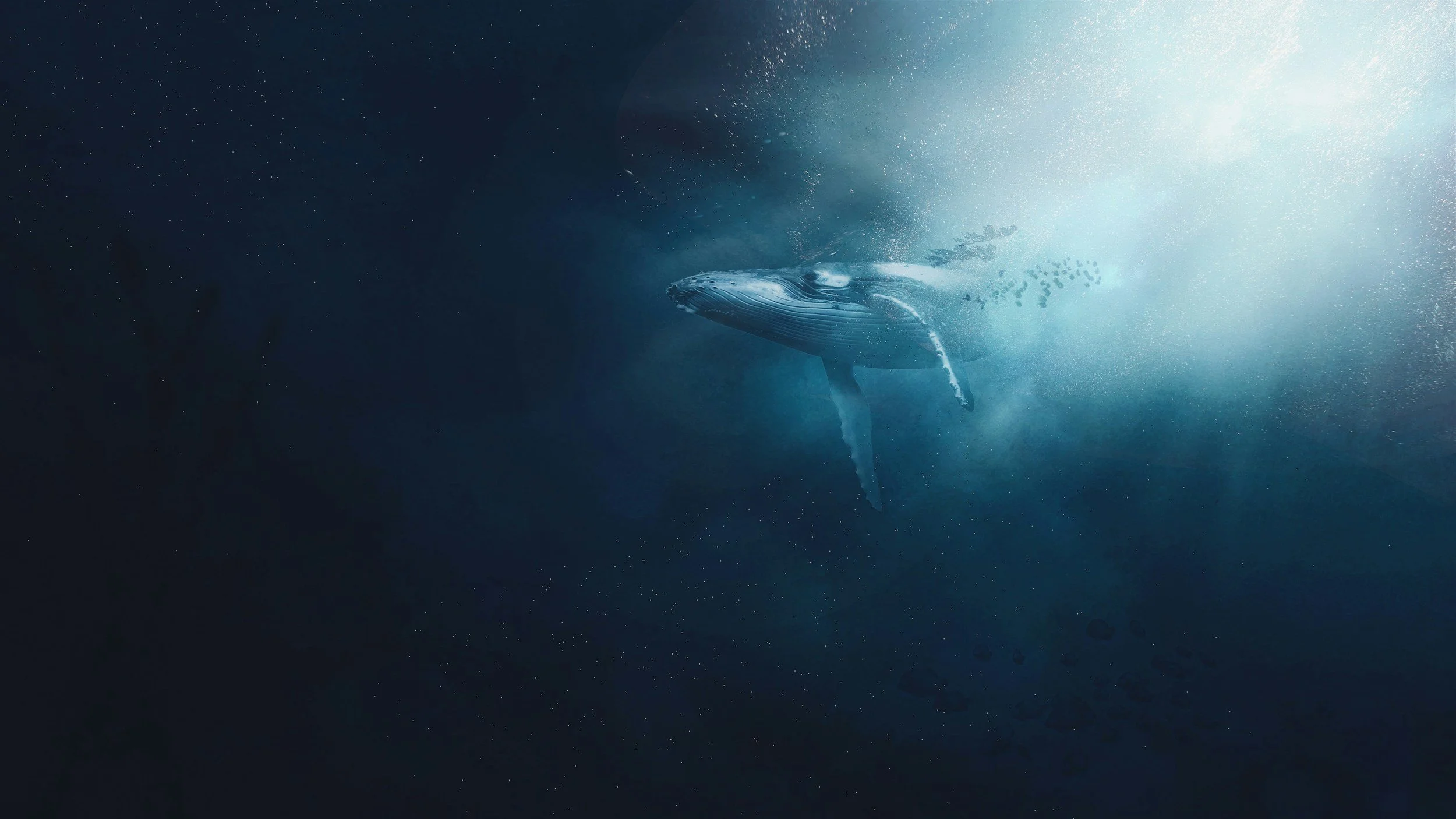
This brings me on to the so-called ‘loneliest whale in the world’ – a mysterious creature that calls out at 52 hertz, a much higher pitch than other whales use. It’s been tracked since the 1980s but never seen, and scientists don’t think any other whales can hear its calls (sob).

The story of the loneliest whale has inspired books and documentaries, and even music – including ‘Whalien 52’ by K-pop behemoth BTS, which uses the 52-hertz whale as a metaphor for the alienation often felt by adolescents. The good news is that whale calls picked up by a sensor in California in 2010 suggest there might be more than one whale calling at 52 hertz. So maybe, at last, someone’s answering back.

Well, that was all a bit depressing, wasn’t it? To cheer us up, here’s a video of the Commerson’s Dolphin, a tiny black-and-white dolphin that lives in the cold waters near South America and the Kerguelen Islands. They look like teeny-weeny killer whales. (Of course, they’re critically endangered. Sorry.)

gynoid

We’re heading into the realms of science fiction (with a bit of science fact) for this one. A gynoid is a humanoid robot designed to look like a woman – think Maria in Fritz Lang’s Metropolis (1927), one of the earliest depictions of a female android, and Ava from the film Ex Machina (2014).

The term ‘gynoid’ was first introduced by sci-fi guru Isaac Asimov in a 1979 editorial as a theoretical female equivalent to the word ‘android’, which is usually gender-neutral or male by default (OBVIOUSLY). It comes from the Greek word gynē meaning ‘woman’ and the suffix -oid, which means ‘resembling’ or ‘like’.

In fiction, gynoids are often used to explore societal themes, including gender roles and artificial intelligence. And by ‘explore … gender roles and artificial intelligence’, I mean men exploring having sex with them – I can’t think of a single fictional gynoid who doesn’t have a man trying to insert himself into her charging port.

Real-life examples of gynoids who hopefully aren’t suffering the same fate (yet, anyway) include:

Actroid in action

EveR, looking scarily real

  • Actroid, life-like gynoids developed by Osaka University and manufactured by Kokoro Company. They can mimic human functions including blinking, speaking and breathing, and the latest models can recognise, process and respond to speech

  • EveR (‘Eve’ plus ‘r’ for robot), a series of female androids developed by a team of South Korean scientists. This gynoid can recognise 400 Korean and English words, and respond to questions both verbally and with facial expressions. She’ll also get annoyed with you if you poke her (unlike a lot of real women who just put up with that shit)

  • Vyommitra (from the Sanskrit words Vyōma meaning ‘space’ and Mitra meaning ‘friend’), a gynoid made for space travel (although not far, as she doesn’t have any legs). She was designed and developed by the Indian Space Research Organisation to work on board the Gaganyaan, a crewed orbital spacecraft expected to launch in 2026.

Just to even up the scores a little, here’s Jude Law as Gigolo Joe, a ‘male pleasure Mecha’. You’re welcome.