witches

weird

I had to doublecheck this hasn’t featured as a word of the week before, as it’s a really common adjective (describing word) with an interesting backstory. Amazingly, it hasn’t, so hang on to your (witch’s) hats…
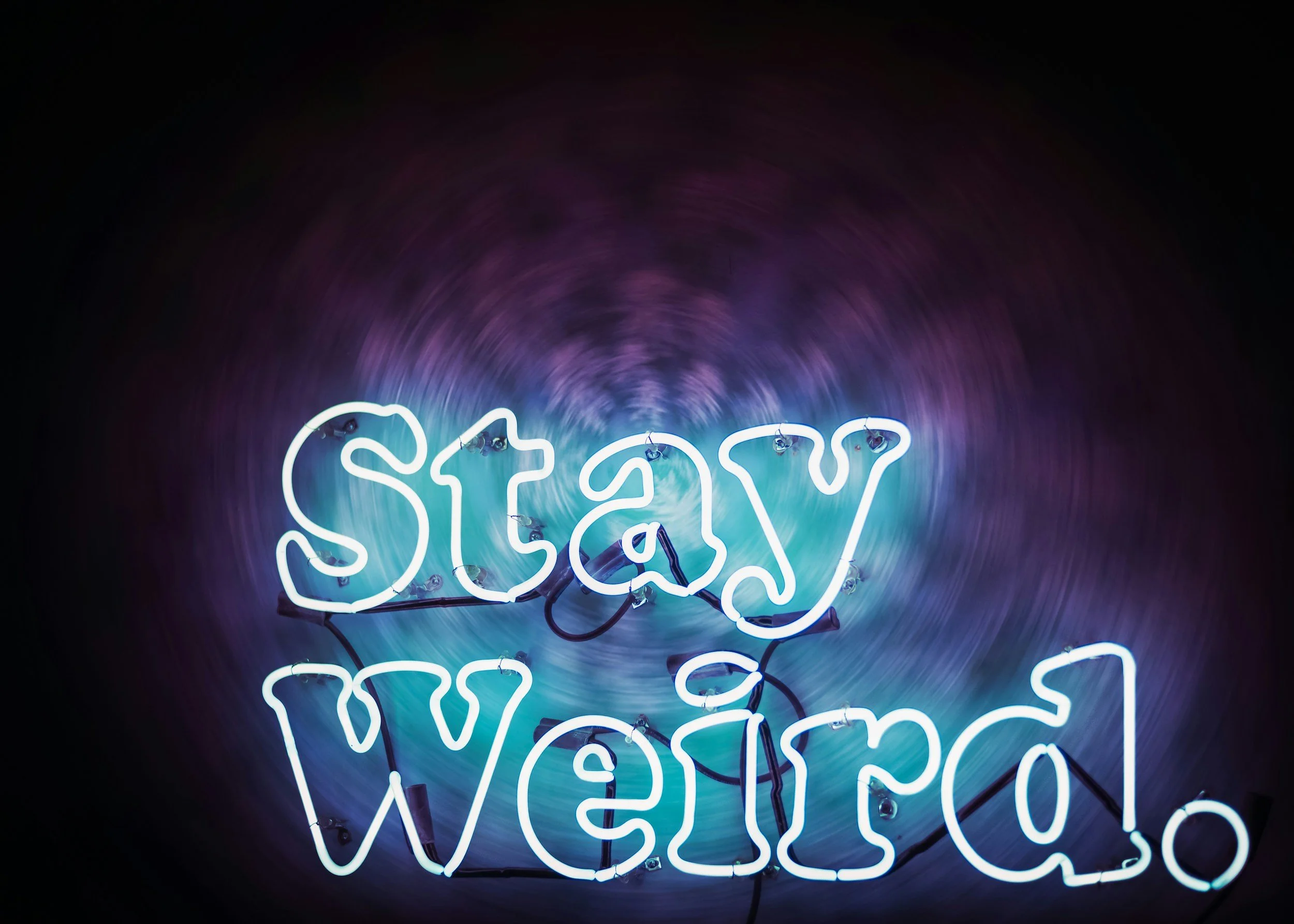
You know what ‘weird’ means. And it turns out people have been being weird for a bloody long time – it first appeared in the 700s as the Old English noun, ‘wyrd’. The word ‘noun’ is the important thing here (a noun being a person, place or thing). Rather than using ‘wyrd’ to describe someone or something like we do today, you’d talk about ‘their wyrd’, meaning the path their life would take: what lay ahead of them and how that might unfold. That’s because at this point it meant ‘fate’ or ‘destiny’. So you could say ‘Her wyrd was to carry on coming up with words of the week’.

Fast forward a few centuries to the 1100s, and the English language was changing fast. For a start, we were all ooh-la-laaing a lot more after the Norman Conquest. And as monastic scribes who were familiar with our Old English spelling system died, the French-trained ones who replaced them didn’t know what to do with all our wyrd spellings. So they started writing them the way they sounded (gasp! Although clearly that didn’t stick). That’s when ‘wyrd’ began to shift. Because it was pronounced with a long ‘ee’ sound, people started spelling it as ‘werd’, ‘weyrd’ and, finally, ‘weird’. At the same time, the noun version was slowly disappearing from everyday speech, and being replaced with an adjective that meant something like ‘linked to fate’.

In the 1600s, our old friend Shakespeare locked in the new spelling and adjectival use when he called the witches in ‘Macbeth’ ‘the weird sisters’. That still didn’t mean odd at this point though – he was using it with its old meaning of ‘tied to destiny’. But because the witches’ scenes were eerie and unsettling, and full of toil and trouble and thumb pricking, the word picked up that mood. Over the next couple of centuries, it shifted from ‘fate-related’ to ‘supernatural’, and then to the softer, everyday sense of ‘strange’ or ‘unusual’ that we use now.

Warning: contains someone puking up a baby’s finger. Shakespeare is WILD.

mascot

When you hear the word ‘mascot’, you probably think of someone dressed in an oversized costume running about at a sports event posing for pictures and hugging people. But in fact, the word ‘mascot’ has quite a sinister history, rooted in black magic and witches. OOOH.

Okay, I might have overegged the pudding ever so slightly. The word ‘mascot’ dates back to the 19th century, and comes from the French word ‘mascotte’, which was used to describe a lucky charm, talisman or magical object. This in turn came from ‘masco’, a Provençal (a dialect of southern France) term for a sorceress or witch. That probably comes from the Old Provençal word ‘masca’, meaning ‘mask’ or ‘spectre’. In the late 19th century, we started using the term to refer to a person, animal or object that brought luck or represents a group, like a sports team.

Sports team mascots are often chosen based on symbolism, characteristics or qualities that are supposed to bring positive energy or success. But sometimes they’re just downright scary. Take Kingsley, who represents Partick Thistle, a professional football club from Glasgow, and looks like a squashed sun with the cold dead eyes of a killer. He was designed by Turner Prize-nominated artist David Shrigley and was unveiled in 2015 to coincide with Thistle’s new sponsorship from investment firm Kingsford Capital Management. Reactions to Kingsley varied from ‘Lisa Simpson on meth’ to ‘the haggard face of the Teletubbies’ sun baby’. Kingsley also has the dubious honour of being the only mascot ever to earn a review from the Guardian’s art critic Jonathan Jones, who compared him to the monsters painted and sculpted by the surrealist Joan Miró. It obviously hit home as well, with Kingsley’s web page on the Partick Thistle site reading as follows:

‘There were a lot of mean things said about me when I first appeared, but I’m not too concerned because I know it’s what’s on the inside that counts. I’m a nice guy really – just a bit misunderstood … I might look a bit angry but I’m really very approachable and I love Partick Thistle. So don’t be scared to come and say hello if you see me out and about.’

Well, he would say that, wouldn’t he?

WT actual F