I had to doublecheck this hasn’t featured as a word of the week before, as it’s a really common adjective (describing word) with an interesting backstory. Amazingly, it hasn’t, so hang on to your (witch’s) hats…
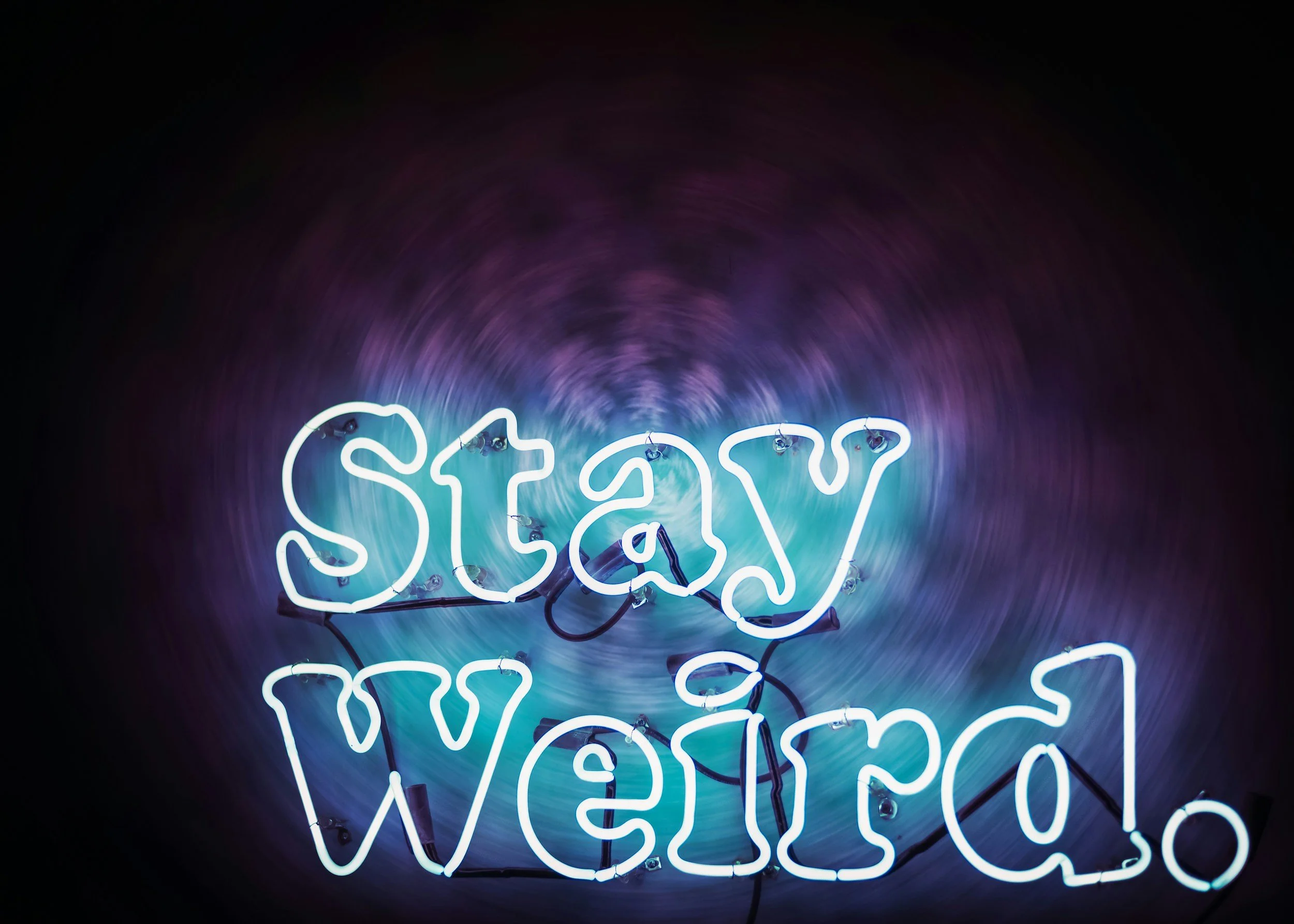
You know what ‘weird’ means. And it turns out people have been being weird for a bloody long time – it first appeared in the 700s as the Old English noun, ‘wyrd’. The word ‘noun’ is the important thing here (a noun being a person, place or thing). Rather than using ‘wyrd’ to describe someone or something like we do today, you’d talk about ‘their wyrd’, meaning the path their life would take: what lay ahead of them and how that might unfold. That’s because at this point it meant ‘fate’ or ‘destiny’. So you could say ‘Her wyrd was to carry on coming up with words of the week’.
Fast forward a few centuries to the 1100s, and the English language was changing fast. For a start, we were all ooh-la-laaing a lot more after the Norman Conquest. And as monastic scribes who were familiar with our Old English spelling system died, the French-trained ones who replaced them didn’t know what to do with all our wyrd spellings. So they started writing them the way they sounded (gasp! Although clearly that didn’t stick). That’s when ‘wyrd’ began to shift. Because it was pronounced with a long ‘ee’ sound, people started spelling it as ‘werd’, ‘weyrd’ and, finally, ‘weird’. At the same time, the noun version was slowly disappearing from everyday speech, and being replaced with an adjective that meant something like ‘linked to fate’.
In the 1600s, our old friend Shakespeare locked in the new spelling and adjectival use when he called the witches in ‘Macbeth’ ‘the weird sisters’. That still didn’t mean odd at this point though – he was using it with its old meaning of ‘tied to destiny’. But because the witches’ scenes were eerie and unsettling, and full of toil and trouble and thumb pricking, the word picked up that mood. Over the next couple of centuries, it shifted from ‘fate-related’ to ‘supernatural’, and then to the softer, everyday sense of ‘strange’ or ‘unusual’ that we use now.
Warning: contains someone puking up a baby’s finger. Shakespeare is WILD.