
If you’ve ever come home to find your usually well-behaved (well, kinda) cavapoo has decided to redecorate the lounge using the stuffing from three cushions and the contents of the kitchen bin, you’ve seen havoc in action.
As a noun, ‘havoc’ describes widespread destruction, confusion or disorder. It’s the kind of chaos that doesn’t just happen; it’s wreaked. And it turns out that its origins are rooted in a specific – and actually quite terrifying – military command.
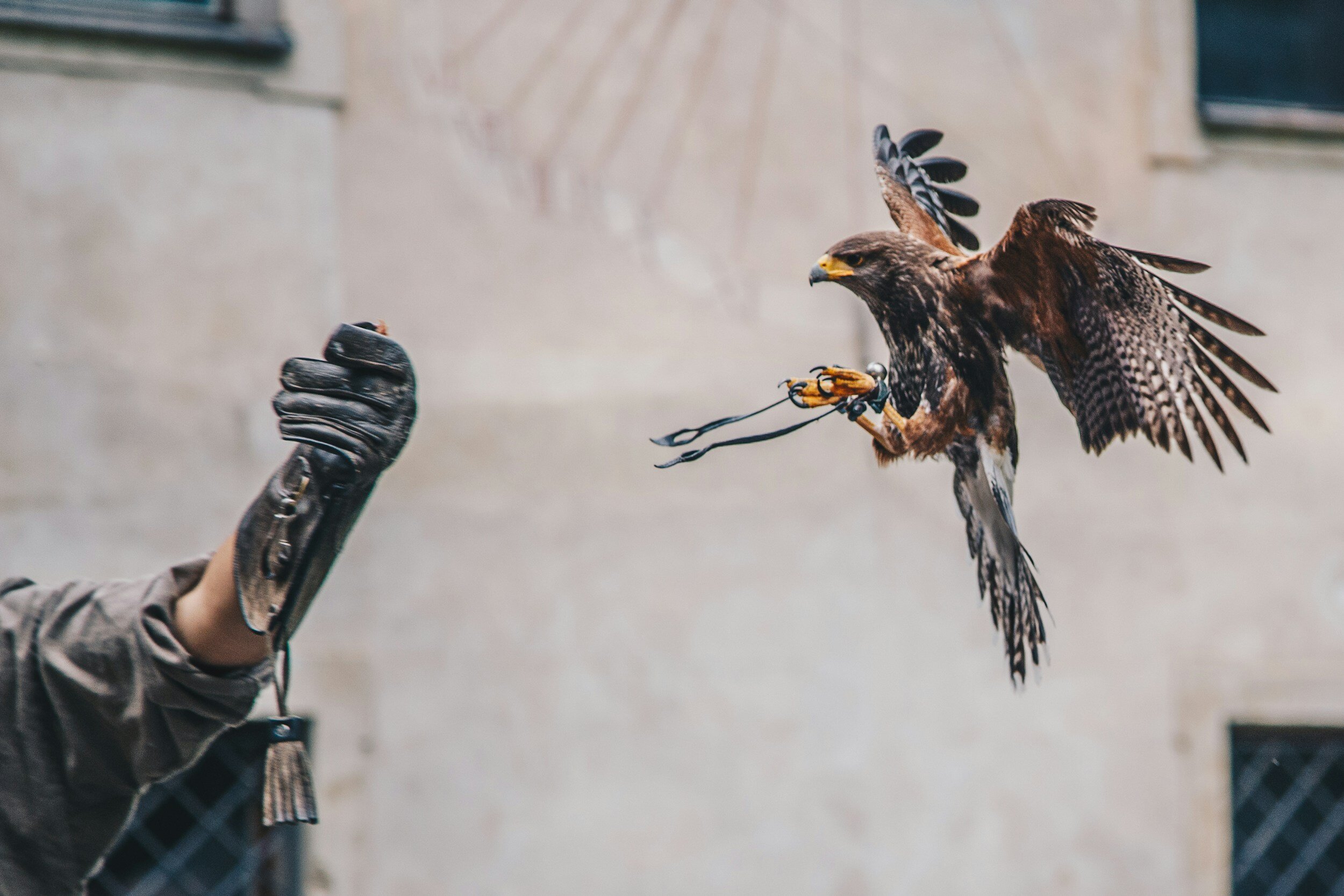
In the Middle Ages, ‘Havoc!’ was a formal cry used during a conflict. It signalled that soldiers could start plundering and looting, grabbing whatever the olde equivalent of flat-screen TVs and games consoles was, and generally causing as much mayhem as they liked. The command came from an Old French word, havot, meaning pillaging. During the 14th century, as French-speaking officers gave orders to English-speaking troops, the soft French ‘t’ was gradually hardened into the English ‘k’. This is probably due to something called folk etymology, which is when a foreign word enters a language and people subconsciously ‘correct’ it to something that already sounds familiar to them. In this case, that was hafoc, the Old English name for a predatory hawk – to a 14th-century soldier, the command to start looting and pillaging might have felt conceptually very similar to the action of a hawk swooping down to snatch its prey.
Havoc time (did you just read that as MC Hammer? Maybe that’s just me) was so destructive that it had to be legally regulated. In 1385, Richard II issued the ‘Statutes of War’, which specifically forbade shouting ‘Havoc’ without authorisation under penalty of death. So anyone who lost their head and got overly enthusiastic about being first to the lootfest would quite literally lose it for real shortly after.
The most famous literary appearance of ‘havoc’ comes courtesy of, you’ve guessed it, William Shakespeare. In Julius Caesar, Mark Antony promises to ‘Cry “Havoc!” and let slip the dogs of war’. Today, we use ‘havoc’ for much lower stakes, though I’m fairly certain my dog still hears the 14th-century call to arms the second the front door clicks shut behind me.