
Ah yes, my favourite novel by Jilly Cooper (I’m not ashamed to admit I love her). A rival is, of course, someone you compete with for the same thing – like the last roast potato at a family dinner or the armrest on an aeroplane. ‘Rival’ comes from a Latin word, rivalis, which literally means ‘one who uses the same stream as another’ (rivus = brook or stream – but not ‘river’, weirdly, which is flumen). But where does the conflict and side-eye come in? Well, just as it is now (and rapidly becoming more so thanks to AI and its thirsty data centres), water was a precious commodity in ancient times. If you and your neighbour were using the same stream, you were naturally competing for that resource. That’s why, in Roman law, rivales were neighbours who had ‘river rights’ to the same water source. Which of course led to lots of argy-bargy about one person taking too much. So it wasn’t long before the word rivalis came to mean ‘competitor’ or ‘adversary’.
As Latin evolved into the Romance languages, rivalis entered Old French as ‘rival’. But the literal watery meaning fell away while the ‘competitor’ meaning took over, specifically in the context of love or honour.
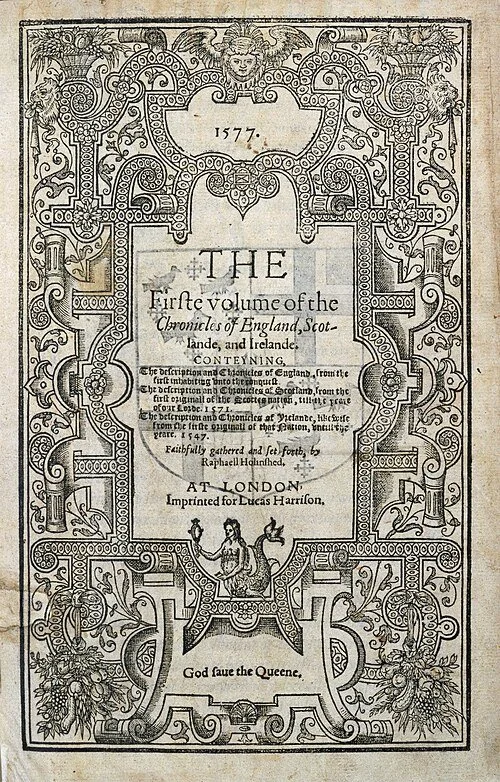
While ‘rival’ existed in Latin and French for yonks, the word didn’t make its debut in English until the late 16th century, first appearing in print in 1577. This was in ‘Holinshed’s Chronicles’ (specifically ‘The Firste Volume of the Chronicles of England, Scotlande, and Irelande’), an enormous history of Britain which was a major source of inspo for lots of Shakespeare’s plays (as well as works by Christopher Marlowe and Edmund Spenser). Here it was used in the context of political and military competition. (There’s also a separate, slightly earlier variation of the word – ‘rivality’, meaning the state of being rivals – which turned up in print as early as 1528, but that obviously didn’t make the cut.)
‘Rival’ initially arrived as a noun (i.e. a person, place or thing) in English, and we have Willy S (as per bloody usual) to thank for verbifying it (i.e. turning it into an action – to rival someone). He first did that in ‘King Lear’ (1605–1606) in a now rather suspect reference to Cordelia as a prize for two men to fight over:
My lord of Burgundy,
We first address toward you, who with this king
Hath rivaled for our daughter.
Not bad for a word that started as a plumbing dispute, right?