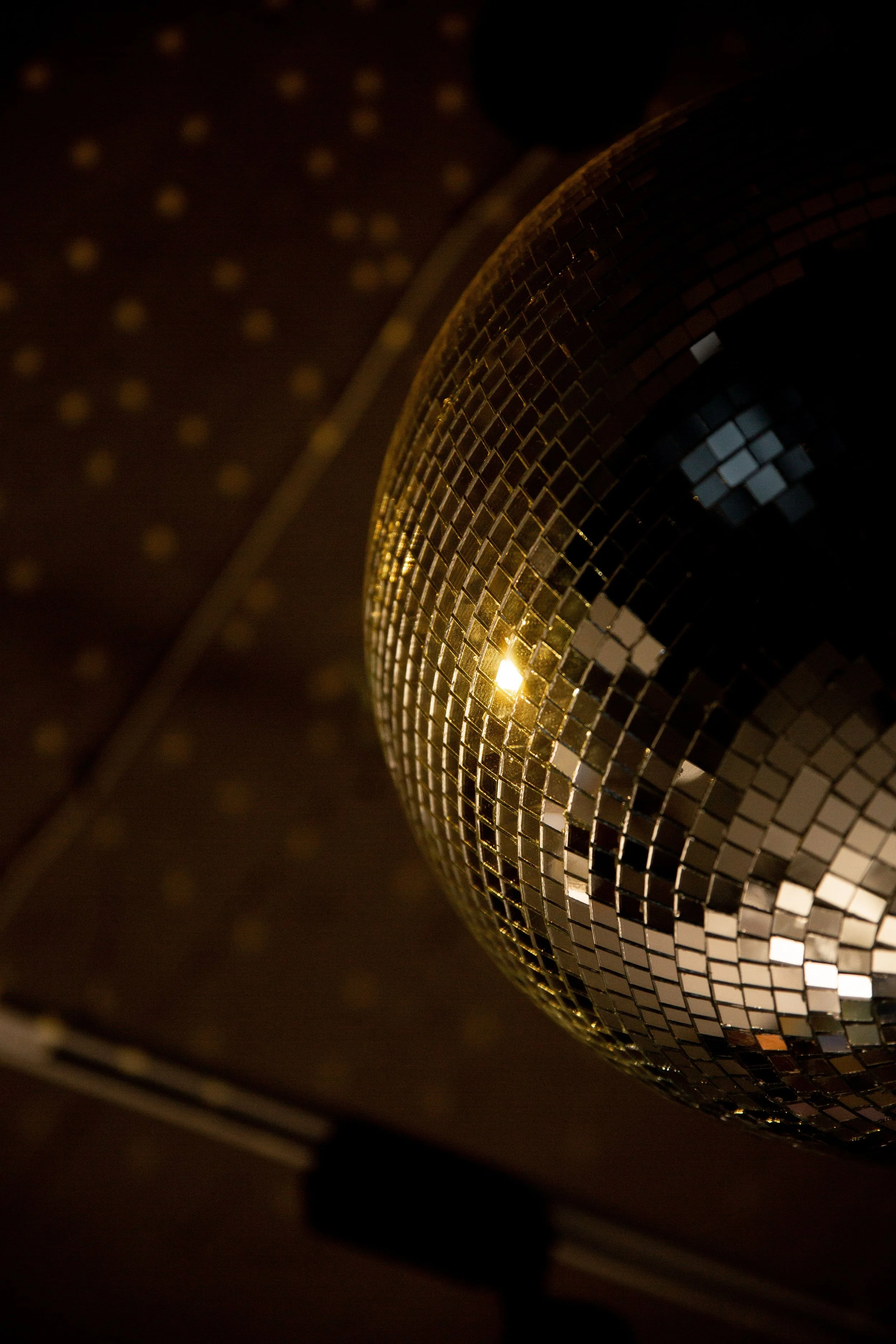
If you ask someone what a ‘disco’ is, they’ll probably talk about light-up floors, flared trousers, mirror balls and dancing round handbags (unless they’re under 35, of course, in which case they’ll likely look at you blankly). Of course, ‘disco’ comes from ‘discotheque’ (or if we’re being pedantic – which is my middle name – discothèque). But long before John Travolta struck that pose in Saturday Night Fever, a ‘discotheque’ was something much less glamorous (although there wasn’t a huge amount of glamour in the sticky-floored Essex nightclubs I was dancing around in the 90s, to be honest – Zeus in Chelmsford, I’m looking at you).
It was, to be blunt, furniture.
The furniture behind the funk
Like 90 per cent of my words of week, to really get under the skin of ‘discotheque’, we have to head back to Ancient Greek.
We start with diskos, which, you can probably guess, means ‘a flat, circular object that you throw’ (think Olympic discuses). Over time, people started using it to describe anything flat, thin and round. Medieval Latin and early European languages went on to use various derivatives of discus to describe dinner plates, platters, round wooden boards and the like (that’s where we get ‘dish’ from, for example).
In the 17th century, the French gave ‘discus’ a glow-up as only the French can, creating the word ‘disque’ to mean any flat, thin, circular object. Fast forward to the 1880s (ish) and Emile Berliner has just invented the gramophone record in 1887 – a flat, circular sound storage format – which he called a ‘disc’, and the French called a ‘disque’.
So where did the ‘theque’ come from? If you remember your GCSE French, you’ll know that the word bibliothèque means ‘library’. French speakers then began using -thèque as a suffix meaning ‘a place or storage case for a collection of things’ (catchy). Stick disque and -thèque and you get discothèque! Well, you don’t – you get disquethèque. But thanks to French grammar rules (and something very complicated involving Greek declensions), it ended up as discothèque (take my word for it). But it was still nothing to do with sequinned bodysuits or Donna Summer at this point – it was simply a library of records. AKA, that bit of furniture I mentioned at the start of this post (which seems like years ago now, sorry).
Panic at the disco
So how did a furniture cabinet turn into a party? The first official discothèque is generally agreed to be Whisky à Gogo (à gogo meaning ‘in abundance’ and names after the novel, later a movie, Whisky Galore), a club that opened in Paris in 1947. They played records on turntables instead of using a live band or orchestra, and because of that, it was described as a discothèque.
By the late 1950s and early 1960s, the discothèque had spread across Europe and also jumped the Atlantic to the US of A. Of course four whole syllables AND an accent is a lot to deal with, especially when you’re throwing shapes on the dancefloor, so it wasn’t long before ‘thèque’ fell by the wayside and we were left with just ‘disco’. Not long after that, the word expanded from the place where you do your bopping to the entire culture.
So next time you hear a banging bassline and feel the irresistible urge to do the Hustle, remember: you’re not just shaking your booty – you’re celebrating a 2,500-year linguistic journey that started with Ancient Greek field sports and ended with too-tight polyester suits and sequins that were visible from space.
(Oh, and when I was researching this post, I asked Google Gemini to help me understand how ‘discotheque’ went from storage to party. It confidently told me about a woman called Pauline Tézenas du Montcel who opened a venue called ‘La Discothèque’ in Paris in 1947. When I searched for her elsewhere, I didn’t find anything. Gemini then admitted that the awesome-sounding Pauline was ‘a completely hallucinated persona with no historical existence in French nightlife history’ AKA a massive lie. Yet another reason to always employ a human copywriter.)