
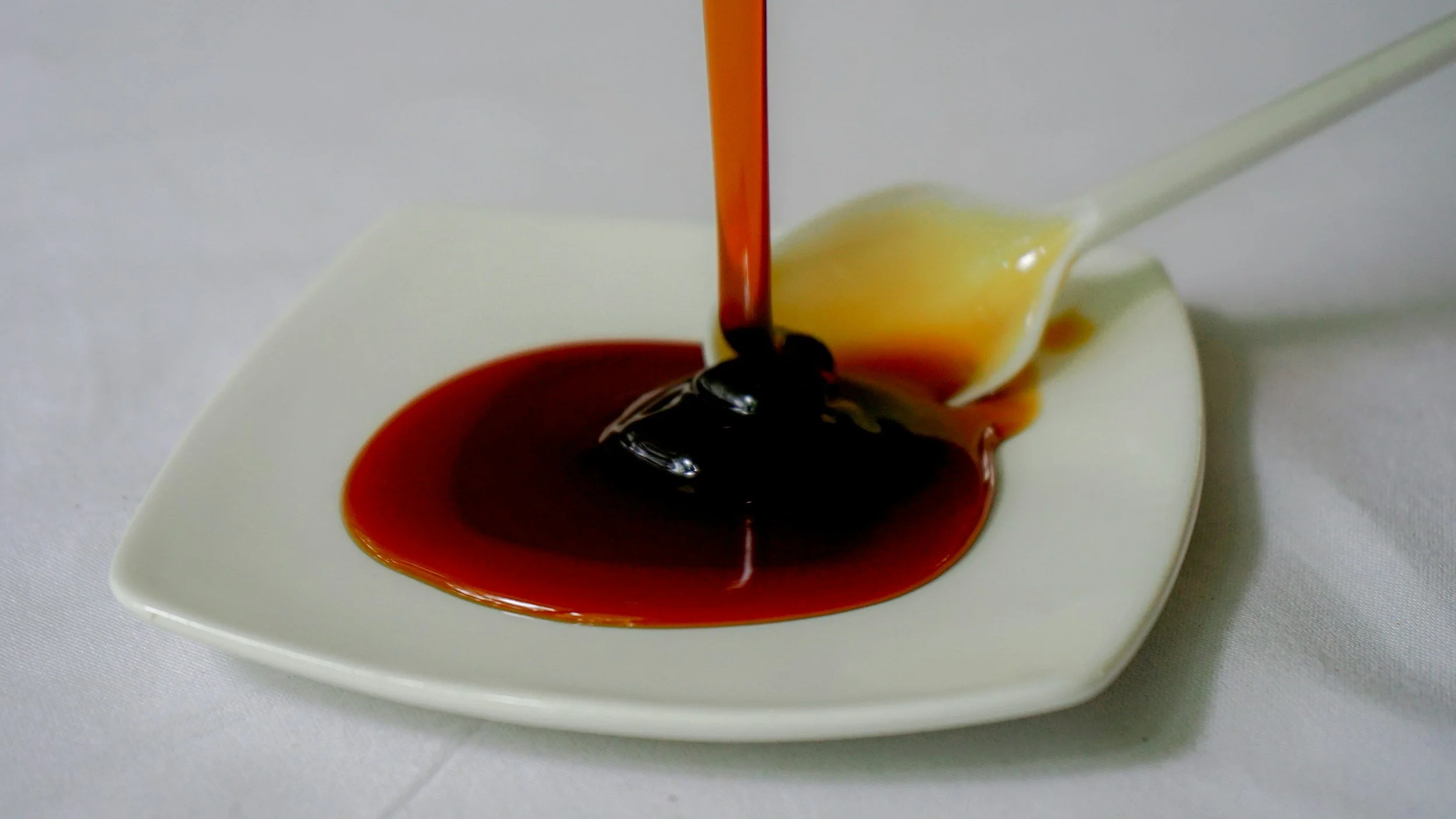
I’m pretty sure you know what treacle is – uncrystallised syrup made during the refining of sugar. Okay, maybe you didn’t know that. But I’m sure you do know that it’s the sticky stuff that we use in many a pudding (my mum makes a killer treacle sponge pudding). Why ‘treacle’ though? Well, it turns out the word itself has distinctly medicinal origins.
As so many of these stories do, this one begins in ancient Greece. The word we’re interested in this time is thēriakos, meaning ‘of a wild animal’. Since lots of wild animals enjoy taking a chunk out of us human beings, thēriakē came to mean ‘antidote against a poisonous bite’. Latin borrowed this as theriaca, and the word eventually made its way through Old French into Middle English as triacle with this meaning. The earliest recorded use of it in English dates to 1340, in a text called ‘Ayenbite of Inwyt’ where it refers to an antidote to poisons and snakebites.
(Just a quick aside: the ‘Ayenbite of Inwyt’ – literally the ‘again-biting of inner wit’ or the ‘Remorse of Conscience’ – is the title of a confessional prose work written in a Kentish dialect of Middle English. Wikipedia describes it as: ‘Rendered from the French original, one supposes by a “very incompetent translator,” it is generally considered more valuable as a record of Kentish pronunciation in the mid-14th century than exalted as a work of literature’. BURN.)
So how did we get from ‘remedy for painful bite’ to ‘sticky stuff on puds’? Well, theriac recipes often contained honey in large quantities – sometimes three times the weight of all the dry ingredients combined. Because of this, the meaning of ‘treacle’ later became associated with the sticky dark syrup left over from the process of sugar refining. This was probably because of a perceived resemblance to the old medicinal preparations. Or maybe just because it was really sweet.
‘Treacle’ is primarily a British term for what Americans call molasses, even though the two products aren’t actually identical – molasses is typically boiled for longer, creating a thicker, darker liquid with less sugar (and less fun, by the sounds of it). The figurative sense, meaning cloyingly sentimental, does appear in some American writing, but it’s less common than it is in British. Oh, and the pet name (‘Hello Treacle’), beloved of Pete Beale in Eastenders (showing my age there), comes from Cockney rhyming slang, where ‘treacle tart’ means ‘sweetheart’.