

When you hear the word ‘urchin’, you probably picture a scruffy Victorian street kid saying ‘Please sir, can I have some more?’. But, did you know that the OG urchin had prickles rather than pickpocketing skills? Yep, in Middle English, ‘urchin’ meant ‘hedgehog’. It appears in writing as ‘yrchoun’ or ‘irchoun’, which we borrowed from an Old French word, ‘herichon’. That came from the Latin word for hedgehog, ‘ericius’. That Latin root is also linked to the Proto-Indo-European word ‘ghers-’, which means ‘to bristle’. That’s also where we get ‘horror’ from, which literally means ‘a bristling of the hair’.
From ‘hedgehog’, ‘urchin’ did what words (and Victorian pickpockets, probably) love to do – it wandered. In the 1500s, people started using it figuratively for anyone or anything small, mischievous or misshapen, including hunchbacks, women of bad reputation (rolls eyes), and even goblins and elves. Shakespeare mentions ‘urchin-shows’ in ‘The Tempest’, which refers to the ghostly or spirit-like apparitions that Prospero sends to haunt Caliban:
‘His spirits hear me,
And yet I needs must curse. But they’ll nor pinch,
Fright me with urchin-shows, pitch me i’ th’ mire,
Nor lead me like a firebrand in the dark
Out of my way, unless he bid ’em.’
It wasn’t long before those meanings of small, ragged, impish and half-wild started to blur together, and the word ‘urchin’ began being applied to children who fit the same image. By the 18th to 19th centuries ‘street urchin’ had become a familiar phrase, especially in urban contexts. Here it is in Dickens’ ‘The Pickwick Papers’:
‘Gabriel had been looking forward to reaching the dark lane, because it was, generally speaking, a nice, gloomy, mournful place … he was not a little indignant to hear a young urchin roaring out some jolly song about a merry Christmas, in this very sanctuary …’
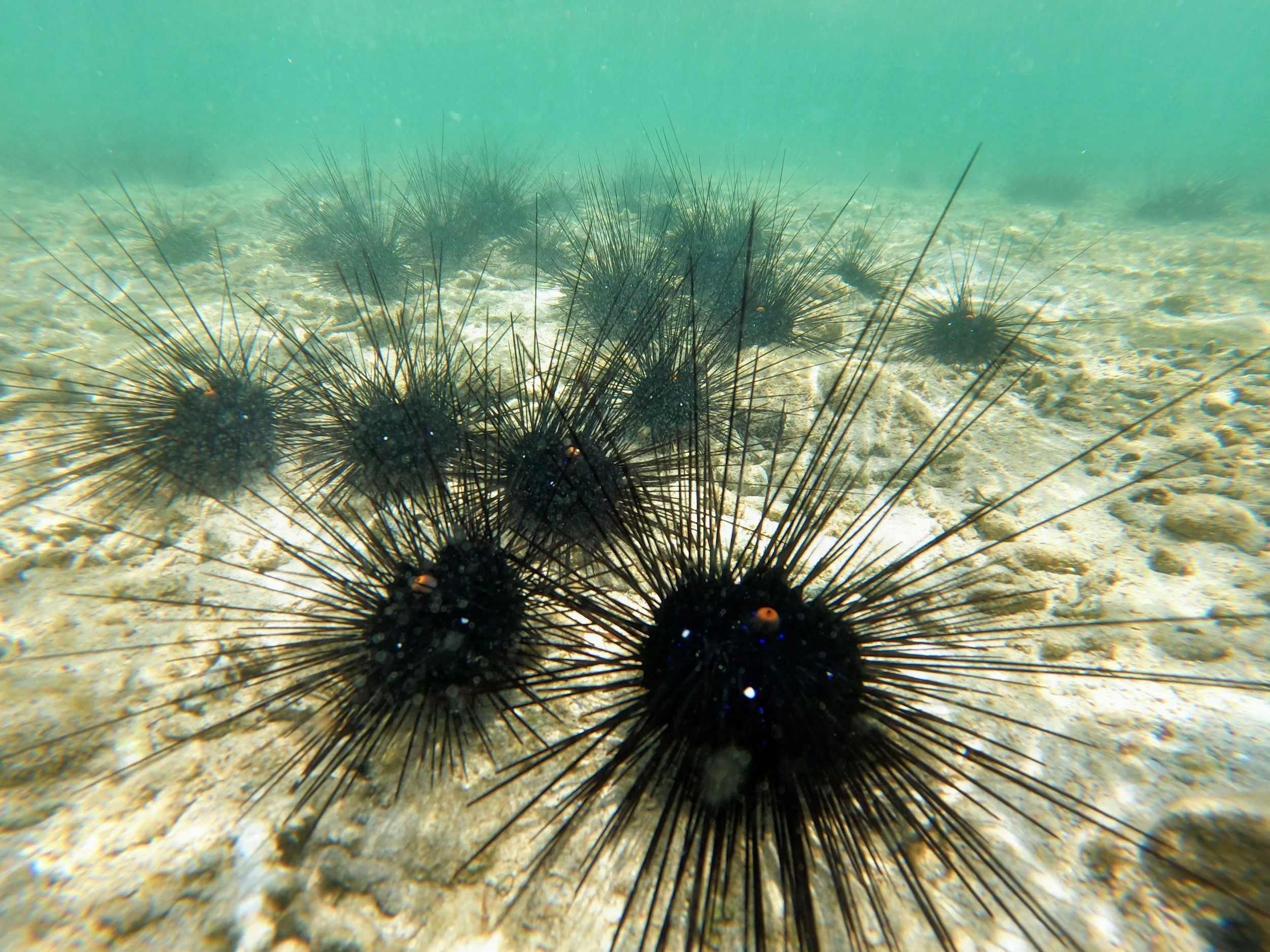
Another urchin also appeared in the 1500s, this time in the sea. This is when the phrase ‘sea urchin’ cropped up, when English speakers spotted those spiky little sea creatures and thought, essentially, ‘there’s an underwater hedgehog’. The link’s completely visual: same shape and same spines, just wetter. Well, kinda.
I trod on a sea urchin on holiday when I was younger, and got a few of its spines lodged in my foot. The locals told me to pee on it, and I still don’t know if that was good advice or just them taking the piss out of the tourists. I’ll leave it up to your imagination as to whether I did or not, but let’s just say I flew home without any sea urchin spines in my foot.
