

Last weekend was my parents’ 50th wedding anniversary. Once the inevitable champagne-based hangover had cleared, it got me thinking – why is it called an ‘anniversary’? Well, turns out it actually has a much less celebratory backstory.
Let’s start with the etymology. ‘Anniversary’ comes from Latin and is made up of two roots:
annus, meaning ‘year’ (which is also where we get words like ‘annual’ and ‘perennial’)
versus, meaning ‘turned’ (that’s the past participle of the verb vertere – to turn – which gives us words like ‘reverse’, ‘divert’, ‘universe’ and ‘convert’).
Stick them both together and you get the adjective (describing word) ‘anniversarius’, which means ‘returning yearly’ or ‘revolving with the year’. Because it’s an adjective, the Romans slapped it on a bunch of different nouns to show that something happened once every year. For example:
seasonal farm produce – like wheat, barley or grapes – was called ‘fructus anniversarii’
politicians served in ‘magistratus anniversarii’ (‘one-year offices’)
Roman doctors diagnosed seasonal allergies like hay fever as ‘morbus anniversarius’ (‘a yearly returning illness’).

With Latin being the OG language of the Christian church, when early church leaders and scholars needed a word for recurring holy days, they combined ‘anniversaria’ with ‘dies’, meaning ‘day’, to make ‘the annually returning day’. This wasn’t used for happy milestones though. ‘Anniversaria dies’ was for feast days honouring the many, MANY martyred Christian saints or the anniversary of someone’s death. Party time!
In the medieval equivalent of LOL, people couldn’t be bothered to keep writing ‘anniversaria dies’, so they dropped the ‘dies’ altogether and turned it into the noun, ‘anniversarium’ (meaning ‘the annual day’). That eventually made its way into French as ‘anniversaire’, crossing the Channel into English around the 1300s as ‘anniversary’.
Even though the ‘dies’ had gone, it was still wearing a lot of black eyeliner and obsessing about death. If, for example, your Auntie Ethel died on 12 March, your family would pay the local priest to say a special prayer for her soul every 12 March after that. That annual death-day service was called your auntie’s (you’ve guessed it) ‘anniversary’. I’m guessing there probably weren’t any party poppers though.
It would take another couple of hundred years (and the Protestant Reformation) for ‘anniversary’ to get a proper glow-up and become less about funeral prayers, and more about cake, champagne and throwing up in flowerbeds (just me?).
(I mentioned Christian martyrs above. While I was researching – and I use the word ‘researching’ very loosely – this post, I read about Saint Cassian of Imola who taught grammar to school children. When he refused to make a sacrifice to the Roman gods, the local magistrate turned him over to his own students. They stabbed him to death with iron styli, which are basically ye olde biros. Safe to say that was a tough day at the office.)
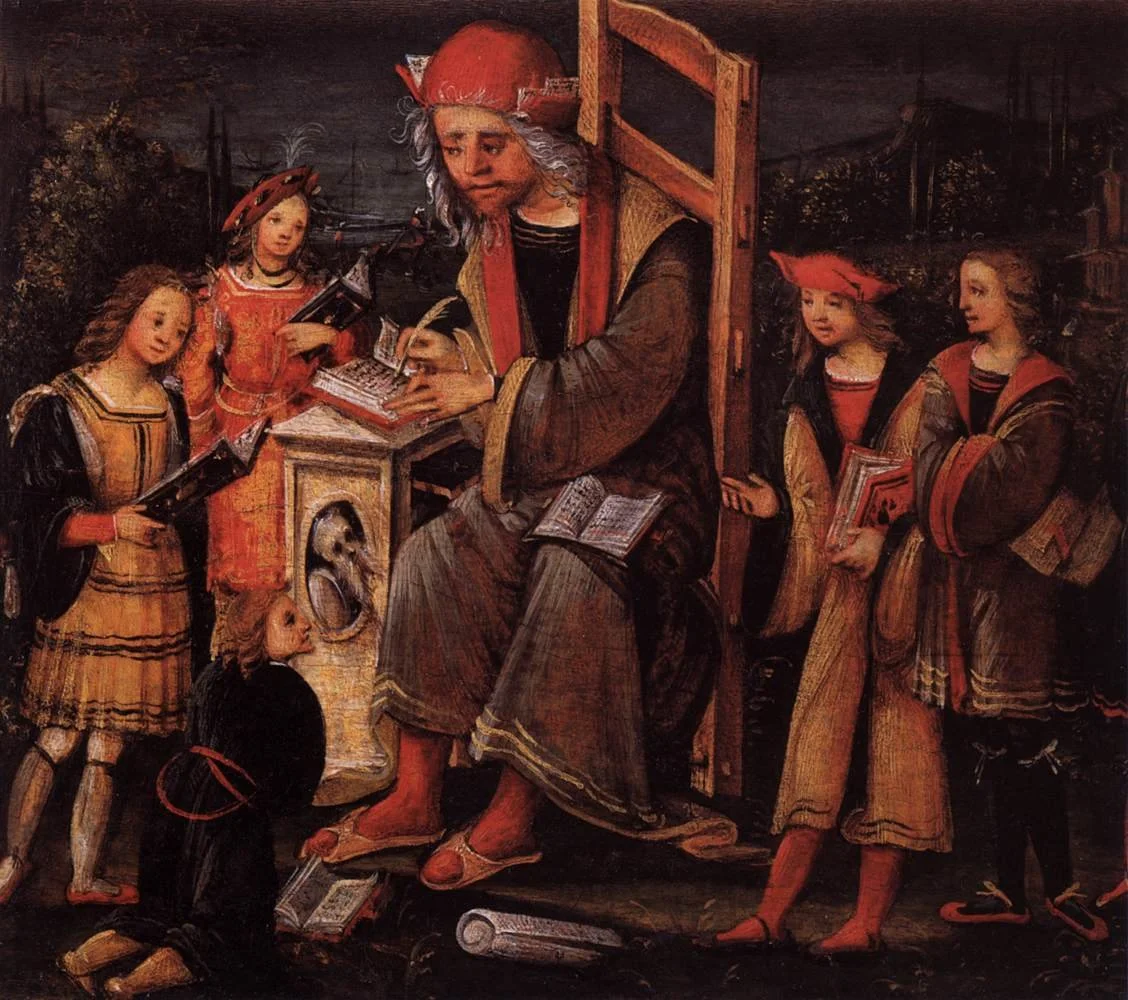
St Cassian of Imola, about to regret his policy on student participation.
