
Today, I think probably everyone thinks heckling is a thing that happens to people on stage, mostly comedians. But it has genuinely surprising origins. And they involve… sheep. Scottish sheep, to be precise.
In the early 14th century, ‘heckle’ (then spelled ‘hechel’) was a noun that referred to a comb for flax or hemp. It came into English from the Middle Dutch ‘hekelen’, which itself is from a root meaning ‘hook’ or ‘tooth’, a nod to the rows of sharp teeth on the combs. The verb followed soon after around 1350, meaning to comb out fibres before spinning them into linen.
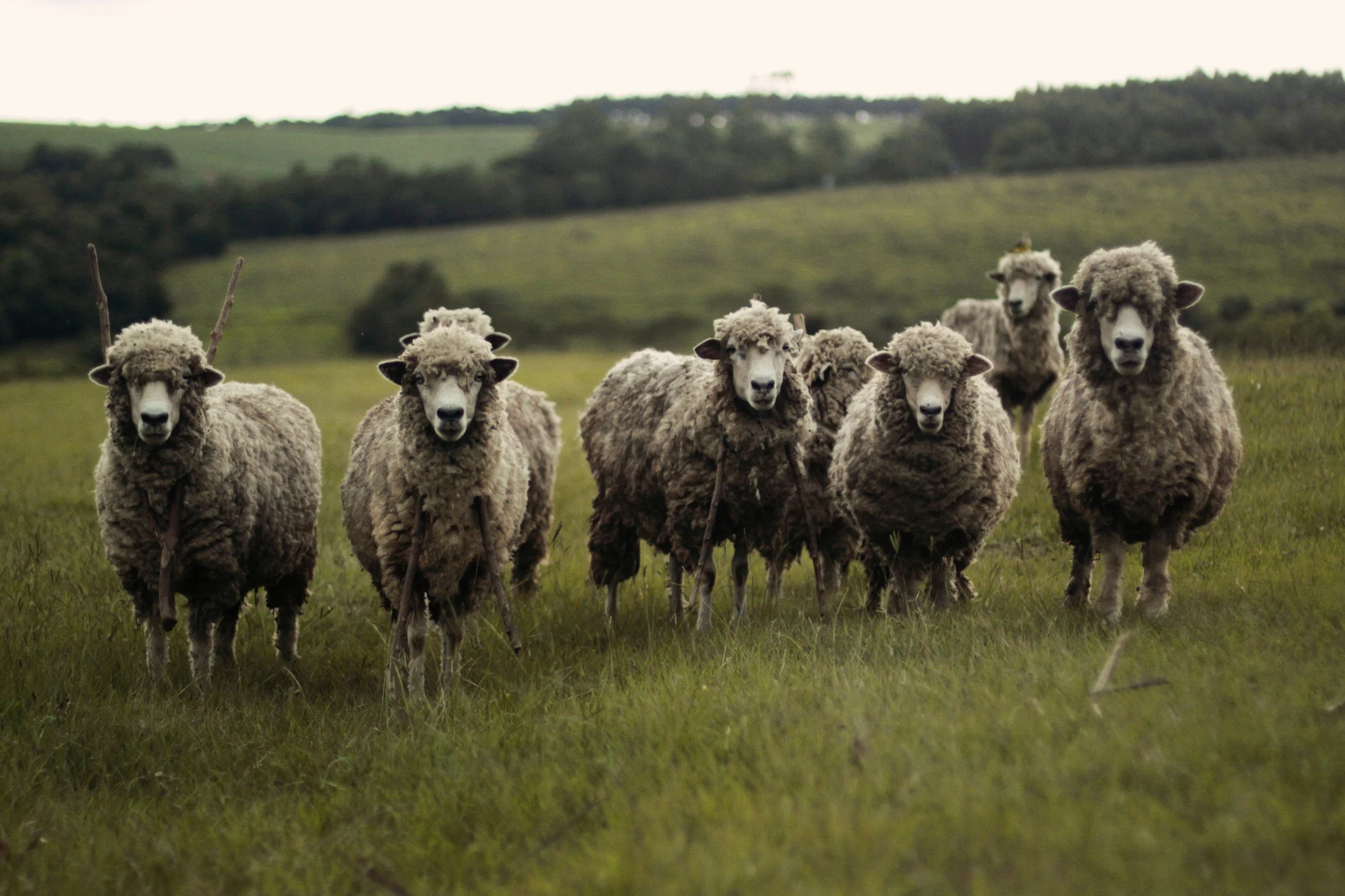
Although flax was the main thing being heckled at this point, the same process of combing applied to wool, which is where my sheep come in. Farmers and spinners would literally heckle wool fibres into shape before weaving them into cloth.
So how did it go from combing to shouting at gigs? Come with me to 18th-century Dundee. This was the local centre of the wool trade and therefore full of hecklers, skilled workers employed to comb out wool. These hecklers had a reputation for radical politics, forming themselves into what we’d call a union today, and bargaining for better salaries and perks (mainly booze, apparently). At public meetings they’d bombard politicians with awkward questions, ‘combing through’ their arguments just like they did with those tangled fibres. And by the 1790s, ‘to heckle’ had also come to mean challenging or interrupting a speaker. Fast forward to the 19th century, and the textile sense of ‘heckle’ had pretty much faded away completely.
There you go. From pulling fibres apart to pulling people on stage apart in less than 500 years.