
Me, you and almost everyone else in the English-speaking bit of our planet uses ‘enormity’ to mean ‘really bloody massive’. But, did you know that me, you and almost everyone else in the English-speaking bit of our planet is actually using it wrongly? That’s because, originally, enormity had nothing to do with size.
‘Enormity’ comes from a Latin word, enormitas, which means ‘out of rule’ or ‘irregular’. So for centuries, ‘enormity’ meant a grave wickedness, an outrageous crime or a monstrous evil – nothing to do with size. Here’s an example from Mary Shelley (#Legend) in Frankenstein. Victor is at the trial of Justine, the family servant falsely accused of murdering Victor's young brother, William. Victor describes the hostile crowd in the courtroom like this:
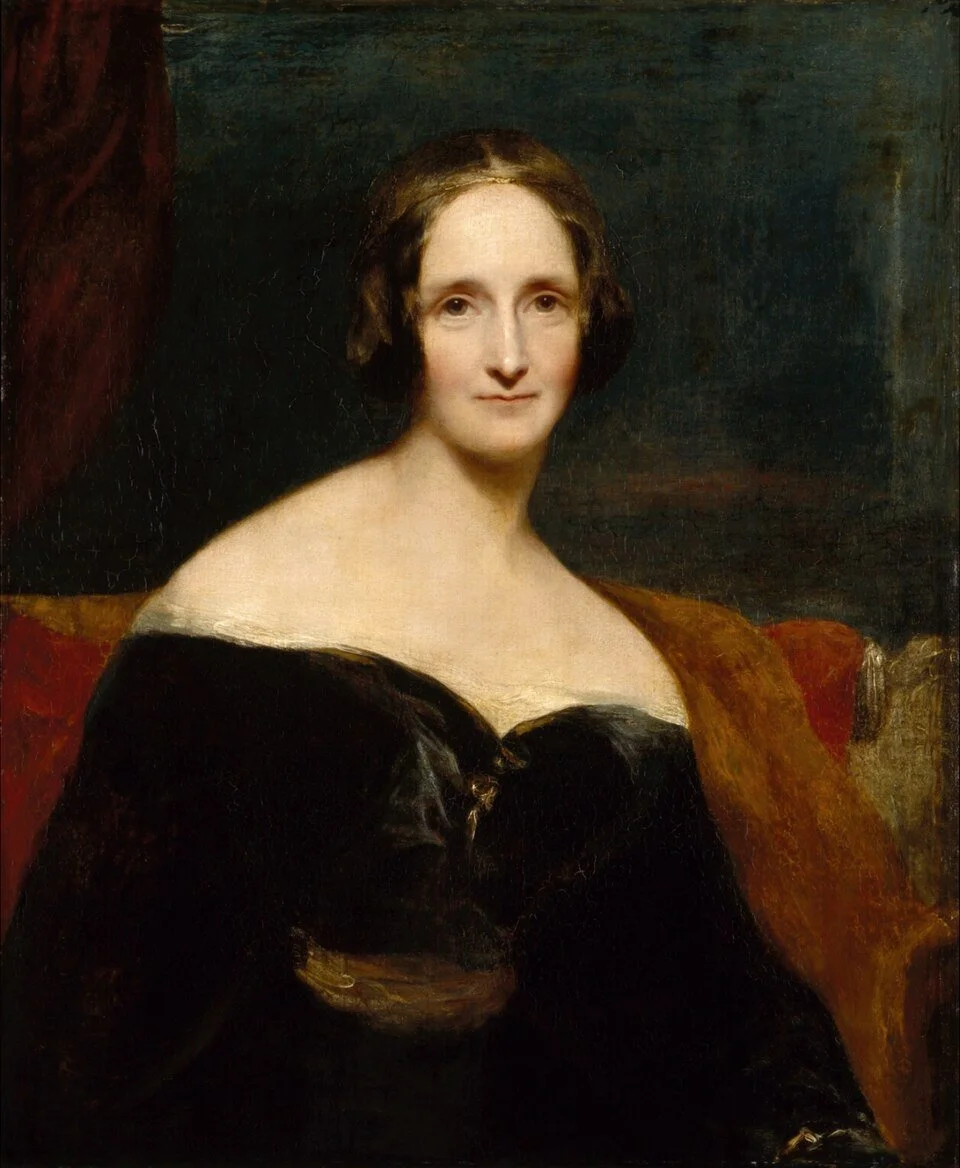
Mary Shelley – she wrote Frankenstein when she was 18, for gawd’s sake.
‘Yet she appeared confident in innocence and did not tremble, although gazed on and execrated by thousands, for all the kindness which her beauty might otherwise have excited was obliterated in the minds of the spectators by the imagination of the enormity she was supposed to have committed.’
Shelley is using ‘enormity’ to refer to the sheer, monstrous wickedness of the murder poor old Justine was accused of. In short, ‘enormity’ isn’t supposed to be about how big something is, but how bad it is. (Spoiler alert – it did not end well for Justine.)
So why are we all getting ‘enormity’ so wrong? Well, just because it sounds so similar to ‘enormous’. While the two words do share a distant ancestor (norma, meaning ‘carpenter’s square or rule’), they had completely different meanings in Latin. ‘Enormous’ came from enormis, which meant ‘out of rule’ in a physical sense, like ‘abnormal’, ‘unusually shaped’ or really freaking massive. By the 19th century, ‘enormous’ had firmly come to mean just ‘huge in size’ though. And because the only noun form for ‘enormous’ was ‘enormousness’ which sounds a bit stupid, people’s brains naturally made a leap to ‘enormity’ in the same way as ‘generous’/’generosity’ and ‘pompous’/’pomposity’, for example.
As the 19th century turned into the 20th, everyone, including writers, politicians and journalists, was using ‘enormity’ to describe physical bigness of good or neutral things, e.g. the enormity of the universe. Language purists fought back hard though – and for decades, style guides fiercely insisted that using ‘enormity’ to mean size was an uneducated blunder. But much like how everyone is now using ‘myself’/’yourself’/’ourselves’ wrongly (which drives me absolutely NUTS and ruins every episode of The Traitors), it was contagious. And because language is nothing if not democratic, if enough people use a word wrongly for long enough, it officially becomes right. By the mid-to-late 20th century, dictionaries updated their entries to include ‘immensity’ or ‘great size’ as a secondary definition. And today, it’s fully accepted in standard English.
Well, almost: this is from The Guardian’s online style guide:
‘It might sound a bit like “enormous”, but enormity refers to something monstrous or wicked, such as a massacre, and is not just another word for “big”.’
The Economist and The New York Times Manual of Style and Usage also take similar hard lines on the word ‘enormity’. So if you, like me, are a fully signed up member of the pedant brigade, you might want to stick to ‘immensity’ for big stuff from now on.