

At eighteen letters long, arachibutyrophobia is one of the longest words of the week so far (although see hippopotomonstrosesquipedaliophobia). It has ‘phobia’ at the end, so you’re probably halfway there (well, a third of the way, technically) already. It’s a fear of something – from Phobos, the Greek personification of fear, obviously. But fear of what? I can almost 100 per cent guarantee that you won’t be able to guess it.
It is…
Wait for it…
The fear of peanut butter sticking to the roof of your mouth.
Yep, really.
As well as the already-mentioned ‘phobia’, arachibutyrophobia has two other parts. ‘Arachi’ comes from Arachis, the scientific genus name for the peanut plant, and ‘butyro’, is from the Latin word butyrum, meaning butter. So despite its magnificent appearance, it’s actually pretty straightforward etymologically speaking.
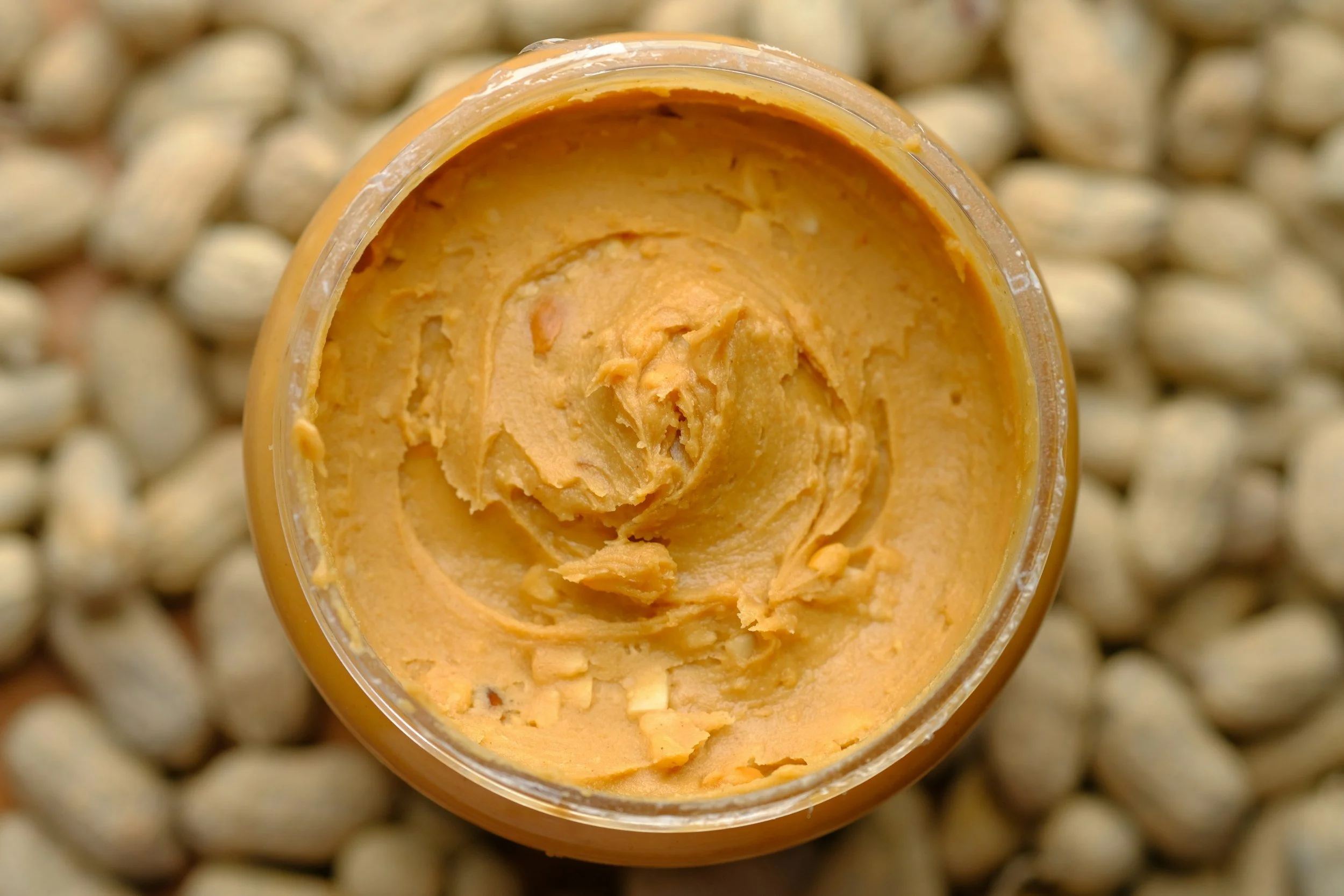
‘Arachibutyrophobia’ isn’t formally recognised as a mental health disorder, although that doesn’t mean it isn’t a genuine anxiety for some people (not me – I can’t stand peanut butter so it’s not coming anywhere near the roof of my mouth). It’s a relatively young word and first appeared in a 1975 book called ‘The People’s Almanac’ by Irving Wallace and David Wallechinsky – a classic reference book packed with entertaining facts and figures. This included a phobia list by a lexicographer called Robert Hendrickson, and it’s there that ‘arachibutyrophobia’ first made its appearance. It’s also incorrectly credited to a 1982 Peanuts comic strip by Charles Schulz, where Sally reads a school report about it (calling it ‘a beautiful excuse for not going to school’), as well as Peter O’Donnell’s 1985 Modesty Blaise novel ‘Dead Man’s Handle’. But as both of these came after ‘The People’s Almanac’, they were simply spreading the word (much like peanut butter itself) rather than inventing it.
Whether or not Hendrickson made arachibutyrophobia up as a bit of a laugh, or sourced it from somewhere else, is a mystery. Apparently his research files were donated to Claremont University in California when he died, but so far no one’s done the detective work to find out if he was having us all on or not.