It’s a no from me

We all know the alphabet, right? WRONG.

(Well, not completely wrong, but ‘ONLY A BIT WRONG’ didn’t work as well dramatically.)

I was watching Only Connect the other day (the hardest quiz on TV™ – if I get one question right I do a little dance and feel like I’m winning at life), and one of the questions was about letters of the alphabet which we don’t use anymore. After an obligatory not-at-all in-depth internet search I discovered there are at least 12 letters which didn’t make it through the audition stages of the competition. 12, I hear you splutter? I can’t handle the excitement! Don’t fret, I’m only going to tell you about six now – I’ll save the rest for a later blog post (I wouldn’t want to spoil you).

So, in no particular order, here we go...

1. Thorn

You know when you see a sign that says ‘Ye olde something shoppe’? That ‘y’ at the start of ‘Ye’ actually isn’t a ‘y’ – it’s a whole other letter which means we should be pronouncing ‘ye’ as... ‘the’. Okay, so that’s not terribly exciting, but in days of yore (or should that be thore? No, no it shouldn’t), there was a single letter for the ‘th’ sound called thorn. Here’s what it looks like:

þ

So, what happened to the thorn? Turns out it’s those pesky printers’ fault. When the printing press made its way to our shores from Europe, it didn’t have a thorn, as no one else used it. So some bright spark decided that the closest thing to it was a ‘y’ (really? Not a ‘p’?). And that’s where we get ‘Ye’ from.

Thorn itself was an Anglo Saxon rune from the Elder Futhark runic alphabet which looks pretty awesome and I wish we still used today. And thorn is actually spelled þorn (hee hee hee).

2. Ampersand

Yep, you did read that right. The ampersand (&) was originally a proud member of the alphabet (in fact, it was the last letter of the alphabet), and was only downgraded in the 19th century. Don’t believe me? Here it is in all its glory in an 1863 book called The Dixie Primer, for the Little Folks (you can see the whole of that book here).

moor5.jpg

Interesting (kinda) fact: it wasn’t always called an ampersand. When people were reciting the alphabet, they’d say ‘X, Y, Z, and’, which sounds a bit stupid. So, some very clever person decided to say ‘and per se’ instead, which basically means ‘by itself’ (I bet that person got punched in the face a lot). Eventually the three words were run together, and we ended up with ‘ampersand’. 

I love ampersands (except when people use them instead of ‘and’ for no reason). This is a picture of a shelf in my house which demonstrates just how much:

7651017664_IMG_0321.jpg


3. Ash

We do still use this one today. Although when I say ‘we’ I mean pretty much no one. Here it is:

Æ

This is a ligature, which is a posh way of saying it’s two letters smushed together. Like thorn, ash comes from the Futhark alphabet. It managed to survive the Norman conquest and was around until the 13th century before it fell by the wayside. It did stage a comeback in the 16th century when writers started to borrow from Latin and Greek for words we didn’t have at the time, but you’re unlikely to see it anywhere in English these days. It does still appear in the alphabets of some languages though, including Danish, Norwegian and Icelandic.

Here’s a list of some everyday words which used to contain ash:

  • archæology
  • curriculum vitæ
  • fæces (because I have to get something poo-related in every blog post I write)
  • hæmorrhage
  • pædiatrician
  • vertebræ.

There’s loads more here.

4. The long S

You’ve definitely seen this one. It’s basically what it says on the tin – that long ‘s’ that everyone thinks is an ‘f’. Here it is in a book only to be sold by Spiderman:


Milton_paradise.jpg

Confusingly, the long s wasn’t superseded by the ‘s’ we use today – they were both in action at the same time. Madness. I won’t even try to explain this lexical anomaly because thankfully another blogger has already done that for me. Find out about that here.

5. Yogh

In a weird coincidence, I was having a chat with my sister’s partner over the weekend, and he informed me that the shop John Menzies* should actually have been pronounced John ‘Mingis’ (I can’t remember why we were talking about John Menzies – conversational gold, I’m sure). It turns out that the reason for this is the old English and Scots letter yogh. Here it is, looking suspiciously like a 3:

ȝ

Yogh actually had three (!) different pronunciations, depending on whereabouts in the word it appeared. So in modern English it could either be spoken as a ‘y’ as in ‘yes’ or a ‘g’ as in ‘night’, while in Scotland it would be the ‘ch’ in ‘loch’. 

So, what happened to yogh? Once again, it’s the fault of the printing press. In English-English it was rendered in print as a ‘y’, while in Scottish-English it was replaced with a ‘z’. Hence the FUBAR John Menzies pronunciation**.

I’m concerned about what this means for how I say the word ‘yoghurt’.

6. Eth

Here’s an eth for you:

ð

Eth comes from Irish, and originally represented a slightly different pronunciation of ‘th’. It was essentially a softer version of thorn (depending on your regional accent) – so more like ‘thing’ than ‘them’. (The first is the voiceless dental fricative, while the second is the voiced dental fricative. Well, OBVS.)

It was thorn that killed off eth – people just started using thorn all the time, so eth didn’t have a job anymore. So it eth-ed off. 


I’ve said it (many times) before and I’ll say it again – the English language is an ever-changing beast. And that’s a great thing. Who knows what kind of alphabet kids will be singing in a few hundred years’ time (assuming the impending apocalypse hasn’t happened of course). I have a suspicion it may well be emoji based...


* For any young people reading, John Menzies was a WH Smith-type shop that was around in the 90s. I used to frequent the café when I was a student because it was the only one in Colchester you could smoke in. Ah, memories.

** This also applies to Menzies ‘Ming’ Campbell and Dalziel in Dalziel and Pascoe (which should be pronounced Dee-ell). Unfortunately it does not explain why Mainwaring is pronounced Mannering.
Sard off, you bescumbered rantallion!

The inimitable Eva Price, of Coronation Street fame, uses the word ‘pigging’ (I presume) in place of swearing. She uses it a lot. And that got me thinking – leaving aside all the gangsters, murder, affairs etc, the inability to swear (not even the mildest of rude words like a ‘bloody’ or a ‘bugger’ seems to be allowed pre-watershed) is one of the things that makes soaps less believable (that and how people always just order ‘a pint’ when they go in the pub – A PINT OF WHAT!?!).

It must be tough for scriptwriters to come up with a decent insult when a character’s slept with someone’s husband/wife, murdered their family, stolen their baby (and so on), and the worst they can call them is a git or a pillock. If I was a soap opera writer, I’d be plundering the English language’s glorious back catalogue for swears* – there are ye olde insults galore which could definitely slip by the censors. Here are eight of my favourites.

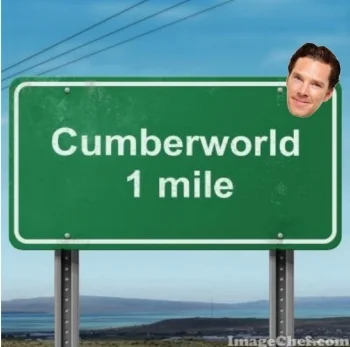
1. Cumberworld

Nope, not a theme park devoted to Benedict Cumberbatch (although how I wish that was a thing), a cumberworld is a person who’s so useless that all they do is take up space. Think Piers Morgan, most politicians, etc.

2. Gillie-wet-foot

This is an old Scottish word for a businessman who swindles people out of their money, or someone who gets into debt then legs it.

3. Scobberlotcher

A scobberlotcher’s someone who never works hard. So not me then (because I’m definitely not looking up swear words on the internet when I should be working). It probably comes from scopperloit, which is an old English dialect word for a holiday (which I’ll be using in my next out-of-office).

4. Wandought

No, not a spell from Harry Potter – a wandought is a weak and ineffectual man (wandoughty is an old word for impotence. Say no more). 

5. Sard

This is basically the f-word of its day (which was pre-18th century). Apparently it first turned up in a 10th-century Old English translation of the Bible which said ‘...don’t sard another man’s wife’. Good advice. Especially as it leaves us ladies free to sard as many husbands as we like apparently.

6. Beardsplitter

An alternative for ‘dick’, this is Victorian slang for penis. I’m not going to walk you through the why as you can probably work it out for yourself. Paints a vivid picture, doesn’t it?

7. Rantallion

Another uncharacteristically graphic Victorian insult. It means a man whose scrotum’s longer than his penis. So basically someone with a teeny weeny winkie.

8. Bescumber

Still nothing to do with Cumberbatch (although when I open Cumberworld I might adopt it as a ride name where you get covered in Benedicts), to ‘bescumber’ someone is a swear that means to ‘discharge ordure’. Regular readers (hello Dad!) will know ‘ordure’ means poo. So if you say you’re going to bescumber someone, then you’re going to cover them in poop.

So, there you are scriptwriters – eight alternatives to bitch, pratt, idiot, etc. I’m sure we’ll be hearing Phil Mitchell yelling ‘You sarding wandought!’ in the Queen Vic any day now.

Cumberworld.jpg

* So it’s probably lucky I’m not a soap opera writer.

Welcome to the masquerade ball

Have you ever heard a lovely word, then realised it actually means something horrible? Here are six terms that are masquerading as pretty things, but have not-so-nice meanings.

*Warning: Contains references to faeces. A LOT of references to faeces.

Oh, and some swears.

1. Tenesmus

Okay, so this sounds like some kind of beautiful landscape feature. Come my darling, stroll with me along the tenesmus and we can watch the sun go down together...

What it actually means

Cramping rectal pain. Yep, it’s when you really need to poop, and can’t. Nice.

2. Nugatory 

Mmmm, this must be an adjective for something creamy and delicious. Maybe something chocolatey...?

What it actually means

From the Latin nugari (‘to trifle’) it means unimportant, of no value or useless. Futile basically.

So definitely not chocolate then.

Masquerade.jpeg

3. Meconium

Ooh, it’s science-fictiony, right? I’m sure I remember Captain Kirk asking Scottie to fire up the warp drive with some meconium.

What it actually means

Well, it’s kind of science-y. Nope, who am I trying to kid – it’s poop again, sorry. Originally it was used to describe a brown, syrupy substance made from crushed poppy heads (from the Greek word mekon for ‘poppy’). But we now use it to describe the poos a baby does when it’s born. Oh.

4. Moribund

Maybe just because it sounds vaguely like ‘fecund’, this one could be something to do with being bountiful or fertile. Or maybe relating to mushrooms? I don’t know why.

What it actually means

Close to death. Sorry.

5. Ordure

This one’s got a certain air of respectability about it. I can just imagine Dickens writing about a well-dressed gentleman with a double-barrelled name exuding an air of ordure. He’d be wearing a very smart stovepipe hat.

What it actually means

Once again, I apologise, because this one’s also poo. Ordure literally means excrement or dung, and goes all the way back to the 14th century. So you’d probably want to avoid any gentlemen exuding it, stove-pipe hat or not.

6. Coprolalia

Wait, I know this one. It’s the name of a 19th-century ballet about a mechanical doll. Nailed it, right?

What it actually means

No smarty pants, that’s Coppélia. Coprolalia is a psychiatric term for the involuntary use of obscene language. Still, at least it’s nothing to do with motherfucking shit this time.


So, the moral of this blog post is that you should never judge a word by the way it sounds. And that the English language has a lot of words about poo.

It ain’t necessarily so

I’m a big EastEnders fan (I even have a weird crush on Danny Dyer). One of the soap’s most famous lines after ‘Hello Princess’ came about when Zoe Slater bellowed at her ‘sister’ Kat, ‘You ain’t my muvver!’ (spoiler: she is). After reeling for a moment at this revelation my mind then obviously turned to grammar* – why is ‘ain’t’ considered persona non grata in the world of contractions? We’ve embraced ‘won’t’, ‘can’t’ and ‘aren’t’ and the like. So what’s made ‘ain’t’ so universally reviled?

Contractions – not just for babies

When we’re speaking, we naturally run words together. So we’ve been using contractions for pretty much as long as we’ve been using English. I encourage my clients to use them all the time, even in formal writing – without them, words can sound stilted and robotic. And even though I get the occasional die-hard who just won’t accept that, most people are happy to embrace the likes of ‘we’re’, ‘shan’t’ and ‘don’t’ (one notable exception was a client from a large accountancy firm who, when I suggested we say ‘we can’t do that’ instead of ‘we cannot do that’, told me he didn’t want any of ‘that hip-hop rap-speak, thank you very much’).

Having said all that, I’d never use ‘ain’t’ instead of ‘am not’ or ‘has/have not’ in business writing. But why the hell not?

Fear of the unknown

One not-particularly-feasible theory for our suspicion is that it’s not immediately obvious which words ‘ain’t’ is formed from. We can easily see where (for example) ‘don’t’ and ‘we’ll’ come from. And if we’re using ‘ain’t’ in place of ‘am not’, we should probably follow the style of its more acceptable cousins – which would make it ‘amn’t’ (which is quite hard to say) or ‘an’t’ (which isn’t). So where did the ‘i’ come from? Maybe it snuck in from ‘isn’t’ via ‘in’t’ – another reviled contraction. (I can’t even hazard a guess about how ‘has/have not’ –  as in ‘you ain’t seen nothing yet’ – turned into ‘ain’t’, so I’m just not going to go there.)

Unfortunately this whole theory falls flat when you look at ‘won’t’, which is short for ‘will not’. According to the five seconds of internet research I just did, this comes from ‘woll not’ which is ye olde English (y’know, from yore). And we’re all alright with ‘won’t’, right?

What the dickens?

So, the next place we need to look is Dickens (it’s almost always either Dickens, Shakespeare or Carroll when it comes to word origins). Some of the earliest appearances of ‘ain’t’ in writing appear in his novels. And it’s generally a Cockenee, and – quite often – criminal type, what says it:

  • ‘Look at your clothes; better ain’t to be got!’: Magwitch in Great Expectations
  • ‘She ain’t one to blab. Are you Nancy?’: Bill Sikes in Oliver Twist (I’m still traumatised by that bit in the musical when Oliver Reed bludgeons Nancy to death. IT’S A KIDS’ FILM FOR CHRISSAKES).

It seems that this is an association that stuck – authors generally use ‘ain’t’ to indicate a character comes from a, ahem, less salubrious background. So it looks like our fear of ‘ain’t’ is simply down to a lingering Victorian snobbery which we’re yet to get over. So despite the fact that ‘ain’t’ does appear in the OED, it doesn’t look like it’ll be making the leap from EastEnders scripts into polite conversation/writing any time soon…


* And then 17 years later I wrote a blog post about it.

A partridge in a pear tree? I’d rather have a blog on etymology

I blimmin’ love Christmas. I put my decorations up on 1 December every year without fail, then I get really depressed on Boxing Day because it’s ALL OVER. So, before that happens, here’s my Christmas gift to you – six Christmassy words and their etymology (I was going to do 12 – as in the 12 days of Christmas – but it was too many and I ran out of steam. Sorry).

1. Eggnog

Yum, eggy booze. Who on earth thought that sounded nice? Maybe that’s why we only drink it once a year. Anyway, the ‘nog’ bit of ‘eggnog’ is a 17th-century word for strong beer (looks like the English have always been lager louts) from Norfolk. And the ‘egg’ bit? Well, you can probably work that out for yourself. 

2. Carol

Nothing to do with Vorderman or King, we used to use the word ‘carol’ to talk about any celebratory song. It was the Tudors who started using it for Christmas songs only. We nicked the word ‘carol’ from our Gallic friends across the channel in the Middle Ages – a carole was French for a circle dance accompanied by singers. And they probably got it from the Italians (carola), who took it from the Latin (choraulēs – ‘flute player accompanying a chorus dance’), which came from the Ancient Greek word khoraulḗs (‘one who accompanies a chorus on the flute’). That has its roots in Proto-Indo-European language, but as you probably stopped reading a while ago, I won’t go into that.

3. Mistletoe

This one’s a bit of a mystery (a mistle-tery? Nope?). Well, ‘mistle’ is – the ‘toe’ bit’s fairly straightforward, as it comes from ‘tān’, which is an Old English word for ‘twig’. But no one’s really sure where the ‘mistle’ part came from. Wikipedia just says it’s ‘from Proto-Germanic *mihstilaz (“mistle”), from Proto-Indo-European *h₃meyǵʰ- (“to urinate”)’ which I feel merits more explanation, but sadly, doesn’t give any.

Mistletoe’s a parasitic plant, which means it sucks the nutrients out of other plants, either stunting their growth or killing them (which is why it stays green all year round, the bastard). And some of it’s poisonous. Kissing under the deadly parasitic twig doesn’t seem quite so romantic now, does it?

4. Poinsettia

The poinsettia is a Mexican plant which the ancient Aztecs called ‘cuetlaxochitl’. Presumably because no-one could pronounce that, when American ambassador Joel Roberts Poinsett bought one back with him from Mexico to the US of A they decided to name it after him. The association with Christmas comes from an old Mexican legend (which I was in a production of at primary school). You can read it here (the myth, not my primary school production).

5. Tinsel

Beloved of 80s Christmas trees, ‘tinsel’ was originally the name for a cloth that was woven with gold or silver thread. It comes from the Middle French word estincelle which means ‘spark’ or ‘spangle’.

Tinsel was invented in Nuremberg in the 17th century. Originally made from real silver, apparently it’s supposed to mimic the appearance of ice. I never knew that, even though now I do it seems blindingly obvious.

I like saying the word ‘tinsel’.

6. Yule

Log lady.jpg

Like a lot of stuff to do with Christianity, this one was stolen from paganism (technically called ‘Christianised reformulation’ fact fans). It comes from the word jól, the Norse name of a pagan festival which took place in the 12 days leading up to 25 December. It’s connected with the myth of the wild hunt (which is a pretty frickin’ awesome myth). We nicked the word jól and added it to Old English as ġéol, which morphed into ‘yule’ some time in the middle of the 1400s. I’m not really entirely sure what we use it for these days, except for making bad puns (‘yule love this festive blog post!’) and the yule log. I totally thought a yule log was a cake, but it’s an actual log which also has pagan roots (BOOM BOOM).

If you’d like to find out more about the yule log (and why wouldn’t you?), have a look at this article on ManyEats.com.)


So, there you have it. A little bit of Christmas cheer, in blog form. Oh, and thanks for reading my word-based musings this year – here’s to plenty more in 2018.

Happy Christmas to all, and to all a good night.

Immigrant song

According to the OED, there are at least a quarter of a million words in the English language. But that doesn’t mean we’ve got everything covered. So sometimes we adopt words from other languages to fill the gaps. Chances are you’ve already come across ‘schadenfreude’, and new kid on the block ‘hygge’. But what about ‘tartle’? It’s a Scottish word for that panicky pause when you have to introduce someone whose name you’ve forgotten. Good, right? So here are my top 12 (because anyone can do a top ten) foreign words without an equivalent in English. Bloody foreign words, coming over here and stealing our words’ jobs.

Aktivansteher

I’m annoyed that the Germans have got this word and we haven’t. The literal translation is ‘energetic queuer’ – basically it’s for those clever people (of which I’m, sadly, not one) who always join the right queue.

Baggerspion

Another German one, the direct translation of which is ‘digger truck spy hole’. It’s the desire to peek into a boarded-up building site. C’mon, you know you’ve done it...

Bagstiv

A Danish word for something that I’ve obviously got no experience of – when you wake up in the morning still drunk from the night before (it translates as ‘backwards drunk’). Nope, never happened to me. And definitely not this morning.

Culaccino

This is an Italian word for the stain left on a table from a cold drink. Use a coaster people!

Gigil

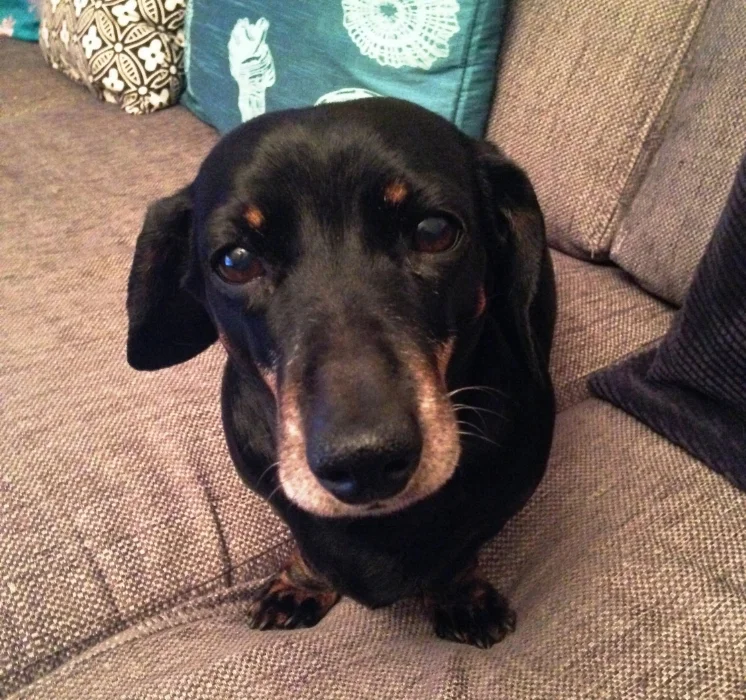
A Filipino word for when you see something really cute and feel the urge to squeeze or pinch it. I get this every day for my dog Bella. Cue gratuitous picture...

IMG_4648.JPG

Greng-jai

Being as the English are known for not wanting to cause a fuss, it’s odd that the Thai have a word for this one and we don’t. It’s when you don’t want someone to do something for you because it’s a pain for them.

Iktsuarpok

This is an Inuit word for when you’re so excited about someone coming round to your house that you keep going outside to check if they’ve turned up yet. Like me and the Amazon delivery man.

sebastian-pether-85797_1920.jpg

Mangata

I love this one. It’s a Swedish word for the road-like reflection of the moon on water. Gawjuss.

Mencolek

You know that thing when someone taps you on one shoulder from behind so you turn one way, when they’re actually standing on the other side? Well, the Indonesians came up with this word for it.

I actually already have a word for people who do this. It starts with ‘w’ and ends with ‘ankers’.

Politikerleden

This is a Danish word for being disgusted by a politician. So basically everyone in the world then.

Tsundoku

Think ‘One Hundred Years of Solitude’, ‘The Satanic Verses’, ‘The Alchemist’... yep, this is a Japanese word for when you buy books and then never read them. At least they look nice on the shelf.

Zeg

This is a Georgian word for ‘the day after tomorrow’ and has equivalents in lots of languages including German (übermorgen) and Polish (pojutrze). I’m cheating slightly here because there is actually an English version – ‘overmorrow’. But unfortunately it’s ye olde middle English, so no one uses it anymore. There’s also the equally delightful ‘ereyesterday’ in English for ‘the day before yesterday’. I’m going to make it my mission to bring these back.

This woke blog post is lit AF

The other day I got an email from a company I buy quite a lot of clothes from. The subject line was ‘Something for your bae’. Now this threw me, as I have no idea who or what my bae is. After asking the internet I now understand that this is shorthand for my girlfriend or boyfriend. Good to know. But it got me thinking – how out of touch with the yoof am I?

It turns out, quite a lot.

So here’s my pick of some young people’s speak, along with what it actually means and some handy examples for if you want to chuck any into conversation. (And I’ve now instigated a rule that if a company send me an email with slang I don’t understand, then I’m too old to be buying whatever it is they’re selling.)

Woke

What? To be woke about something means to be well informed about it.

In action: I stay woke by listening to Radio 4. 

Lit

What? One of my friends used this the other day and I had to ask her to explain it (because I’m not woke about millennials). Confusingly it turns out it has a few meanings, depending on the context. It can mean that something’s really good, or drunk/stoned/had a great night. This second meaning’s actually been around for a long time, and first showed up in the 1910s.

In action: This cross stitch I’ve just finished is lit or Emma got lit at book group last night.

AF

What? Short for (sorry Mumsy) ‘as fuck’. Because who wants to type/say a whole FOUR extra letters?

In action: This Farrow & Ball paint colour I’ve chosen is delightful AF.

Glo up

What? When I googled this the first result was the village of Gloup in the far north of the island of Yell in the Shetland Islands. How did I not know there’s an island called Yell? It’s home to the most haunted house in the Shetlands as well as some trolls (the old-fashioned kind, not the internet ones).

Anyway, I digress. To glo up is to suddenly become really attractive.

In action: Plain Jane Superbrain did glo up in Neighbours (FYI I’m not entirely sure what the past tense is – maybe she glo'd up? Answers on a postcard please). 

I so wanted to be Plain Jane Superbrain when I was young. Check her out in action below (the clip also features some little-known Australians called Jason Donovan, Guy Pearce and Kylie Minogue. I wonder what happened to them?).

Hangry

What? When you’re angry because you’re hungry, obvs. I like hangry because (a) it makes perfect sense and I can’t believe there isn’t a word for it already, and (b) I love a portmanteau. Who doesn’t?

In action: My Waitrose delivery is an hour late and I’m super hangry.

Mansplaining

When a man explains something to a woman in a patronising way, or by interrupting or speaking over her. It’s often about something she already knows, or is already an expert in. (Not to be confused with manspreading which is a whole different thing.)

In action: Check out these awesome examples. And it even happened to an ACTUAL ASTRONAUT.


So, that’s it for yoofspeak for the time being. If you’re as old as me, then hopefully this will help you out if you have to interact with any millennials any time soon. And if you’re a yoof yourself, feel free to correct me or give me some more examples (without mansplaining though please).

Fancy a fuksheet?

The English language is a wonderful thing. And one of the reasons for that is because we have lots of rude words. Think about it. There are loads of them. I can come up with five words for my you-know-what off the top of my head right now. But there are also a lot of words which sound rude but are actually perfectly acceptable in polite society. Here’s just a small selection of some of my favourites – why not see how many you can get into the conversation at your next dinner party?

1. Bumfiddler

Depending on which part of the internet you look at (and I wouldn’t recommend Googling this if you’re easily offended), to be a bumfiddler either means that you pollute or spoil something (like a document, not a bottom), or that you’re a fidget or a busybody. If you put a space in it (i.e. bum fiddler), it means to harm or attack. And if you look it up on urbandictionary.com, it’s to do with playing a fiddle with your arse. Obviously.

2. Cockchafer

It’s a big old beetle. It was almost eradicated with pesticides but numbers are on the rise again, you’ll be pleased to hear. And apparently Nikola Tesla once made an engine out of four of them (I don’t know how). 

Here’s a picture of one – it’s surprisingly cute for a family of bugs which can apparently ‘terrorise ... with their high-pitched screams as they leave a trail of destruction’ (a quote in this well-balanced article from the Daily Star which was published last summer. I must have missed the cockchafer plague).

cockshafer.jpeg

3. Copula

A copula is a word used to link the subject of a sentence with a predicate (i.e. the bit that describes or expands on the subject). So in the sentence ‘The cockchafer is furry’, ‘is’ is the copula. It also crops up in probability theory and statistics where it’s a multivariate probability distribution for which the marginal probability distribution of each variable is uniform. But you knew that already, right?

4. Formication

Nope, not that. It’s actually pretty unpleasant – a feeling that you have insects crawling over your skin. From the Latin formica which means ‘ant’. So you could legitimately say that you feel like you’re being formicated by cockshafers. If the situation ever arises.

5. Fuksheet

Okay, so ‘fuk’ with no ‘c’ is a Middle English word for a sail. So you attach a fuksheet to a fukmast. And then you fuk off in your boat.  

6. Invagination

Turning something inside out, innit. And the opposite is called ‘evagination’. One source said it also applies to putting one thing (not that) inside another (not that either), like a sword into a sheath. (If you’re anything like me you’re now singing ‘Come with me, and you’ll be, in a world of pure invagination...’)

7. Jaculate

When you throw something, especially something like a dart or a javelin, you jaculate it. Yep. Not to be confused with ejaculate, which is when you eject something suddenly. And, you know, the other thing.

8. Peniaphobia

Nothing to do with being scared of winkies, this is the fear of poverty. It comes from the Greek penia.

9. Teasehole

Less ooh er, matron and more opening in a glassmaking furnace for putting fuel in.

10. Vagitus

Despite sounding like some kind of ailment you have to whisper over the counter at the chemist, this is actually rather nice – it’s the name given to a newborn baby’s first cry. Aw.

Punctuation drunk – part 2

After leaving you on a grammatical cliffhanger last time (kinda), at long last, here’s the second part of my foray into the world of obscure punctuation marks. Man, my life is exciting. Hold onto your hats people...

Percontation point: ⸮

Despite sounding like a place where teenagers went to snog in the 50s, the percontation point is actually a back-to-front question mark. And it might be my new favourite thing. You use it to show you’re being ironic or sarcastic. Nowadays the nearest equivalent is probably an exclamation mark in brackets, as in: ‘Yeah, blogs about punctuation marks are really interesting (!).’

Who came up with that? Henry Denham (a 16th-century printer and my new celebrity crush) first suggested the backwards question mark as a way to end a rhetorical question. Sadly this didn’t make it past the 17th century, but it was resurrected by a French poet in the 1890s who used it to show irony or sarcasm. In fact, loads of people have tried to come up with a punctuation mark to denote sarcasm (including the excellently named sarcmark) but nothing’s really stuck yet.

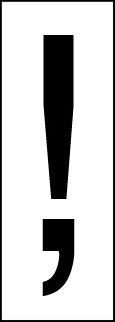
Exclamation comma: not available on keyboards so see picture below

Exclamation comma.jpg

I’m not a fan of the exclamation mark generally – they can make you sound a bit mental and shouty! And with the exclamation comma, you’re no longer limited to only sounding mental and/or shouty at the end of a sentence. It’s a bit hard to give you an example as it’s untypeable, so using an exclamation mark as a stand in, it would look something like this:

‘We’re so excited about this punctuation mark! we can’t end this sentence.’

The exclamation comma’s actually pretty young compared to most of its other obscure cousins, and was created in 1992 by three American inventors (called Leonard Storch, Haagen Ernst Van and Sigmund Silber), who even took out a patent on it. Fortunately for us that’s now expired, so feel free to be surprised in the middle of sentences with gay abandon (but only in handwritten documents).

But what if I want to ask a question in the middle of a sentence? Fret not – our three intrepid inventors also created an unholy union between the question mark and the comma. They called it – wait for it – the ‘question comma’ (it’s no ‘exclamoquest’ is it?). And it’s also not available on keyboards, sorry.

Dagger: †

Possibly not that obscure – you’ve probably seen this one in action as it’s generally used for a footnote if the writer’s run out of asterisks. It’s another oldie and is believed to have been invented by a Homeric scholar called Zenodotus (which is what I’ll be naming my next dog). You can also use it next to someone’s name to show they’re dead, in which case it’s called the ‘death dagger’. Ooh. (There are actually loads more uses for the dagger, and thankfully someone much cleverer than me has collated them on Wikipedia, if you’re interested. Or even still reading.)

Why’s it called a dagger⸮ (See what I did there?) The dagger has a second and, in my opinion at least, much more exciting name – the obelisk. This comes from the Greek word obeliskos, which doesn’t mean pointy statue, but ‘roasting spit’. Much better, right?

There’s also a double dagger, or ‘diesis’ (‡), and apparently even a triple one for people who don’t know that you can also use numbers for footnotes. 

Guillemets: « »

Not to be confused with the birds, or the indie rock band, guillemets are possibly a bit of a cheat, because they’re foreign. They’re basically a more exotic version of our quotation marks and are used in loads of languages including French, Greek, Italian and Spanish. I only really included them here because I like the word (and I wanted to make that indie rock band joke in the first sentence). 

Sheffer stroke: |

Not the prettiest of punctuation marks, the sheffer stroke is actually on your keyboard. I’ll wait here while you go find it. 

Got it? It’s the one next to the z (and the cleanest key on my keyboard, as I don’t think I’d pressed it before today). It’s named after one Henry M Sheffer, author of the 1913 paper ‘Transactions of the American Mathematical Society’ where he provided an axiomatisation of Boolean algebras using the stroke, and proved its equivalence to a standard formulation thereof by Huntington employing the familiar operators of propositional logic (which are, of course, and, or and not). I absolutely, positively didn’t copy and paste this from Wikipedia.

It’s also, rather boringly, called a vertical bar, and is a variant of the slash, presumably for people who are just too lazy to make it slope. 

The end?

That’s it for the moment for obscure punctuation. If you’re feeling a bit bereft (I know I am), then why not join me on my quest to come up with a new punctuation mark named after me? The Emmamark perhaps? Or the Wilkin Woggle (I don’t know what this is for, but I’m liking the name already)? Or, you know, go outside and talk to people or something.

Punctuation drunk – part 1

Alongside your everyday commas, question marks, semicolons and so on, there are other, more exotic, punctuation marks hiding in the shadows. Here are just a few of them...

The Pilcrow: ¶

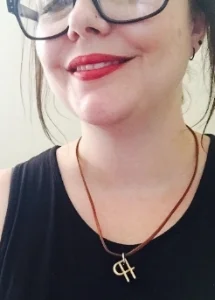
I’ve got a pendant in the shape of a pilcrow (a present from my friend Bee – here’s a slightly smug-looking picture of me wearing it). You’ve probably seen a pilcrow in Microsoft Word (it’s the button which shows all the usually hidden formatting marks). Sometimes called a paragraph mark, it’s the elder statesman of punctuation, and can trace its roots as far back as Ancient Greece. I’m reliably informed by the internet that its name comes from the Greek word paragraphos, by way of French and Middle English.

But what the hell’s it for? In the Middle Ages rubricators used a pilcrow to mark a new train of thought in a manuscript. This was before it became usual to start these on a new line. What the hell’s a rubricator I hear you say? Nothing to do with the cubes I’m afraid – rubrication’s when a scribe adds text in red ink to ancient manuscripts for emphasis. I like to think of them as the medieval equivalent of a highlighter pen.

These days, apart from the button in Word which I’ve already mentioned, the pilcrow turns up in:

  • legal and academic documents – it’s used for cross references (it’s more complicated than that, but even I started getting bored writing about it so I gave up)
  • as a proofreading mark to show a paragraph should be split in two (sadly it’s pretty rare that us editors get to use a pen for proofreading these days, so this one might be a dying art)
  • in the order of service for some churches to show that the text following is an instruction to stand up, sit down or kneel (I feel like this could be used in hilarious, and probably blasphemous, ways in the wrong hands)
  • online for something to do with permalinks to avoid link rot. I don’t know what this means.

Interrobang: ‽

New-favourite-word alert! The interrobang is the weird lovechild of the question mark and exclamation mark. It’s the punk rocker of the punctuation world – the enfant terrible. (Sorry, I got a bit carried away there.) In 1962, Martin K Speckter, head of a New York advertising firm, decided it would be better to have a single mark at the end of a rhetorical or surprised question, instead of using ‘!?’ (e.g ‘How the hell did you lose your shoe!?’). It was him who came up with the name interrobang (from the Latin interrogatio and ‘bang’, printers’ slang for the exclamation mark), although he did write a magazine article inviting suggestions for alternatives. In the 60s equivalent of Boaty McBoatface, he got some awesome portmanteaus including ‘emphaquest’ and ‘exclamoquest’ (which might even be slightly better). But ‘interrobang’ stuck, and the mark was even added to a range of US typewriters in 1968. Unfortunately this wasn’t enough to save it, and the interrobang was doomed to fade into obscurity. I’ll be doing my very best to bring it back.

When can I use it? Basically, every time anyone says or does something stupid. Like when you drunk text someone and then send a message the next day saying: ‘Don’t know what happened last night‽’

Asterism: ⁂

The less popular cousin of the asterisk, the lovely looking asterism takes its name from a group of stars that’s smaller than a constellation. Nice, right?

Why do I need one of those? You probably don’t, to be honest. You can use an asterism to indicate a break in text that’s not as strong as a page break (or the end of a chapter), but bigger than a paragraph. I’ve used one below because it looks pretty, and I feel like it needs an outing. Sadly most people tend to use ‘***’ these days instead, possibly because it has the fabulous name of ‘dinkus’.

⁂

Want to know more?

If you can’t wait for part 2 of this post (and let’s face it, it’s pretty damn exciting), check out the book Shady Characters by Keith Houston, which I used when writing this post (a present from my dad – I get a lot of punctuation-based gifts). You can buy yourself one here.