

(Es)stating the bleeding obvious

As a freelancer, there are (obviously very rare) occasions when I end up watching daytime telly. And on those rare occasions, one of the things that sometimes finds its way onto my telly box is Homes Under the Hammer. The title’s pretty self explanatory, but just in case you’ve never seen it, the idea is that people buy houses at auction, then do them up and (fingers crossed) sell them on for a profit. Part of this process involves a couple of estate agents giving the hopeful owners a value for the rent and sale prices they might get. And one of the things I’ve noticed is that it doesn’t matter which agency they’re from, or where in the country – they all use the same jargon. And it’s pretty much universally awful.  Here are just three that set my teeth on edge.

‘Property’

No one ever says ‘Damn, I left my wallet at my property’. Or ‘Have a good day darling, I’ll see you at our property later’. So why do estate agents do it? It seems that flat, house or, god forbid, home are dirty words.

‘Per calendar month’

This drives me nuts. Why do they need to say ‘calendar’ month? Every. Single. Time. I do understand that there’s a technical reason behind it to do with the fact that some months are longer than others. But for TV purposes, can’t we just take that as a given? If they just said ‘month’ then we’d all still understand what they mean. And the programme would probably be done in half the time.

‘Benefits from’

AAGGRRRH! ‘Has’. You can just say ‘has’. If I went around saying that ‘My flat benefits from a garden’ or ‘My face benefits from a mouth’ people would think the lights were on but no one was home. Sorry, at the property.

So what do you think? Any particular professional (estate agent or otherwise) pointless jargon that drives you nuts?

PS If you’ve never watched Homes Under the Hammer, it’s worth it just for the fact that the person who chooses the incidental music is a comedy master. For example, there was one episode featuring a place in Blackburn. When they revisited it later in the programme, they played AC/DC's Back in Black. Because they were back in Blackburn, geddit? GENIUS.
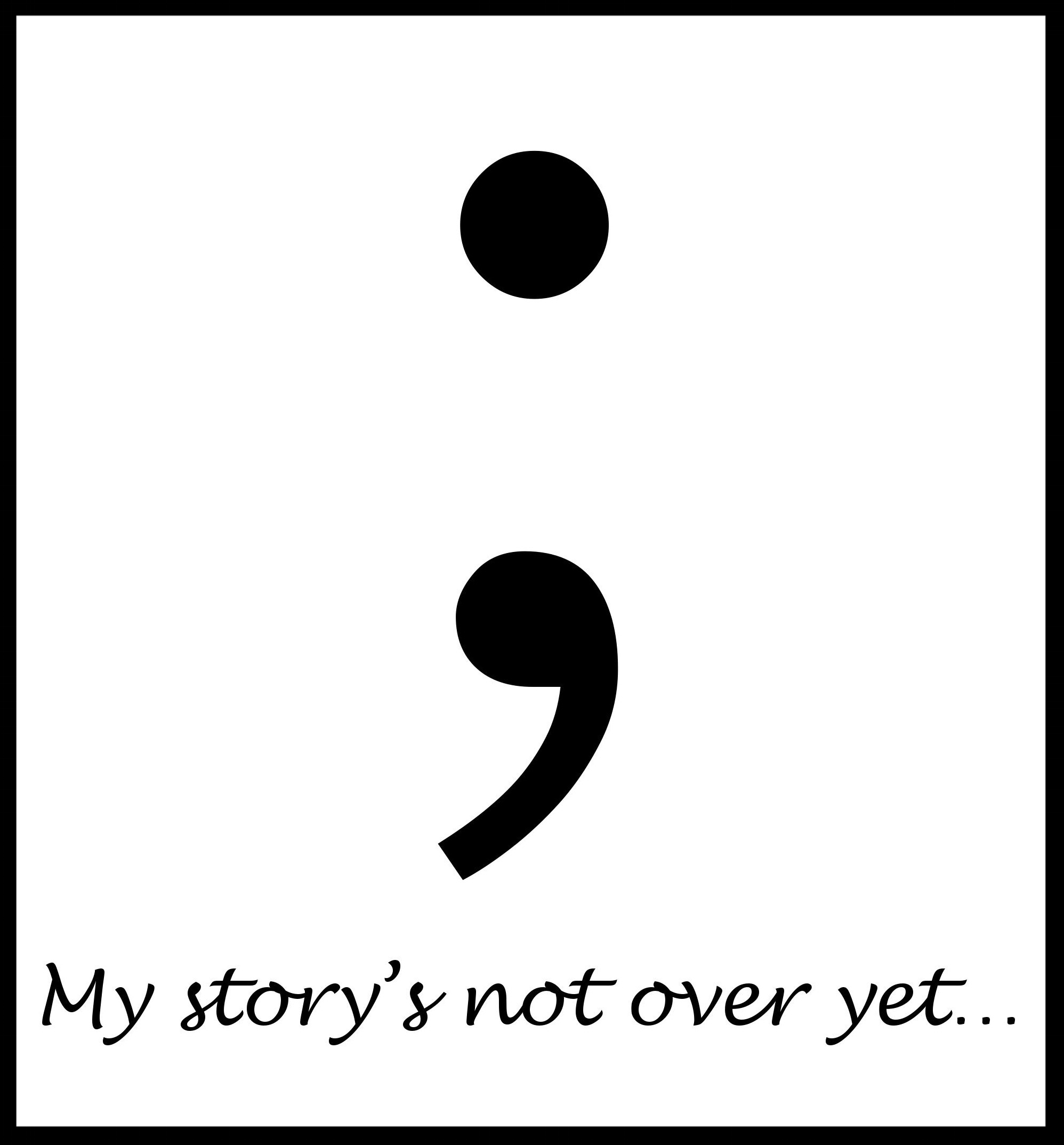
Slaughterhouse semicolon

On Only Connect (hardest quiz on TV) last week, Victoria Coren-Mitchell quoted Kurt Vonnegut’s views on semicolons. In his book A Man Without a Country, Vonnegut writes:

‘…do not use semicolons. They are transvestite hermaphrodites representing absolutely nothing. All they do is show you’ve been to college.’

Now, I’m not one to contradict a literary luminary like Vonnegut, but I think I have to take issue with this. And this is why.

Here comes the science

Semicolons have two uses: for complicated lists, and to link two separate sentences that are closely related. It’s the second one I’ll be concentrating on today. Here’s an example:

‘Dean was fed up with working; he’d rather be in the pub.’

semicolon.jpg

A comma would be wrong here and would cause a comma splice (don’t get me started on comma splices; I hate them). That’s because grammar rules say you can’t link two independent clauses – i.e. two clauses that are sentences on their own but are closely linked – with a comma. It has to be a semicolon, or a dash. On the other hand, comma splices are fine in some languages, and in fact some well-known quotes in English are comma splices. ‘I came, I saw, I conquered’ is one.

In real terms, a semicolon offers more of a pause than a comma, but not as much as a full stop. Read the sentence above out loud and you’ll hear it.

You could, of course, use a dash here (‘Dean was fed up with working – he’d rather be in the pub’). Speaking of which…

Dashed good grammar

Another issue with semicolons is that they can be hard to see online. If you’re reading text on a phone screen for example, a semicolon and a comma can look pretty similar (unless you’re a massive pedant like me). So the en dash (not the hyphen – I’ll have a rant about this in a later post) is rapidly stealing the semicolon’s job. Grammar books generally say you should use an en dash to mark off information that isn’t essential to the rest of the sentence, so they’re not technically interchangeable. And the OED says that you should avoid dashes in formal writing, although I definitely disagree with that.

My verdict…

All of this brings me to the conclusion that there definitely needs to be something in between a comma and a full stop. But whether that’s a dash or a semicolon is up to you.

In out, in out, shake it all about

I’m rewriting some call centre scripts at the moment which need details about various forms people can download. I’ve been saying to fill these in (as in ‘fill in your details’) but someone else working on the same project has gone with ‘fill out your details’. This has left me in a bit of a quandary. A trip to Google tells me that ‘fill out’ is favoured (or favored) in America, while ‘fill in’ is the more acceptable version on this side of the pond. And the OED doesn’t seem to have a preference (although apparently everyone ‘fills in the blanks’). So what do you think? Are you in or out?

Contraction distractions

I’m reading The Essex Serpent at the moment by Sarah Perry (well worth your time and will look lovely on your bookshelf), a historical gothicky novel set in and around my old neck of the woods of Colchester. It’s a great read, but I’ve found myself distracted a couple of times by her use of contractions. Now anyone who knows me and my writing will know that I’m a great advocate of contractions (‘we’re’, ‘it’s’, etc, etc.) – they’re a really quick and easy way to immediately make writing sound less robotic and more like a human being’s come up with the words. I tell all my clients to use them whenever they can. But Ms Perry has gone one step further and used some slightly unusual ones, which I’m not entirely sure I’m on board with – especially considering that I sometimes avoid ‘it’ll’ as it feels like a step too far. Some examples:

  • “Cora Seaborne sends a wreath judged rightly to’ve cost the earth.”
  • “…she looked relieved; she told me she’d’ve had the operation if I thought it best.”
  • “He could’ve dropped dead right there at his desk and we’d’ve all laughed.”

Double trouble

The examples in bold, I’m reliably informed by the internet, are unimaginatively called “double contractions” because they contain (you’ve guessed it), two apostrophes as well as two contractional clitics (i.e. the ’d and ’ve).

So what do you think? If you read them out loud they sound fine. And Wikipedia has a great long list of acceptable double contractions, some of which actually hurt my eyes. Like she’ll’ve. Too much, or something we should all be trying to embrace?