
General ramblings

Immigrant song

According to the OED, there are at least a quarter of a million words in the English language. But that doesn’t mean we’ve got everything covered. So sometimes we adopt words from other languages to fill the gaps. Chances are you’ve already come across ‘schadenfreude’, and new kid on the block ‘hygge’. But what about ‘tartle’? It’s a Scottish word for that panicky pause when you have to introduce someone whose name you’ve forgotten. Good, right? So here are my top 12 (because anyone can do a top ten) foreign words without an equivalent in English. Bloody foreign words, coming over here and stealing our words’ jobs.

Aktivansteher

I’m annoyed that the Germans have got this word and we haven’t. The literal translation is ‘energetic queuer’ – basically it’s for those clever people (of which I’m, sadly, not one) who always join the right queue.

Baggerspion

Another German one, the direct translation of which is ‘digger truck spy hole’. It’s the desire to peek into a boarded-up building site. C’mon, you know you’ve done it...

Bagstiv

A Danish word for something that I’ve obviously got no experience of – when you wake up in the morning still drunk from the night before (it translates as ‘backwards drunk’). Nope, never happened to me. And definitely not this morning.

Culaccino

This is an Italian word for the stain left on a table from a cold drink. Use a coaster people!

Gigil

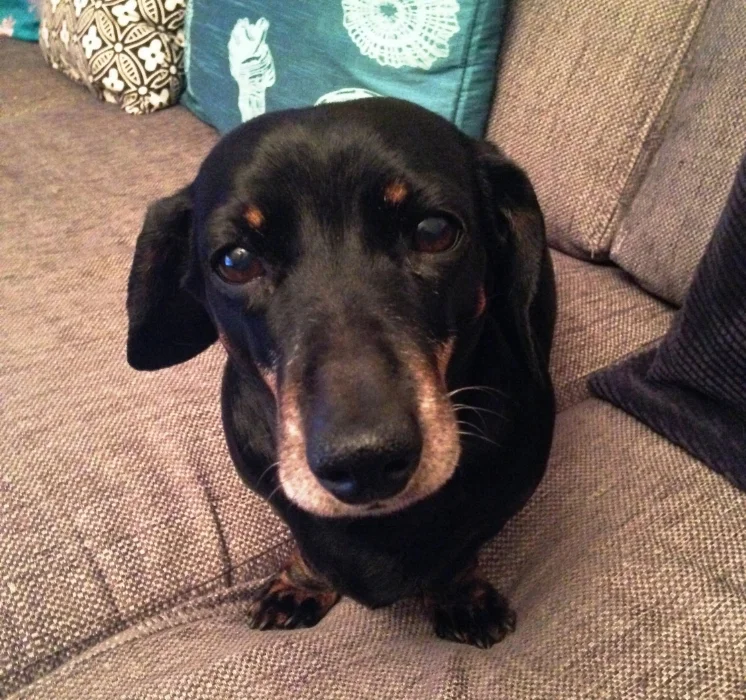
A Filipino word for when you see something really cute and feel the urge to squeeze or pinch it. I get this every day for my dog Bella. Cue gratuitous picture...
IMG_4648.JPG

Greng-jai

Being as the English are known for not wanting to cause a fuss, it’s odd that the Thai have a word for this one and we don’t. It’s when you don’t want someone to do something for you because it’s a pain for them.

Iktsuarpok

This is an Inuit word for when you’re so excited about someone coming round to your house that you keep going outside to check if they’ve turned up yet. Like me and the Amazon delivery man.

sebastian-pether-85797_1920.jpg

Mangata

I love this one. It’s a Swedish word for the road-like reflection of the moon on water. Gawjuss.

Mencolek

You know that thing when someone taps you on one shoulder from behind so you turn one way, when they’re actually standing on the other side? Well, the Indonesians came up with this word for it.

I actually already have a word for people who do this. It starts with ‘w’ and ends with ‘ankers’.

Politikerleden

This is a Danish word for being disgusted by a politician. So basically everyone in the world then.

Tsundoku

Think ‘One Hundred Years of Solitude’, ‘The Satanic Verses’, ‘The Alchemist’... yep, this is a Japanese word for when you buy books and then never read them. At least they look nice on the shelf.

Zeg

This is a Georgian word for ‘the day after tomorrow’ and has equivalents in lots of languages including German (übermorgen) and Polish (pojutrze). I’m cheating slightly here because there is actually an English version – ‘overmorrow’. But unfortunately it’s ye olde middle English, so no one uses it anymore. There’s also the equally delightful ‘ereyesterday’ in English for ‘the day before yesterday’. I’m going to make it my mission to bring these back.

Why so Sirius?

Monday marked 20 years since Harry Potter and the Philosopher’s Stone was published. Apart from making me feel well old (I know, I know, you’d think I was barely a twinkle in my mother’s eye 20 years ago (!), but in fact I’d just started university when it came out), it reminded me of how much I admire JK Rowling – she’s created a world that people of all ages, myself included, have come to love. (When the last book came out I once hid in the loo at work in the middle of the day so I could finish a chapter.) So this week, I thought I’d take a look at the etymology of the names of some of my favourite characters in the series. Rowling studied French and classics at university so the origins of her character’s names are often very pertinent – she put a huge amount of thought into even minor characters’ names. 

FYI: I find it hard to believe there are many people who haven’t read an HP book or seen a film, but just in case you are that one person, be warned that this way spoilers lie...

‘You’re a wizard Harry’

  • Sirius Black: Oh Sirius. I was convinced right up until the last page of the last book that you’d somehow come back from the dead. Sigh. Anyway, Sirius is the name of the brightest star we can see from the earth. Because he’s lovely, you see. And of course it’s also called the Dog Star, which refers to Sirius’ status as an animagus.
  • Remus Lupin: My second favourite after Sirius (which apparently is the kiss of death for HP characters), this one’s a bit of a double whammy. ‘Remus’ must be a reference to ‘Romulus and Remus’ who, as I’m sure all my highly educated readers already know, were the legendary twin brothers who were abandoned then brought up by a wolf (obvs), and then went on to found the city of Rome. So that’s our first clue to Remus’ wolfy secret. Secondly, presumably Lupin is a reference to ‘lupine’ (rather than the flower), which of course means ‘of, like, or relating to a wolf’. Boom.
  • Albus Dumbledore: ‘Albus’ is Latin for ‘light’, which makes sense as he’s number 1 good guy. And ‘Dumbledore’ is apparently an English dialect word for bumblebee. Nope, me neither. Maybe JK just liked the sound of it? (Some further googling reveals that apparently she imagined him bumbling round his office like a bee. Why not, I guess?)
  • Severus Snape: Fantastically portrayed on film by the much-missed Alan Rickman, Severus was a complicated character who ultimately turned out to be working for the good guys (he just had a really long endgame). So, ‘Severus’ means ‘stern’ in Latin (which is where we get ‘severe’ from), which makes sense as he was a fairly scary teach. And according to the lady herself, JK Rowling took the name ‘Snape’ from a village in Suffolk (where I’m writing this right now – Suffolk, not Snape), but it also means ‘to snub or rebuke or give a hard time to’ which is a nice coincidence (although probably entirely intentional).
Me and Sirius.jpg

‘I solemnly swear I’m up to no good’

  • Voldemort: The big bad himself, ‘Vol de mort’ means ‘flight [or ‘theft’ depending on which bits of the internet you read] of death’ which makes sense considering the whole horcrux-hiding-bits-of-your-soul thang. 
  • The Malfoys: This one’s not too hard to decipher – ‘mal’ comes from old French for ‘evil’ or ‘bad’. In the same language ‘foi’ means ‘faith’ or ‘trust’ which could well have something to do with the Malfoys putting their trust in the wrong dude. Draco is presumably a reference to ‘draconian’ or possibly dragon or snake (i.e. devious). (And hello to Jason Isaacs!)
  • Fenrir Greyback: One of the more minor characters, I put Fenrir in because I like the way it sounds. Fenrir was a big ole nasty wolf in Norse mythology, and a big ole nasty wolfman in Harry Potter land. It’s him who infected Lupin’s family with lycanthropy originally, and he also takes a chunk out of Bill Weasley. Bastard.
  • Argus Filch: Argus Panoptes is a Greek giant with a shedload of eyes. A perfect moniker for someone who’s always watching round corners. And obviously ‘filch’ is an informal term for stealing, which again fits for a man who likes to confiscate shiz. 

So, there you have it. There are loads more links in HP to Latin, French and Greek, as well as astrology, biology – the list goes on. Feel free to leave a comment about your favourite.

Bonus material

Check out this Harry Potter-based sock puppet video – guaranteed to be stuck in your head for DAYS. 

What’s in a name?

Nominative determinism. Go on, say it. Nominative determinism. Sounds nice right? And clever. 

Say what?

Now I know that my many (she says hopefully) readers are super intelligent, but just in case any of you haven’t come across this lovely term before, it’s basically the idea that people quite often end up doing jobs that match their names. Also called aptronyms, think William Wordsworth (poet, obvs), Usain Bolt (I confess I hadn’t actually made the connection until I started writing this), or Mr Greenacre, who was the man that looked after the hockey pitches at my school. Possibly less famous than the first two, but you get the point.

lt-les-mcburney-best-firefighter-name-ever1.jpg

The term nominative determinism was coined in an article in the New Scientist. They gave examples including:

  • a man who wrote a book about polar exploration with the surname Snowman
  • an article on treating disorders of the urinary system by two researchers called Splatt and Weedon (BEST. THING. EVER).

The theory goes that this isn’t just coincidence – it’s possibly down to genetics, or a thing called implicit egotism. As this is a blog about words, I’m not going to delve into the science, just the funny names. So here’s a list of my favourite examples of this theory in action.

Sara Blizzard

She’s a blimmin weather forecaster for the BBC. And across the pond there’s an Amy Freeze and a Larry Sprinkle.

Igor Judge

Judge Judge innit.

Christopher Coke

He’s a big ole drug dealer. 

Lord Brain

Guess what he wrote books about? Neurology.

Sir Manley Power

He was a total military ledge. 

Dr Alter

He’s a plastic surgeon. Well of course he is.

Frances Crook

She runs an organisation that works to reform prisons. In a double whammy, ‘Frances’ means ‘free the criminals’ apparently.

Vania Stambolova

I’m not sure if this one really counts because she’s from Bulgaria and it only works in English, but I don’t care because it’s awesome. I bet you can’t guess it. She’s a... wait for it... 400m hurdler. Amazing.

Marion Moon

She was Buzz Aldrin’s mum. I can’t believe I only just found this out.  

Ann Webb

She founded the British Tarantula Society. REALLY.

Robin Mahfood

He’s the president of a charity called Food for the Poor. Even though his name says otherwise.

Dr Richard Chopp

HE DOES VASECTOMIES. Honest.

So, dear reader, if you can beat Dick Chopp, please let me know in the comments. I’ll buy you dinner (chops, of course).